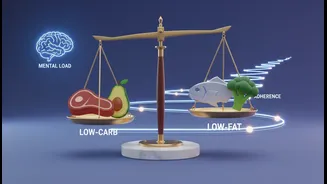








The Science of Decision Fatigue
The feeling of being mentally drained after a long day of work and responsibilities is a universal experience. Scientists have a term for this: decision fatigue. It refers to the deteriorating quality of your choices after a long session of decision-making.
Research from Cornell University indicates the average person makes over 200 decisions about food alone each day. When you multiply that by all the other choices you face from the moment you wake up, it's easy to see how your cognitive resources get depleted. Studies show that when this mental energy is low, our brains default to the easiest option, which is rarely the healthiest one.
Your Brain on Overload
When your brain is tired, it undergoes a fundamental shift in processing. The slow, deliberate part of your brain responsible for thoughtful consideration and long-term goals (the 'slow-thinking' part) gets lazy. Meanwhile, the fast, automatic, and impulsive part takes over. This is why a salad sounds great in the morning, but by evening, your brain is screaming for pizza. The mental effort required to make healthy choices—weighing options, resisting temptation, planning meals—is significant. When your cognitive tank is near empty, your ability to exert self-control plummets, making you far more susceptible to high-calorie, low-effort comfort foods. It’s a physiological response, not a moral failing.
Stress: The Ultimate Diet Saboteur
Chronic stress and mental burden go hand in hand, creating a powerful combination that undermines even the best dietary intentions. Stress increases cortisol levels, a hormone linked to weight gain, particularly around the abdomen. Research has shown a direct link between high cortisol levels and poorer decision-making, which in turn leads to less successful weight loss outcomes. In essence, dieting itself can be a source of stress, which can then raise cortisol and make it even harder to stick to the diet. This creates a vicious cycle where stress degrades your ability to make healthy choices, and the perceived failure to do so can create even more stress.
Lighten Your Mental Load
If mental burden is the problem, then reducing that burden is the solution. This isn't about trying harder; it's about working smarter to preserve your precious cognitive energy. One of the most effective strategies is to reduce the number of food-related decisions you have to make each day. Weekly meal planning is a powerful tool. By deciding on your meals in advance, you eliminate the daily 'what's for dinner?' debate when you're already tired. Creating a rotation of 10-15 simple, healthy go-to meals you enjoy can also simplify the process, removing the pressure to constantly find new recipes. The goal is to make the healthy choice the easiest choice.
Practical Strategies for Success
Beyond meal planning, you can set up your environment to support your goals. Keep healthy, easy-to-eat snacks readily available. If you know a stressful day is coming, have a pre-made healthy meal ready to go in the fridge. Another powerful technique is creating 'if-then' plans. For example: 'If I feel overwhelmed and want to order takeout, then I will first have a glass of water and go for a five-minute walk.' This pre-made decision short-circuits the impulse by providing a clear, alternative action. Also, don't underestimate the power of simplicity. A diet full of complex, time-consuming recipes is harder to maintain under stress than one based on simple, whole foods.
Redefining a Successful Diet
Ultimately, this research invites us to reframe what 'diet success' means. Instead of focusing solely on the number on the scale, perhaps success is building a sustainable lifestyle that supports both your physical and mental health. This involves being kind to yourself and recognizing that your brain has limits. It means viewing a slip-up not as a failure, but as a data point indicating that your mental load might be too high. By focusing on managing stress and reducing decision fatigue, you're not just hacking your diet; you're building a more resilient foundation for your overall well-being. A healthy diet, it turns out, starts with a well-rested mind.