

What Exactly Is a Solar Storm?
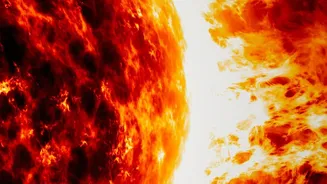
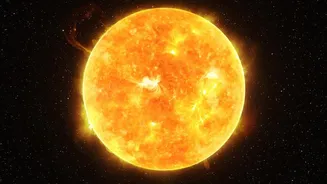
Think of a solar storm as a massive eruption on the sun's surface. These events, often called coronal mass ejections (CMEs), release vast clouds of magnetised plasma and energetic particles into space. While the sun is 150 million kilometres away, these
eruptions can travel at incredible speeds, reaching Earth in one to three days. When this solar material interacts with our planet's magnetic field, it triggers a geomagnetic storm. These storms are not weather in the traditional sense; you won't feel wind or rain. Instead, they are disturbances in Earth's magnetic environment, capable of creating beautiful auroras but also causing widespread technological disruption.
The Threat to Our High-Tech World
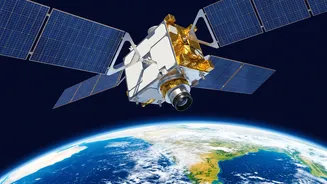
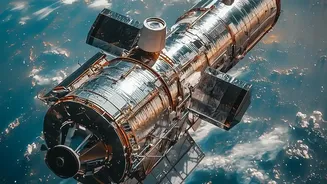
Our increasing reliance on technology makes us vulnerable to these cosmic events. Satellites are on the front line. The intense radiation from a solar storm can fry their sensitive electronics, degrade solar panels, and shorten their operational lifespan. In some cases, the storm can heat and expand Earth's upper atmosphere, increasing drag on low-orbit satellites, causing them to lose altitude and potentially burn up. On the ground, the threat is to our power grids. Geomagnetic storms can induce powerful, uncontrolled currents (GICs) in long transmission lines. These currents can flow into high-voltage transformers, causing them to overheat and potentially leading to physical damage, voltage collapses, and large-scale blackouts.
An Eye on the Sun: How Tracking Works
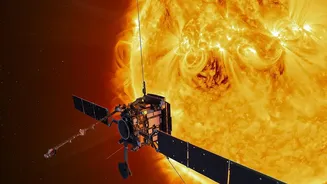
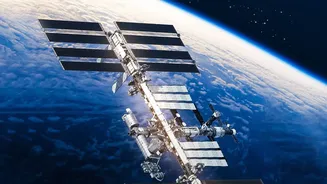
Safeguarding our infrastructure begins with constant vigilance. A network of space-based and ground-based observatories acts as our early warning system. Satellites like NOAA's DSCOVR and SOLAR-1 are positioned at a special point in space about 1.5 million kilometres from Earth, called Lagrange Point 1 (L1). This location provides an uninterrupted view of the sun. These satellites directly measure the solar wind—the stream of charged particles constantly flowing from the sun—looking for the tell-tale signs of an approaching CME. This gives forecasters a crucial heads-up, typically ranging from 15 to 60 minutes before the storm impacts Earth's magnetic field. It's a short window, but it can be enough to make a difference.
India's Watchful Guardian: The Aditya-L1 Mission
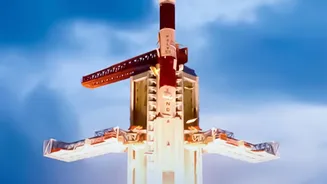
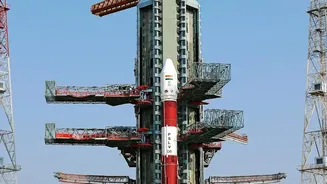
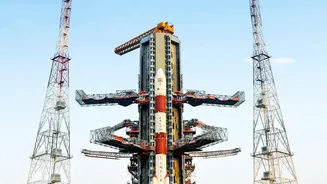
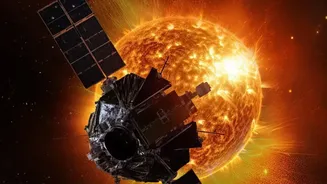
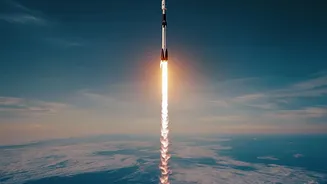
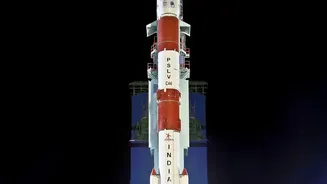
India has significantly bolstered global space weather monitoring with its own dedicated solar observatory, Aditya-L1. Launched by the Indian Space Research Organisation (ISRO), this advanced spacecraft is also positioned at the L1 point, equipped with seven distinct payloads. Its instruments are designed to study the sun's atmosphere, the dynamics of CMEs, and the solar wind. Recent findings from Aditya-L1 have been groundbreaking. Scientists have identified small brightenings in the sun's atmosphere that occur hours before a major solar flare, offering a potential new method for earlier flare forecasting. This ability to better predict the origin and direction of solar eruptions is vital for protecting India's own growing fleet of satellites and its critical national infrastructure.
From Warning to Action: How Engineers Protect the Grid
When a solar storm warning is issued, infrastructure engineers spring into action. For satellite operators, this might mean temporarily shutting down non-essential systems, reorienting the spacecraft to protect sensitive components, or preparing for course corrections. For power grid operators, the notice from space weather forecasters allows them to prepare the system for impact. They might reduce the load on certain transmission lines, bring extra generation capacity online to maintain stability, or postpone routine maintenance. In extreme cases, the safest option might be to intentionally de-energize parts of the grid to prevent catastrophic damage to expensive and hard-to-replace transformers. New technologies, such as neutral blocking devices that can physically block geomagnetically induced currents from entering transformers, are also being tested and deployed to harden the grid against these events.