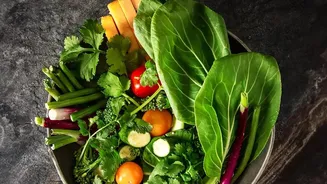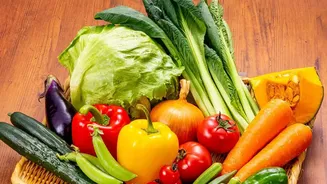






Come winter, a bowl of hot sarson ka saag with makki ki roti is more than just a meal; it's a cherished tradition. This nutrient-packed dish is celebrated for its health benefits, but what about its role in building strong bones?
The Green Powerhouse
Saag, a dish typically
made from mustard greens (sarson), spinach (palak), or other leafy greens, is a true nutritional heavyweight. It's loaded with vitamins A, C, and K, along with essential minerals like iron and magnesium. These nutrients support everything from your immune system to eye health and help fight inflammation in the body. The generous amount of dietary fibre also aids digestion and promotes gut health, making it a wholesome choice for any meal. Given this impressive profile, it’s easy to assume that saag is also a one-stop-shop for your daily calcium needs, but the story is a bit more complex.
The Calcium Paradox
On paper, leafy greens like spinach and mustard greens contain a respectable amount of calcium. For instance, cooked spinach has about 245 mg of calcium per cup. This has led many to believe that a diet rich in these greens is enough to keep bones strong. However, the crucial factor isn't just the amount of a nutrient present in a food, but its 'bioavailability'—how much of that nutrient your body can actually absorb and use. When it comes to the calcium in many leafy greens, especially spinach, there's a natural hurdle that gets in the way.
Meet the Oxalates
The culprit is a naturally occurring compound called oxalic acid, or oxalate. Found in many plants, oxalates can bind with minerals like calcium in your gut, forming indigestible crystals. This process prevents a significant portion of the calcium from being absorbed into your bloodstream. Spinach, in particular, is high in oxalates. While it is rich in calcium, studies suggest that only about 5% of it may be absorbed by the body because of the interfering effect of oxalates. This doesn't mean saag is unhealthy—far from it. It simply means it shouldn't be your primary or only source of calcium. The oxalates in spinach, for example, do not prevent your body from absorbing calcium from other foods eaten in the same meal, like a glass of milk or a bowl of dahi.
Building a Truly Calcium-Rich Plate
To meet your daily calcium requirement, which is about 1,000 mg for most adults, diversity is key. Fortunately, the Indian diet offers a treasure trove of excellent, highly absorbable calcium sources. Dairy products remain a top choice; milk, paneer, and especially curd (dahi) provide calcium in a highly bioavailable form. A single cup of milk can provide around 300 mg of calcium. For those who are plant-based or looking for non-dairy options, there are fantastic alternatives. Ragi (finger millet) is a nutritional superstar, boasting around 344 mg of calcium per 100 grams. Sesame seeds (til) are another powerhouse, as are almonds, tofu fortified with calcium, and legumes like chickpeas (chana) and kidney beans (rajma). Leafy greens with lower oxalate levels, such as amaranth (chaulai) and moringa (drumstick leaves), are also excellent choices.
Maximise Your Absorption
Beyond choosing the right foods, you can take simple steps to improve how much calcium your body absorbs. First and foremost is ensuring you get enough Vitamin D, often called the 'sunshine vitamin', as it's essential for calcium absorption. Pairing calcium-rich foods with sources of Vitamin C, like a squeeze of lemon juice on your dal or greens, can also help. It’s also wise not to consume your entire day's calcium in one sitting. Spreading your intake across different meals helps your body process it more effectively, as absorption rates tend to decrease when you consume more than 500 mg at once.