







The Evaporation Problem
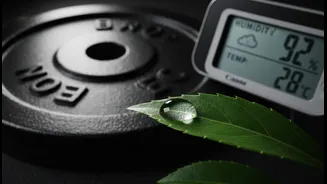
Your body has a brilliant built-in cooling system: sweating. When you exercise, you heat up, and your glands release sweat. The magic happens when that sweat evaporates off your skin, a process that pulls heat away from the body and helps regulate your core
temperature. However, this system has an Achilles' heel: humidity. When the air is already saturated with water vapor—as it is on a humid day—there's simply no room for your sweat to go. It can't evaporate efficiently. Instead, it drips off you, providing very little cooling effect for the amount of fluid you're losing. As a result, your body struggles to cool down, even though you might be drenched in sweat.
Your Body in Overdrive
Because sweat isn't evaporating and cooling you effectively, your body's internal thermostat senses that you're still too hot. Its response is to double down and produce even more sweat in a desperate attempt to cool off. This creates a dangerous cycle. You sweat more profusely, but since the cooling effect is diminished, your core temperature can continue to rise. This puts extra strain on your cardiovascular system, as your heart has to pump harder to send blood to both your working muscles and your skin for cooling. The perceived effort of your workout skyrockets, and you lose fluids at an accelerated rate, paving the way for rapid dehydration.
The Cascade of Electrolyte Loss
Sweat isn't just water; it's packed with essential minerals called electrolytes. The most important ones for exercise are sodium, potassium, chloride, calcium, and magnesium. These minerals are vital for nerve function, muscle contractions, and maintaining fluid balance. When you're sweating buckets in a humid gym, you're not just losing more water—you're losing a significantly higher volume of these critical electrolytes. Losing a lot of sodium, in particular, can be problematic. This is why just chugging plain water isn't always the answer. In fact, drinking excessive amounts of water without replacing lost electrolytes can dilute the sodium levels in your blood, a potentially dangerous condition known as hyponatremia.
Recognising Electrolyte Depletion
The feeling of being completely drained after a humid workout is often a sign of electrolyte depletion, sometimes called 'electrolyte exhaustion'. The early signs can be subtle and are often dismissed as normal workout fatigue. You might experience a persistent dull headache, unusual tiredness, muscle tightness, or brain fog. As the imbalance worsens, the symptoms become more obvious: dizziness (especially when standing up), intense muscle cramps, nausea, and a rapid or irregular heartbeat. Ignoring these signs can lead to more severe issues like confusion, severe weakness, and heat exhaustion, which requires immediate attention.
A Smarter Hydration Strategy
Combating the effects of humidity requires a more thoughtful approach than simply drinking more water. Start hydrating well before your workout, drinking about 500-600 ml of fluid two to three hours beforehand. During workouts that last longer than an hour in humid conditions, sipping on a sports drink or an electrolyte supplement is crucial to replace what you're losing. Plain water might not be enough. Aim to drink about every 15-20 minutes during your session. After your workout, continue to rehydrate. A good rule of thumb is to drink 500-700 ml of fluid for every pound of body weight lost. Eating a snack that contains minerals like potassium (from a banana or avocado) and sodium can also help restore your balance.