



The Heartfelt Spirit of Bijoya
Once the idols of Goddess Durga are immersed, a sweet melancholy settles over Bengal. But this feeling is quickly replaced by the cheerful spirit of Bijoya, which lasts until Kali Puja. This is a time for renewing social and familial ties. The customary
greeting is 'Shubho Bijoya', and it's an invitation to forgive past grievances and reconnect. Homes are thrown open to friends, relatives, and neighbours who drop by, often unannounced, to share greetings. This tradition of visiting homes is known as the 'Bijoya Sammilani', a series of gatherings that reinforce community bonds. It's less about the grand spectacle of the Puja and more about the quiet, meaningful interactions that happen over a shared plate of food.
A Platter of Savoury Delights
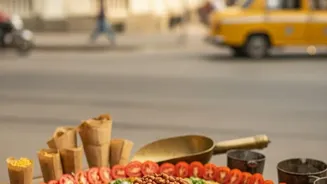
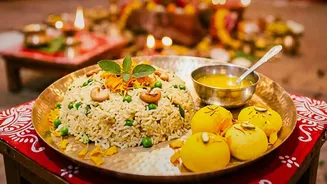
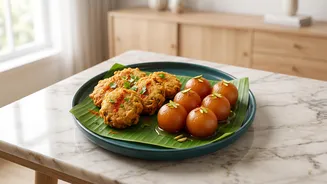
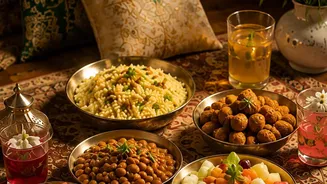
The moment a guest settles in, a quintessential Bengali hospitality ritual unfolds, starting with the savoury course. Central to this is a small, salty, diamond-shaped fried pastry called 'nimki'. Often homemade in large batches, these crunchy snacks are the perfect accompaniment to conversations. They are typically served alongside 'ghugni', a comforting curry made from dried yellow or white peas, spiced gently and sometimes garnished with chopped onions and a sprinkle of spices. Depending on the household, the platter might also feature other fried favourites like 'singaras' (the Bengali version of samosas), 'alur chop' (potato fritters), or a 'kabiraji cutlet', an iconic Kolkata snack. The goal is to offer something comforting and homemade, a true taste of the family's kitchen.
The Essential Sweet Offerings
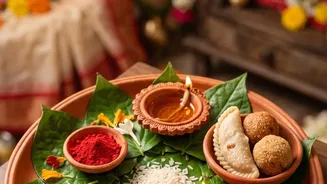
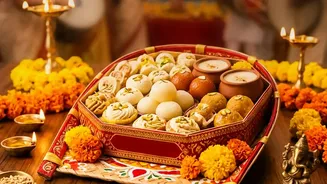
No Bengali celebration is complete without 'mishti' (sweets), and Bijoya is no exception. In fact, offering sweets is the very essence of the greeting. One of the most traditional and beloved homemade sweets for this occasion is 'narkel naru', which are delightful little balls made of grated coconut and jaggery or sugar. These have been a part of Bengali tradition for centuries and represent a simple, rustic sweetness. Alongside narus, you will almost certainly find an assortment of 'sandesh' (a sweet made from fresh cottage cheese or 'chhana') and the ever-popular 'rosogolla'. Bringing a box of sweets when visiting someone’s home during Bijoya is a gesture of warmth and respect, symbolizing the sharing of joy and good fortune.
More Than Just Food
While the food is central, the post-Puja gatherings are about much more than just satisfying the palate. They are about 'adda'—the art of freewheeling, intellectual, and often humorous conversation that can last for hours. It’s a time to catch up on the year gone by, share stories, and simply enjoy each other's company in a relaxed setting. Unlike the rush of pandal-hopping, these home visits are slow-paced and personal. It’s in these moments, over a plate of nimki and a shared sandesh, that the festive spirit truly comes full circle. The grand public worship of the Goddess transitions into a private celebration of the bonds that hold the community together, proving that the heart of the festival beats strongest within the home.