



Beyond Replacement: The Rise of 'Augmented Intelligence'
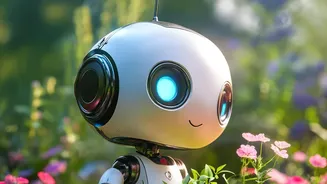
Instead of a simple human vs. machine showdown, we are witnessing the emergence of a powerful partnership. This concept is often called 'augmented intelligence' or the 'centaur model', a nod to the mythological creature that was half-human, half-horse.
In this framework, AI is not a replacement for human intellect but an extension of it. The machine handles what it does best: sifting through mountains of data, identifying complex patterns, and performing repetitive tasks at lightning speed. This frees up the human professional to focus on what they do best: strategic thinking, creative problem-solving, ethical judgment, and providing empathetic, contextual understanding. It’s about leveraging AI’s computational power to elevate, not eliminate, human expertise.
The AI Co-Pilot in Healthcare
Nowhere is this collaboration more impactful than in medicine. In diagnostics, for instance, AI algorithms can analyse thousands of medical images—like X-rays or MRI scans—to detect anomalies or early signs of disease with incredible accuracy, sometimes spotting things the human eye might miss. But the AI doesn't make the final diagnosis. Instead, it acts as a highly-skilled assistant, presenting its findings to a radiologist or doctor. The human expert then applies their years of experience, considers the patient's unique history, and makes the final, empathetic call on the diagnosis and treatment plan. This synergy leads to faster, more accurate diagnoses while keeping the crucial element of human care at the center of the process.
Smarter Decisions in Finance
The financial world, driven by data and speed, is another fertile ground for this hybrid model. Financial analysts and investors are using AI to analyse market data, news sentiment, and economic reports in real-time—a feat impossible for a human team alone. The AI can identify potential investment opportunities or flag hidden risks based on subtle patterns in the data. However, the ultimate decision to invest millions of dollars doesn't rest with the algorithm. A human strategist takes these AI-generated insights, weighs them against broader geopolitical trends, considers the firm's long-term goals, and applies their own intuition before making the final strategic move.
The Trend in Indian Business
This trend is rapidly taking hold in India. A recent survey from August 2026 revealed that Indian enterprises are accelerating their AI adoption, with a significant majority planning to increase their AI investments. Businesses are already reporting measurable returns from their AI initiatives. However, the path is not without its challenges. The same survey highlighted that very few organizations feel their data is fully prepared for large-scale AI deployment. Furthermore, a persistent skills gap and concerns around data privacy and security remain significant hurdles for many Indian companies looking to fully leverage this new collaborative paradigm.
Building the Human-AI Partnership
For this partnership to work, professionals don't need to become expert coders, but they do need to cultivate new skills. The focus is shifting towards 'AI literacy'—understanding how to ask the right questions, interpret AI-generated outputs critically, and recognise potential biases in the data. The most valuable professionals will be those who can effectively manage and collaborate with AI systems, using them as a tool to enhance their own judgment. This requires a strong foundation in critical thinking, creativity, and ethical reasoning. Organizations, in turn, must invest in upskilling their workforce and establishing strong governance policies to ensure AI is used responsibly and effectively.