




More Than Just a Pathfinder
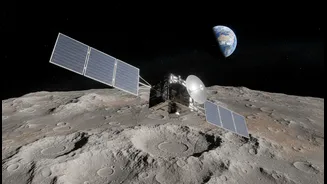
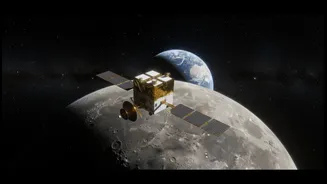
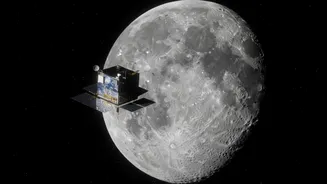
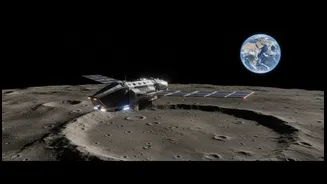
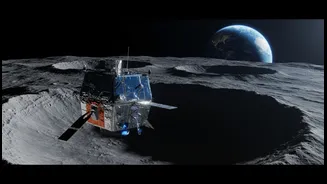
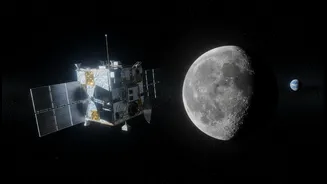
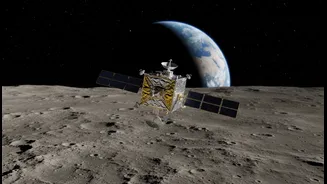
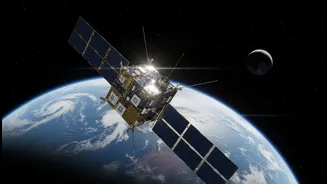
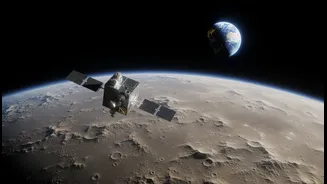
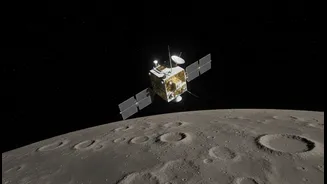
First, let's set the scene. CAPSTONE, a spacecraft roughly the size of a microwave oven, launched in June 2022 with a very big job. Its primary goal was to be the first to fly in a Near-Rectilinear Halo Orbit (NRHO). This unique, highly stable orbit is where
NASA plans to build the Gateway, a small space station that will be a critical part of the Artemis program's long-term lunar presence. Before committing a multi-billion-dollar space station, NASA needed to prove the orbit was as stable and efficient as models predicted. Built by Terran Orbital and operated by Advanced Space, the low-cost CAPSTONE mission was designed to do just that, literally paving the way for future missions. It successfully entered the NRHO in November 2022 and completed its primary mission of verifying the orbit's dynamics.
The Autonomous Navigation Promise
Beyond testing the orbit, CAPSTONE had another crucial objective: demonstrating autonomous navigation. This was handled by the Cislunar Autonomous Positioning System, or CAPS. The idea is simple in concept, but revolutionary in practice. Currently, spacecraft in deep space rely almost exclusively on the Deep Space Network (DSN)—giant radio antennas on Earth—to tell them where they are and where they're going. This is time-consuming and the DSN is an oversubscribed resource. CAPS was designed to test a future where spacecraft can figure out their own position. It would do this by communicating with another spacecraft—in this case, NASA’s Lunar Reconnaissance Orbiter (LRO)—and using the signals between them to calculate its own position and trajectory without needing to phone home to Earth.
What CAPSTONE Actually Achieved
So, did it work? Yes, and it was a major success. CAPSTONE successfully performed multiple tests where it communicated with LRO. The CAPS software onboard processed the data from these crosslink communications and successfully calculated its own position, demonstrating spacecraft-to-spacecraft navigation in lunar orbit for the first time. This was a landmark achievement. It proved that the fundamental concept of peer-to-peer navigation in deep space is viable. The successful tests marked the achievement of a primary mission objective and provided invaluable data that will help refine the technology for future missions. NASA even extended the mission to conduct further tests, using the spacecraft as a flexible, cost-effective testbed for new software and capabilities.
The Crucial 'Without Overstating' Part
This is where nuance is critical. To tell the story correctly, you must avoid suggesting that CAPSTONE made itself fully autonomous. It did not. The CAPS experiments were specific, scheduled tests of a new software system. The spacecraft still relied on ground control for the vast majority of its operations, navigation, and health monitoring. The CAPS system itself ran on a separate, dedicated computer, allowing engineers to test it without risking the primary mission operations. Think of it as a student driver with an experienced instructor in the passenger seat, ready to take the wheel. The student proved they could handle a key maneuver on their own, but they weren't handed the keys and told to drive across the country solo. The success was in the demonstration, the proof-of-concept, not in achieving full operational autonomy.
Why This First Step Still Matters
Even as a first step, CAPSTONE's achievement is a game-changer for the future of space exploration. Proving that autonomous navigation software can work in the real-world lunar environment is a critical milestone. As cislunar space gets more crowded with government and commercial missions, a GPS-like system for the Moon becomes essential. This technology reduces the immense strain on Earth's Deep Space Network, freeing it up for more critical communications. It enables faster decision-making for spacecraft, as they won't have to wait for instructions from a distant Earth. This capability is fundamental to building a sustainable, scalable, and safe infrastructure for a permanent human and robotic presence on and around the Moon.