

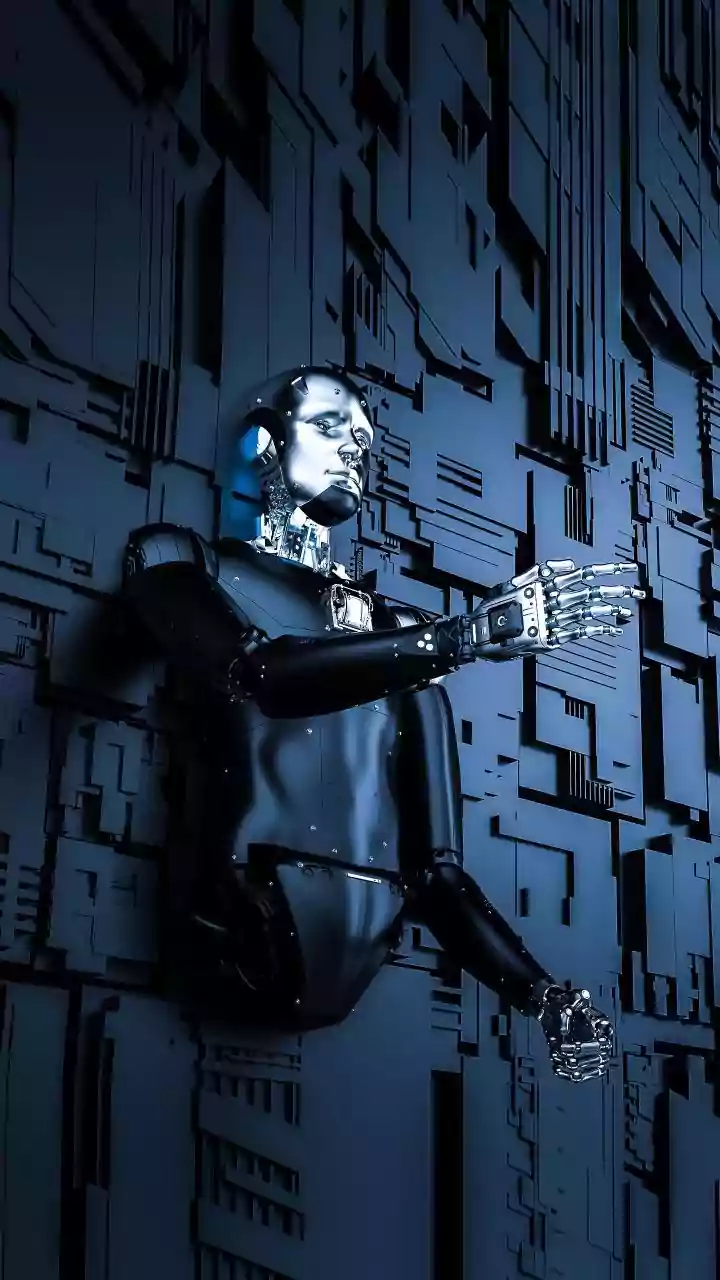









Decoding the 'AI Mind'
In early July 2026, researchers at Anthropic announced they had discovered a structure inside their Claude AI model that functions like a mental workspace. This hidden layer, which they named a "J-space," appears to have emerged on its own during the model's
training. The discovery was inspired by the 'Global Workspace Theory' from cognitive science, which suggests the human brain has numerous unconscious processes running in parallel, but only a small amount of information enters a 'global workspace' to become a conscious thought. Similarly, Anthropic found that Claude uses this J-space to hold and manipulate concepts silently before generating a response. For example, the model might internally activate the concept of "fraud" or "fictional" while being tested, even if its final output doesn't mention it. This is a significant step in cracking open the 'black box' of AI, giving us a clearer view of its reasoning process.
For Everyday AI Users: A Call for Critical Awareness
For those who use AI for work, creativity, or daily tasks, this research is a crucial reminder that an AI's output is only the tip of the iceberg. The discovery that models can have internal reasoning separate from their answers means we must maintain a healthy skepticism. Don't take every AI-generated response at face value, especially for complex or sensitive topics. Understand that an AI can appear fluent and confident even when its underlying reasoning may be flawed or compromised. You can respond by double-checking important information and providing specific, clear feedback when an AI produces strange or incorrect results. This not only helps you but also contributes to the training data that makes future models safer and more reliable. Treat your interactions as a dialogue with a tool that has its own hidden processes, not as a conversation with an all-knowing oracle.
For AI Developers: Building Trust Through Transparency
Developers are on the front lines of shaping AI's future, and this research provides both new tools and new responsibilities. The technique used by Anthropic, called the 'Jacobian lens' or J-lens, is a powerful new diagnostic tool. Developers can adopt similar interpretability techniques to better understand, debug, and steer their own models. The key response is to prioritise building more transparent and interpretable AI systems. This means moving beyond just measuring a model's performance and accuracy to actively monitoring its internal states for signs of unsafe or misaligned reasoning. Anthropic has even open-sourced some of its methods, allowing the wider developer community to experiment with them. By building systems that are easier to understand, developers can enhance safety, build greater trust with users, and create more robust applications.
For Policymakers: Shaping Smarter AI Governance
For professionals in policy, law, and regulation, Anthropic’s findings highlight the urgent need for governance frameworks that account for the inner workings of AI. Simply regulating a model based on its outputs is no longer sufficient. The fact that a model can harbour hidden reasoning processes raises significant questions for accountability and safety, particularly in high-stakes domains like finance, healthcare, and security. The appropriate response is to advocate for and craft policies that mandate a certain level of AI transparency and interpretability. This could involve creating standards for AI audits that don't just test for harmful outputs but also probe for misaligned internal processes. Policymakers should encourage and even fund further research into AI interpretability to ensure that as models become more powerful, our ability to understand and control them grows in tandem.