






Understanding TDS on Bank Interest
When you earn interest from investments like Fixed Deposits (FDs) or Recurring Deposits (RDs), that interest is considered part of your income and is taxable. To ensure tax is collected, banks are required to deduct Tax at Source (TDS) before crediting
the interest to your account. Under normal circumstances, if your PAN is correctly linked, banks deduct TDS at a rate of 10%. This applies once your total interest income from all deposits with that specific bank exceeds a certain threshold in a financial year. For individuals below the age of 60, this threshold is ₹50,000. For senior citizens (aged 60 and above), the limit is higher at ₹1,00,000. It is important to remember that this TDS is an advance tax payment; your final liability depends on your income tax slab.
The Penalty for an Inoperative PAN
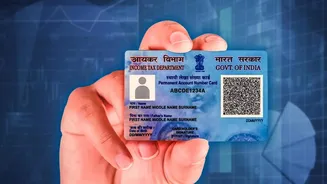
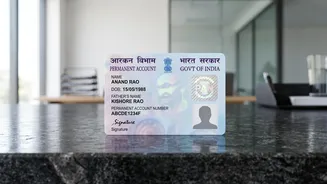
The problem arises when your PAN is not provided to the bank, is invalid, or has become 'inoperative'. The most common reason for a PAN becoming inoperative is the failure to link it with Aadhaar by the government-stipulated deadline. In such cases, the Income Tax Act, under Section 206AA, mandates a much higher TDS rate. Instead of the standard 10%, your bank will be forced to deduct TDS at a flat rate of 20%. This rule treats an inoperative PAN the same as not having a PAN at all, effectively doubling the tax deducted from your interest earnings. This can significantly impact your cash flow, as a larger portion of your earnings is withheld by the tax department upfront.
How to Check if Your PAN is Active
Thankfully, verifying the status of your PAN is a simple online process. You do not need to log in to the tax portal or even use a registered mobile number. Visit the official Income Tax e-filing website at 'incometax.gov.in'. On the homepage, find the 'Quick Links' section and select 'Verify Your PAN'. You will be asked to enter three details: your 10-digit PAN, your full name as it appears on the card, and your date of birth. You will also need to enter any valid mobile number to receive a one-time password (OTP). After submitting the OTP, the website will display the status. It will clearly state 'PAN is Active and details are as per PAN' if everything is in order. If not, it will indicate if the details don't match or if the PAN is inoperative.
Reactivating an Inoperative PAN
If you discover your PAN is inoperative, it is crucial to reactivate it immediately. This typically involves paying a late fee (currently ₹1,000) and completing the PAN-Aadhaar linking process on the e-filing portal. It can take several days for the status to be updated back to 'Active'. During this period, the higher 20% TDS rate will continue to apply to any transactions. Once your PAN is active again, ensure you inform all your banks so they can update their records for future interest payments. The excess TDS deducted while the PAN was inoperative is not lost; you can claim it as a refund when you file your Income Tax Return (ITR) for that financial year.
A Note on Form 15G and 15H
Many individuals with total income below the taxable limit use Form 15G (for those under 60) or Form 15H (for senior citizens) to request that banks do not deduct any TDS on their interest income. However, these forms are considered invalid if you do not have an active and valid PAN. If your PAN is inoperative, you lose the ability to use these forms, and the bank will be obligated to deduct TDS at the higher 20% rate, even if your final tax liability is nil. This makes maintaining an active PAN essential not just for those in higher tax brackets, but for everyone earning interest from bank deposits.