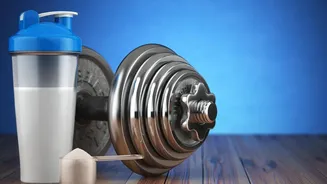







Myth: Protein Powder is Only for Bodybuilders
One of the most persistent myths is that protein supplements are exclusively for elite athletes or people trying to build massive muscles. In reality, protein is an essential macronutrient for everyone, playing a vital role in everything from muscle repair
and immune function to healthy hair and skin. While athletes do have higher protein needs, a supplement can be a convenient way for anyone, including busy professionals or older adults, to ensure they're meeting their daily requirements. Protein needs even increase as we age to help prevent the natural loss of muscle mass.
Myth: All Protein Shakes Make You 'Bulky'
The fear of getting unintentionally bulky keeps many people away from protein powders, but this is a misunderstanding of how muscle growth works. Gaining significant muscle mass requires a combination of a specific, intense weight-training regimen and a consistent calorie surplus — not just a daily protein shake. Protein powder itself doesn't cause weight gain. Rather, consistently consuming more calories than your body burns leads to weight gain, whether those calories come from protein shakes or any other food. In fact, because protein is highly satiating, it can help with weight management by keeping you feeling full and reducing cravings.
Myth: Whey Is Always Superior to Plant Protein
Whey protein, derived from milk, is often called the 'gold standard' because it's a complete protein that is rich in all nine essential amino acids, especially leucine, which is key for triggering muscle synthesis. However, research shows that plant-based proteins can be just as effective for muscle growth when a few factors are considered. Studies comparing whey to pea protein found no significant differences in muscle thickness or strength gains over several weeks of training. The key is ensuring the plant protein provides a sufficient amount of protein and a complete amino acid profile.
Myth: All Plant Proteins Are 'Incomplete' and Inferior
It's true that many individual plant protein sources, like rice or hemp, are low in one or more essential amino acids. However, this is easily overcome. Most modern plant-based protein powders solve this by blending different sources, such as pea and rice protein, to create a complete amino acid profile that is comparable to whey. Soy is an exception, as it is a complete plant protein on its own. When plant blends are matched with whey for total protein and leucine content, studies show they can support muscle growth just as effectively. So, while whey is naturally complete, a well-formulated plant blend is not an inferior choice.
Myth: You Must Drink Your Shake Within 30 Minutes of a Workout
The idea of a strict 30-minute 'anabolic window' to consume protein after a workout is largely a myth. While muscles are more sensitive to protein after exercise, this enhanced state lasts for several hours, not mere minutes. Most research concludes that your total daily protein intake is far more important for muscle growth than the precise timing of your post-workout shake. Unless you're training in a completely fasted state or have multiple intense training sessions in one day, there's no need to panic and rush to drink your shake.
Myth: More Protein is Always Better
While getting enough protein is crucial, there's a point of diminishing returns. General recommendations for active individuals are often around 1.2 to 1.7 grams of protein per kilogram of body weight per day. Studies show that intakes beyond 2 grams per kilogram of body weight per day don't seem to offer additional muscle-building benefits. For healthy individuals, a high-protein diet is generally safe and does not harm the kidneys, contrary to another common myth. However, it's more effective to spread protein intake throughout the day, with meals containing 20-40 grams, rather than consuming a huge amount in one sitting.