





The Royal Repast in Jaipur
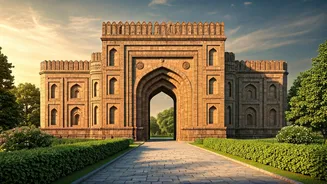
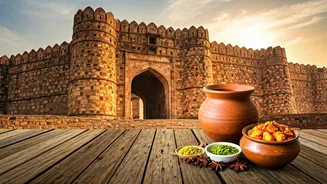
Our first stop is the Pink City, Jaipur, a place where history breathes through every sandstone structure. The magnificent Amer Fort, perched on a hill overlooking Maota Lake, is a testament to Rajputana grandeur. As you wander through its sprawling courtyards,
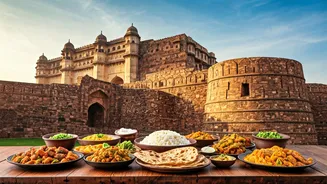
intricate mirror work in the Sheesh Mahal, and the imposing gates, you are walking through centuries of history. The climb, whether on foot or by vehicle, rewards you with panoramic views that are as epic as the tales of the kings who once lived here. The fort's blend of Rajput and Mughal architecture tells a complex story of alliances and aesthetics that defined an era. After immersing yourself in Amer’s regal past, it’s time to feast like royalty. Jaipur’s culinary scene is a direct descendant of its royal kitchens. A traditional Rajasthani thali is not just a meal; it’s an experience. Dive into the iconic Dal Baati Churma—a dish of baked dough balls served with spicy lentils and a sweet, crumbly wheat mixture. For the more adventurous, Laal Maas, a fiery mutton curry, offers a taste of the region's warrior spirit. End your meal with a creamy Ghevar, a disc-shaped sweet soaked in syrup. This is not just food; it’s edible history, with recipes passed down through generations.
Deccani Delights at Daulatabad
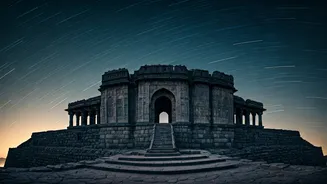
Moving south to Maharashtra, we find the formidable Daulatabad Fort near Aurangabad. This is not a fort for the faint of heart. Its genius lies in its defensive architecture—a labyrinth of dark passages, a towering 'Hathi Haud' (elephant tank), and a steep, spiralling tunnel designed to disorient and trap invaders. The climb to the top is challenging, but the reward is a breathtaking view and a deep appreciation for medieval military strategy. Originally named Devgiri, it was famously renamed by Muhammad bin Tughlaq who, in a moment of audacious ambition, moved his entire capital here from Delhi. This history of migration and conquest has profoundly shaped the region’s food. The cuisine of Aurangabad is a rich tapestry of Maharashtrian and Mughlai influences, often referred to as Deccani cuisine. After conquering the fort’s many steps, reward yourself with Naan Qaliya, a slow-cooked mutton curry that is unique to the city. It’s more fragrant than spicy, a subtle dish that speaks of its Persian roots. Vegetarians can indulge in a flavorful vegetable biryani or the local favourite, Gavran Thali, which showcases rustic, earthy flavours distinct from the coastal and urban parts of the state.
The Biryani Quest at Golconda
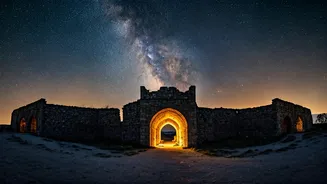
No list of forts and food is complete without Hyderabad and the legendary Golconda Fort. Once the capital of the Qutb Shahi dynasty, this citadel was renowned for its diamond mines, which produced gems like the Koh-i-Noor. The fort's acoustics are legendary; a clap at the entrance can be heard at the highest point, a kilometre away. Exploring its palaces, mosques, and water systems, you can almost hear the whispers of a rich and powerful past. The sound and light show in the evening brings these stories to life in a spectacular display. The culinary legacy of the Qutb Shahi and later the Nizams is, of course, the world-famous Hyderabadi Biryani. A trip to Golconda is incomplete without indulging in this aromatic masterpiece of rice, meat, and spices, cooked in the 'dum pukht' style. The flavours are deep, complex, and utterly satisfying. But don't stop at biryani. Try the rich and tangy Mirchi ka Salan (curried chilli peppers) or the hearty Haleem (a meat and lentil stew), especially if you're visiting during Ramzan. This culinary journey is the perfect complement to the historical grandeur of Golconda, a feast for the senses that lingers long after you leave.