




Our Sun, a Volatile Neighbour
The Sun, our life-giving star, has a turbulent personality. It regularly releases immense bursts of energy and matter in events known as space weather. These include solar flares, which are intense flashes of radiation, and coronal mass ejections (CMEs),
which are giant clouds of solar plasma and magnetic fields hurled into space. When Earth is in the path of these events, our planet's magnetic field and upper atmosphere are bombarded. This cosmic weather can have significant effects, not just creating beautiful auroras, but also posing a serious risk to the technology we depend on.
How Solar Storms Disrupt Our Digital Lifeline
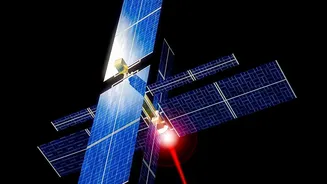
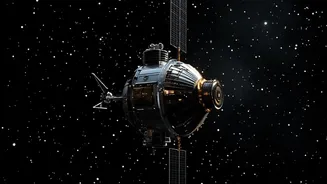
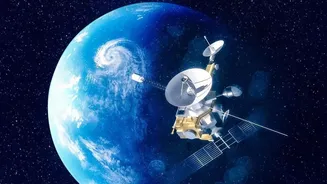
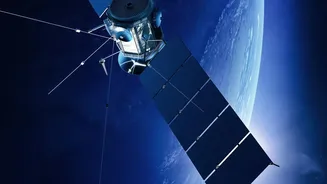
Satellites are particularly vulnerable to space weather. The flood of charged particles can damage sensitive electronics, essentially short-circuiting them. Solar flares can disrupt high-frequency radio waves, causing blackouts in communications. More subtly, these storms affect the ionosphere, the upper layer of our atmosphere that radio signals must pass through. This can bend, delay, or block signals from GPS and other navigation systems, reducing their accuracy from a few metres to tens of metres, or even causing a total loss of signal. For services in India that rely on precise location data, from ride-sharing apps to disaster management, such disruptions can have serious consequences. The 'flickering' can also affect satellite internet and DTH services, leading to connection drops and data loss.
From Shielding to Smarter Forecasting
Traditionally, protecting satellites involved 'hardening' them with radiation-resistant components and shielding. During severe solar storms, operators might even put a satellite into a protective 'safe mode', temporarily shutting down operations to avoid damage. Another issue is atmospheric drag; storms heat the upper atmosphere, causing it to expand and create more drag on low-Earth orbit satellites, forcing them to burn precious fuel to stay in orbit. However, these are reactive measures. The new frontier in satellite protection is proactive: forecasting. Just as we predict cyclones on Earth, scientists are developing sophisticated methods to predict space weather.
The New Era of Predictive Strategies
The latest research focuses on giving satellite and grid operators advanced warning. New missions and instruments are being designed to be placed far from Earth, providing hours of warning about incoming solar storms instead of just minutes. A key part of this is the increasing use of artificial intelligence. AI models are being trained on vast amounts of data from solar observatories to detect patterns and predict solar flares and CMEs with greater accuracy and speed than traditional methods. This predictive power allows for more nuanced responses than simply shutting everything down, saving fuel, extending satellite life, and ensuring more consistent service.
India's Eye on the Sun
India is a key player in this global effort with the Indian Space Research Organisation's (ISRO) Aditya-L1 mission. Positioned 1.5 million kilometres from Earth, Aditya-L1 has an uninterrupted view of the Sun. Its primary job is to study the Sun's activity and provide crucial data on solar winds and CMEs. Recent studies using Aditya-L1 data have already provided breakthrough insights into how solar storms interact with Earth's magnetic field, at times compressing it so much that satellites in geostationary orbit are briefly exposed to the harsh solar wind. This home-grown data is vital for India to develop its own space weather alerts, protecting its growing fleet of communication, navigation, and remote sensing satellites.