
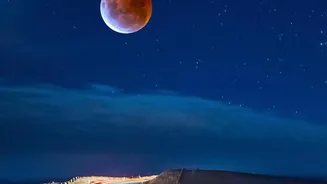
Know Your Eclipse: The Next Big Show
First things first: you need to know when to look up. While many minor eclipses occur, the next significant event for sky-gazers is the deep partial lunar eclipse on August 28, 2026. However, there's a catch for viewers in India. The entire event, from
the first touch of Earth's shadow at around 6:53 AM IST to its peak at 9:43 AM IST, happens during daylight hours across the subcontinent. This means the Moon will be below the horizon and not visible from India. But don't be disheartened. This guide will prepare you for any future visible lunar eclipse, and you can still catch the August 2026 event via live streams from observatories like Timeanddate.com and the Griffith Observatory. Planning is key for any celestial event, so even if the next major one is a virtual watch party, these steps will ensure you’re ready for the next one that graces our night sky.
Understanding the Celestial Dance
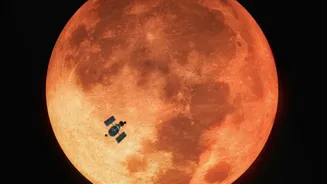
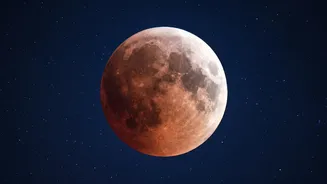
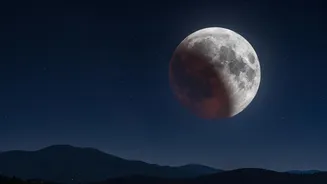
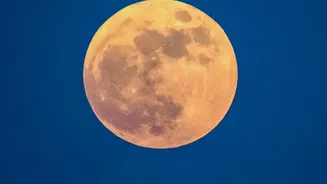
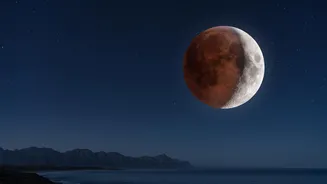
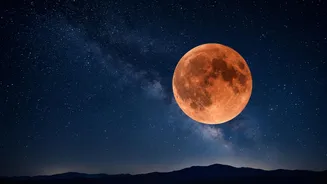
So, what exactly is a lunar eclipse? It happens when the Sun, Earth, and Moon align perfectly, with the Earth positioned in the middle. Our planet casts a shadow, and the Moon passes through it. This shadow has two parts: the faint outer shadow, called the penumbra, and the dark inner shadow, the umbra. A total eclipse occurs when the entire Moon enters the umbra, often turning a dramatic reddish colour known as a 'Blood Moon'. A partial eclipse, like the one in August 2026, is when only a part of the Moon passes through the umbra, looking as if a bite has been taken out of it. Unlike a solar eclipse, a lunar eclipse is completely safe to view with your naked eye, so no special glasses are needed.
Location, Location, Location
For any future eclipse that is visible at night from India, your viewing location is crucial. The goal is to escape light pollution. City lights wash out the night sky, dimming the stars and the subtle beauty of an eclipse. For the best experience, find a spot with a clear, unobstructed view of the sky, far from the glare of urban centres. This could be a rooftop in a less-lit part of town, the outskirts of your city, or a rural area. Some of India's best stargazing spots, renowned for their dark skies, include Hanle in Ladakh (India's first Dark Sky Reserve), Spiti Valley in Himachal Pradesh, the Rann of Kutch in Gujarat, and Coorg in Karnataka. Even if you can't travel to these pristine locations, a short drive away from city lights can make a huge difference.
Gather Your Eclipse-Watching Kit
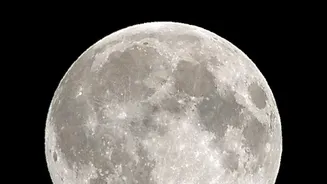
While you don't need any special safety equipment, a few items can elevate your viewing experience from simply watching to truly observing. Binoculars are a fantastic tool; they are easy to use and can reveal stunning details on the lunar surface as Earth's shadow creeps across it. If you have a telescope, even a small one, you can get a much closer look at the craters and seas of the Moon. Beyond optics, think about comfort. Since you'll be outside for a few hours, bring along foldable chairs or a blanket to lie on. Pack some warm clothes, as nights can get chilly even in warmer months. Don't forget snacks and a flask of a warm beverage to make the wait more enjoyable. And, especially if you're in a rural area, mosquito repellent is a must.
Capturing the Cosmic Moment
You don't need to be a professional photographer to capture the magic of a lunar eclipse. Even a smartphone can take decent pictures. The key is stability. Use a tripod or prop your phone against a stable object to avoid blurry shots. Turn off your flash and use your camera's 'pro' or 'night' mode if it has one. This allows you to manually adjust settings like ISO (keep it low to reduce noise) and shutter speed (you'll need a longer exposure). Tap on the Moon on your screen to set the focus. If you have a DSLR, use a telephoto lens to make the Moon appear larger. A tripod is essential here. Experiment with different settings, but a good starting point is a mid-range aperture (like f/8), a low ISO (100-400), and a shutter speed that you can adjust based on the brightness of the eclipse.
Make It a Memorable Night
A lunar eclipse is more than just an astronomical event; it's an opportunity to connect with the cosmos and with each other. Turn your viewing session into a special occasion. Invite friends or family and make it a celestial picnic under the stars. Share stories, point out constellations you know, and simply enjoy the shared sense of wonder. You can download a stargazing app on your phone beforehand to help identify stars and planets visible during the eclipse. By turning the viewing into an event, you transform it from a passive observation into an active, memorable experience, creating a tradition that you can look forward to for years to come.