

Why Is Venus So Dazzling This Month?
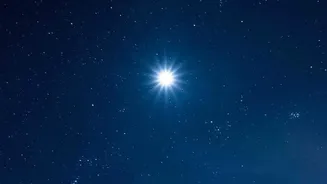
Venus is always one of the brightest objects in our night sky, but this September it will achieve what astronomers call its “greatest brilliancy.” This peak brightness, reaching a stunning magnitude of -4.8, is the result of a perfect cosmic alignment.
It’s not because Venus is fully illuminated. In fact, through a telescope, it would appear as a large, brilliant crescent. The peak brightness occurs because Venus is at a point in its orbit where the combination of its relative closeness to Earth and the large size of its sunlit crescent phase reflects the maximum amount of sunlight back to us. Its famously thick and highly reflective clouds, made of sulfuric acid droplets, also play a crucial role in bouncing sunlight, making it appear exceptionally bright.
The Best Time to View From India
The key period for Indian stargazers is throughout mid-September, with the planet officially reaching its greatest brilliancy around September 18, 2026. However, the spectacle will be impressive on the nights leading up to and following this date. The best time to look is in the evening, approximately 30 to 60 minutes after the sun has set. Venus will be visible in the twilight, appearing as the first and brightest point of light before other stars become visible. Your viewing window will last for about an hour before the planet itself dips below the horizon. Mark your calendars especially for the evening of September 14, when a beautiful, thin crescent moon will appear very close to Venus, creating a stunning celestial pairing.
What Direction Should You Look?
To spot the brilliant planet, you will need to face the correct direction. From anywhere in India, look towards the west or west-southwest horizon just after sunset. Venus will be quite low in the sky, so a clear and unobstructed view is essential for the best experience. It won't be hard to identify; Venus is so bright that it is often mistaken for an airplane or even a UFO. A key difference is that planets tend to shine with a steady, unwavering light, whereas stars appear to twinkle. Its sheer brightness will make it stand out dramatically against the deepening blue of the twilight sky.
A Special Event: The Lunar Occultation
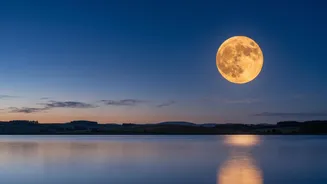
For dedicated sky-watchers, September 14 offers a rare treat. On this day, the Moon will pass directly in front of Venus, an event known as a lunar occultation. This will be visible across large parts of Asia, Africa, and Europe during the daytime. While observing this during the day can be challenging, the close approach of the Moon and Venus in the evening sky on the same date will be a magnificent sight for everyone. Even with the naked eye, seeing the crescent moon and the brightest planet in a close embrace is an unforgettable experience.
Tips for the Best Viewing Experience
You don't need any special equipment to enjoy this celestial event, as Venus is easily visible to the naked eye. For the best view, try to find a location with minimal city lights and a clear view of the western horizon. Parks, open fields, or even the rooftop of a tall building can work well. Give your eyes about 15-20 minutes to adjust to the darkness, which will help you see the planet more clearly. If you have a pair of binoculars, bring them along. While they won't show surface details, they will make Venus appear as a distinct disk rather than a point of light and may even reveal its beautiful crescent phase. Finally, check your local weather forecast for a clear evening sky.