





The Billion-Dollar Graveyard
For as long as we have launched objects into orbit, we have faced a simple, expensive problem: they eventually fail or run out of fuel. A communications satellite can cost hundreds of millions of dollars to build and launch, yet a 15-year operational
lifespan is typical before its fuel is depleted. Once the onboard propellant used for positioning is gone, the satellite, often with perfectly functional electronics, becomes just another piece of space junk. This has created a literal graveyard of defunct, multi-million dollar assets floating thousands of kilometres above Earth. The only solution was to launch a costly replacement. This disposable approach has not only been expensive but has also contributed to the growing problem of orbital debris, which threatens both current and future missions.
A Tow Truck for the Stars
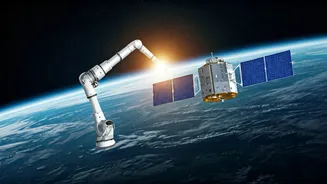
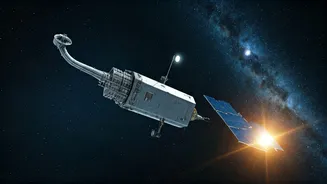
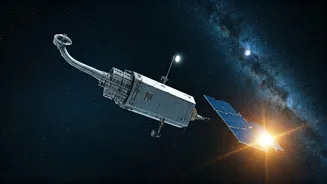
The game is changing thanks to a handful of pioneering companies. Northrop Grumman, through its subsidiary SpaceLogistics, has proven the concept with its Mission Extension Vehicle (MEV). In 2020, in a historic first for commercial spacecraft, MEV-1 successfully docked with the Intelsat 901 satellite, which was out of fuel. The MEV essentially acts as a jetpack, latching onto the client satellite and taking over its propulsion and attitude control, giving the older satellite a new lease on life. After a five-year mission, MEV-1 successfully moved Intelsat 901 to a final 'graveyard' orbit in 2025 and is now moving on to its next client, proving the technology can be reused. A second vehicle, MEV-2, has been providing similar services to another Intelsat satellite since 2021.
More Than Just a Jump-Start
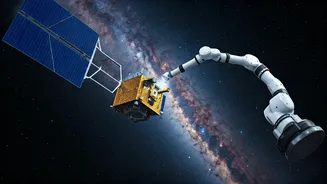
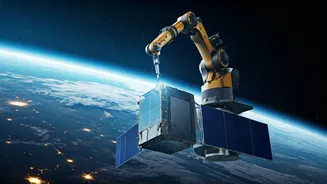
Life extension is just the beginning. The industry is rapidly moving toward more complex services. Future robotic servicing vehicles are being designed to do more than just push. Concepts include refueling, component repair and replacement, and even in-orbit assembly of large structures. Companies like Japan's Astroscale are also tackling the problem from a different angle, focusing on active debris removal. Their ADRAS-J spacecraft successfully demonstrated a close approach to a large piece of rocket debris, a critical first step toward capturing and de-orbiting it. Meanwhile, NASA recently selected startup Katalyst Space for a mission to boost the orbit of the aging Neil Gehrels Swift Observatory, a critical science telescope whose orbit is decaying. These missions are building an entire infrastructure for a future where satellites are not just launched, but maintained, upgraded, and managed throughout their lifecycle.
The New Economics of Orbit
The business case for on-orbit servicing is compelling. For satellite operators, paying for a life-extension service is significantly cheaper than building and launching a brand-new replacement. This frees up capital that can be directed toward new technologies and services. This emerging market was valued at approximately $1.8 billion in 2025 and is projected to grow significantly as the technology matures. The availability of these services fundamentally changes the risk equation for satellite operators and insurers. It introduces flexibility into fleet management, allowing companies to squeeze more value from their existing assets. Furthermore, new regulations, such as those from the U.S. Federal Communications Commission requiring faster de-orbiting of defunct satellites, are creating a built-in demand for end-of-life services, further fueling the market.