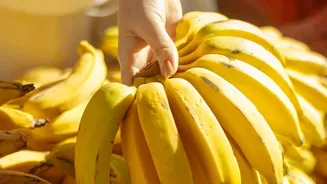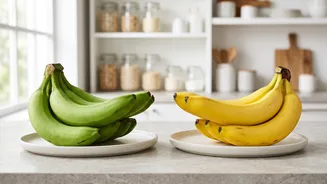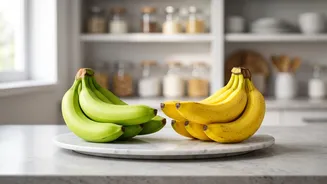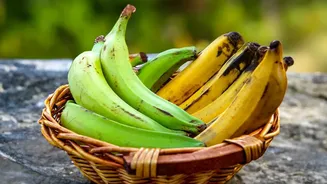






It’s a daily kitchen drama: the green banana you bought yesterday is now a cheerful yellow. But this colour shift is more than just cosmetic. It signals a profound nutritional transformation, turning one fruit into two very different experiences.
The Science of Sweetness
The fundamental
difference between a raw, green banana and a soft, yellow one lies in its carbohydrates. A green banana is packed with resistant starch, a complex carb that, as its name suggests, 'resists' digestion. As the banana ripens—a process triggered by the release of a natural plant hormone called ethylene gas—enzymes get to work converting this starch into simple sugars like sucrose, glucose, and fructose. An unripe banana can be composed of up to 80% starch by dry weight, but by the time it's fully ripe, that number plummets to less than 1%. This chemical change is what makes a ripe banana taste significantly sweeter.
Raw Bananas: A Prebiotic Powerhouse
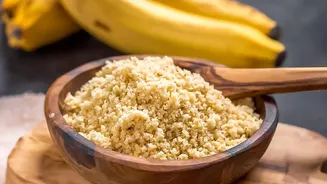
That firm, slightly bitter green banana is a champion for gut health. Because the resistant starch in it passes through the small intestine undigested, it functions as a prebiotic. This means it becomes food for the beneficial bacteria in your large intestine. A healthy gut microbiome is linked to numerous benefits, including better digestion, improved immunity, and even enhanced mood. This starch also makes green bananas more filling, which can help with weight management by increasing feelings of satiety. In many parts of India, raw bananas are used as a vegetable, often cooked into curries and other dishes, providing these starchy benefits.
Ripe Bananas: Quick Energy and Antioxidants
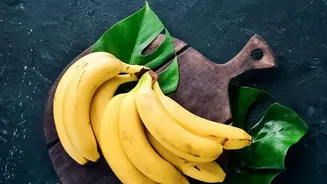
As the starch converts into sugar, the ripe yellow banana becomes a source of quick, easily digestible energy. This makes it an excellent snack for athletes or anyone needing a rapid energy boost before physical activity. While some micronutrients might degrade as a banana ages, the antioxidant levels actually increase during ripening. Those little brown spots you see on a very ripe banana are indicators of higher antioxidant concentrations. These compounds help combat oxidative stress in the body. Ripe bananas are also generally easier to digest for most people, as the breakdown of complex starches means your stomach has less work to do.
The Glycemic Index Difference
How a banana affects your blood sugar is also directly tied to its ripeness. The glycemic index (GI) is a scale that ranks how quickly a carbohydrate-containing food raises blood glucose levels. Thanks to their high resistant starch content, green bananas have a low GI, typically around 30-42. This means they cause a slower, more gradual rise in blood sugar, making them a better choice for individuals managing diabetes or blood sugar levels. In contrast, a fully ripe banana has a medium GI, ranging from about 51 to 62, because its simple sugars are absorbed into the bloodstream more quickly.
Which Banana Is Better for You?
Ultimately, there is no 'superior' banana. The best choice depends entirely on your personal health goals and preferences. If you're focused on gut health and want to maintain stable blood sugar, a less ripe, greenish-yellow banana is ideal. It will provide a sustained release of energy and feed your healthy gut bacteria. If you need a quick source of fuel before a workout, want a sweeter taste, or have a more sensitive digestive system, a fully ripe yellow banana is the perfect option. Both versions offer valuable nutrients like potassium and vitamin B6. The key is understanding how the fruit changes and choosing the stage of ripeness that best suits your body's needs at any given moment.