



The Blueprint in the Blood
For decades, scientists suspected that the impulse to migrate and the ability to navigate were inherited. Now, they are proving it by digging into the genetic code of migratory animals. Research is identifying specific genes that appear to be linked to this
incredible ability. Studies on species like rainbow trout and monarch butterflies have found 'candidate genes' that seem to switch on in response to magnetic fields. One of the leading theories revolves around a class of light-sensitive proteins called cryptochromes, found in the eyes of birds and other animals. When these proteins are exposed to light, they can create pairs of molecules with entangled electrons, a quantum phenomenon. The Earth's magnetic field, though weak, can influence these electrons, potentially creating a visual pattern in the bird's eye that it can 'see' and use as a compass. This suggests that for some species, the navigation toolkit isn't just learned; it's a fundamental part of their genetic makeup.
A Map Inside the Mind
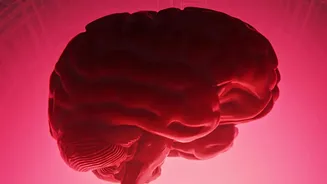
Having a genetic compass is one thing, but how does an animal's brain process this information to create a mental map? This is where brain science comes in. Neuroscientists are now able to study the neural activity in freely behaving animals, offering unprecedented insight into their internal navigation systems. In mammals and insects, researchers have identified specific brain cells—like head-direction cells and place cells—that act like an internal GPS, firing only when the animal is in a particular location or facing a certain direction. Similar studies in birds are revealing how their brains process magnetic information. For instance, some research suggests that birds might have two separate magnetic senses: a compass in the eye based on cryptochromes, and a 'map' sense connected to the trigeminal nerve, possibly linked to tiny magnetic particles (magnetite) found in the beak or inner ear. By exposing animals to artificial magnetic fields and observing the changes in brain activity, scientists can pinpoint which neural circuits are responsible for processing this invisible information.
The Big Picture from Above
While genetics and neuroscience provide clues about the internal mechanisms, satellite ecology gives scientists the context of the entire journey. By fitting animals with tiny, lightweight satellite tags, researchers can track their movements across vast oceans and continents with incredible precision. This technology, which has become increasingly miniaturized, allows for the monitoring of everything from massive whales to small songbirds without impeding their movement. Ambitious projects like ICARUS (International Cooperation for Animal Research Using Space) aim to create a global network monitoring thousands of tagged animals at once from space. This provides a massive dataset showing the exact routes, stopover points, and timing of migrations. This large-scale data reveals patterns that could never be observed from the ground, helping scientists understand how animals respond to weather, find food, and avoid obstacles over thousands of kilometres.
Putting It All Together
The true breakthrough in understanding animal navigation comes from combining these three fields. The satellite data shows the 'what' and 'where' of migration—the precise, real-world behaviour of the animals. Genetic analysis then helps explain the 'why'—the innate, inherited abilities that drive these journeys. Finally, brain science reveals the 'how'—the neural hardware and software that process sensory inputs like magnetic fields and turn them into navigational decisions. For example, by tracking a flock of birds with satellites, scientists can see how experienced older birds fly straighter, more efficient routes than younger ones. This behavioural data can then be correlated with studies on how the avian brain learns and refines its internal map over time. This integrated approach allows scientists to move beyond isolated theories and build a complete picture of how an animal experiences and navigates its world, from the quantum level in its eye to the continental scale of its journey.