



The idea of giant cargo ships navigating the oceans without a human crew sounds like science fiction. But it's getting closer to reality, and a key challenge is ensuring they can do it safely. Enter SeaNav, a new platform from IIT Madras.
What Exactly is SeaNav?
SeaNav, short
for Sea Navigation, is a sophisticated virtual testing ground developed by researchers at the Indian Institute of Technology Madras. Think of it as an ultra-realistic video game for self-driving ships. It's what technologists call a 'digital twin' platform. This means it creates a high-fidelity, real-time simulation of the maritime environment. Instead of risking a billion-dollar vessel and its cargo on the open seas to test a new piece of code, developers can run their autonomous navigation systems through thousands of scenarios within SeaNav's safe, virtual world. The platform, built on the Unity3D engine, can realistically replicate everything from ocean waves and vessel movements to complex port environments and vessel traffic.
The High-Stakes Problem It Solves
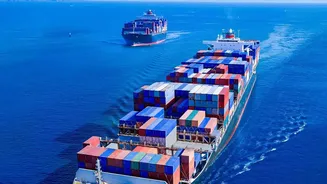
The global shipping industry is the backbone of world trade, carrying over 80% of all goods. Introducing autonomy promises to make this system more efficient and even safer by reducing human error. However, the 'testing' phase is a massive hurdle. Real-world trials are not only incredibly expensive and complex but also potentially dangerous. An autonomous ship must be able to navigate crowded shipping lanes, avoid collisions with other vessels, handle unpredictable weather, and manoeuvre safely in and out of ports. A single software bug could lead to a catastrophic accident, an environmental disaster like an oil spill, or massive financial losses. SeaNav directly addresses this by providing a risk-free environment to validate that a ship's AI can handle these challenges flawlessly before it ever touches water.
Inside the Virtual Ocean
SeaNav's power lies in its detail. The platform, developed by the Department of Ocean Engineering, isn't just a simple map. It's a dynamic world that combines digital twins with artificial intelligence and advanced sensor simulation. Researchers can test how a ship's AI processes information from virtual sensors and reacts to various situations. For instance, they can simulate a multi-vessel scenario to test and perfect collision avoidance algorithms. The simulator has been calibrated and benchmarked using data from a 320-meter-long tanker, ensuring that the results generated in the virtual environment are a close reflection of what would happen with a real-world commercial ship.
A Boost for 'Made in India' Maritime Tech
This innovation from IIT Madras is more than just an academic project; it's a significant step for India's ambitions in maritime technology. The development of SeaNav aligns perfectly with national initiatives like the 'Sagarmala Programme' and the 'Maritime India Vision 2030', both of which emphasize the need for smart ports, digital technologies, and autonomous systems. By creating a reliable platform for developing AI-assisted navigation, SeaNav can help enhance safety and efficiency at major Indian ports such as Chennai, Mumbai, Visakhapatnam, and Kochi. Beyond commercial shipping, the technology has potential applications in coastal surveillance, search-and rescue operations, and even maritime defence, strengthening India's indigenous technological capabilities in a critical sector.