




Not Your Grandfather’s Sauna
When you picture a sauna, you probably imagine a wood-panelled room, hot rocks, and billows of steam. That’s a traditional Finnish sauna, which works by heating the air around you to very high temperatures, often between 65 to 90 degrees Celsius. This
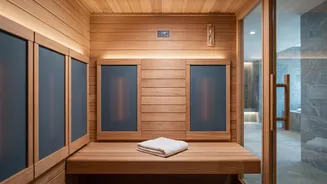
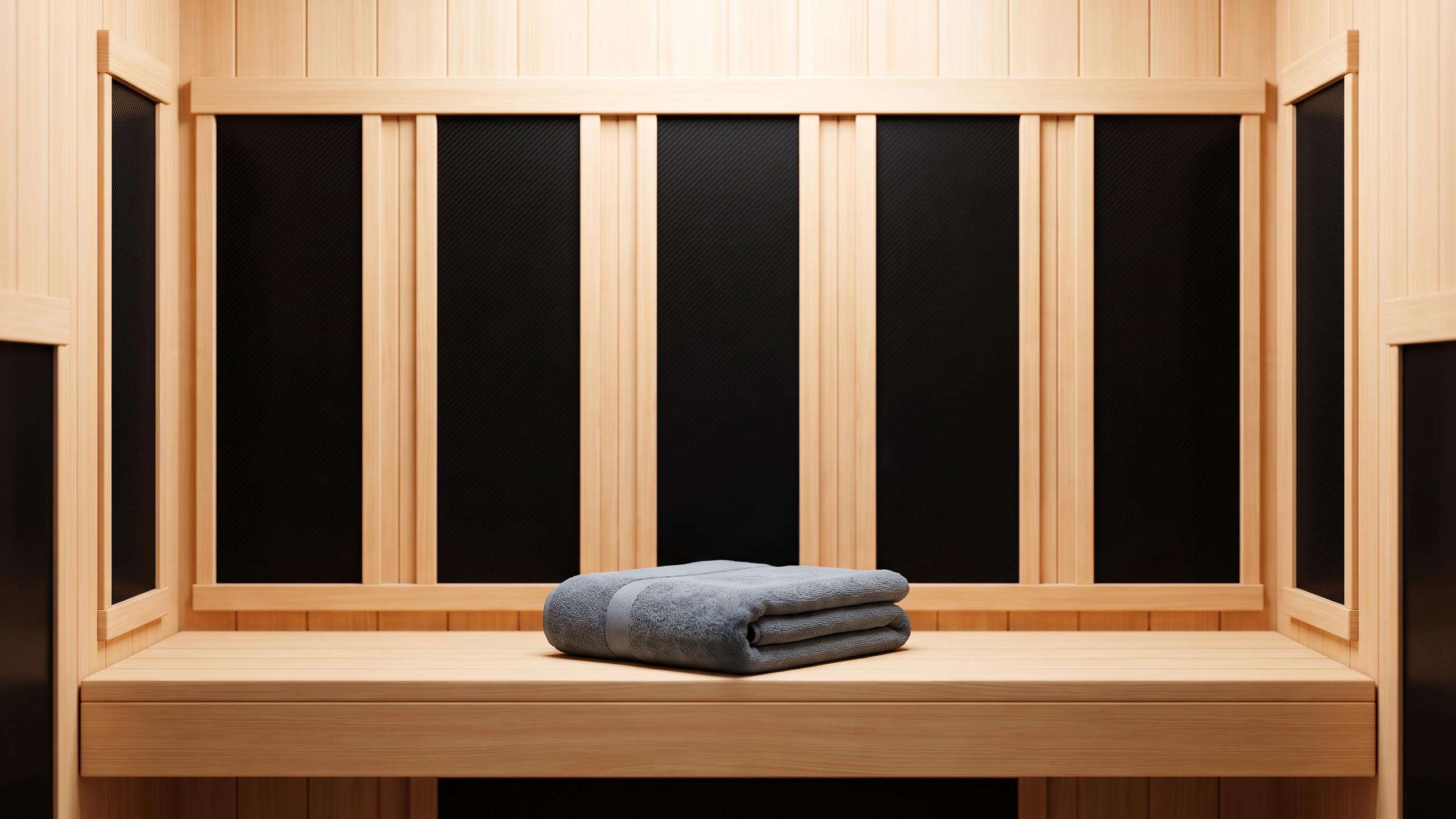
process, called convection, heats your body from the outside in. Infrared saunas operate on a completely different principle. They use special heaters to emit infrared light, a type of radiant heat that warms your body directly without needing to dramatically heat the air. This results in a much lower ambient temperature, typically between 49 and 65 degrees Celsius, which many people find more comfortable for longer sessions. The experience is less about enduring intense, steamy air and more about feeling a deep, penetrating warmth.
The Science of Invisible Light
So, what exactly is this invisible light? Infrared is a safe type of electromagnetic radiation with a wavelength longer than that of visible light. You can't see it, but you can feel it as heat. The sun, a fire, and even your own body emit infrared radiation. In saunas, this spectrum is often broken down into three categories: near-infrared (NIR), mid-infrared (MIR), and far-infrared (FIR). Near-infrared has the shortest wavelength and penetrates the skin's surface, while mid-infrared reaches deeper into soft tissues. Far-infrared has the longest wavelength, allowing it to penetrate several centimetres to reach deeper into the body, including muscles and joints. Most wellness-focused infrared saunas use far-infrared or full-spectrum heaters that combine all three to deliver a range of therapeutic effects.
Heating from the Inside Out
The key difference is how this radiant heat interacts with your body. Instead of just warming your skin, far-infrared waves travel deeper, exciting the water molecules in your tissues. This generates heat from within, raising your core body temperature. This internal warming process is what makes infrared saunas feel so different. It triggers a deep, detoxifying sweat at a lower, more comfortable air temperature. Because the energy is focused on warming your body and not the air, it’s a more efficient way to induce a therapeutic heat response. Your body works to cool itself down, which elevates your heart rate and increases circulation, similar to the effects of moderate exercise. This is the core of what is known as passive heat therapy.
Passive Therapy for Active Muscles
This direct heating mechanism is particularly beneficial for muscles. The increased circulation delivers more oxygen and nutrient-rich blood to muscle tissues, which is critical for healing and recovery. At the same time, this enhanced blood flow helps flush out metabolic waste products that accumulate during exercise and contribute to soreness. Studies have shown that infrared sauna use after a workout can help reduce delayed-onset muscle soreness (DOMS) and preserve muscle performance. The warmth makes connective tissues more pliable, which can reduce stiffness and improve flexibility. It’s considered “passive” therapy because it can induce physiological responses similar to light exercise without you having to move a muscle, making it a powerful tool for recovery.
Benefits Beyond the Muscles
While muscle recovery is a primary benefit, the effects of passive heat therapy don't stop there. The deep relaxation state induced by the gentle warmth helps balance the nervous system, shifting it from a 'fight-or-flight' mode to a 'rest-and-digest' state. This contributes to stress reduction and can improve mood and overall well-being. The activation of heat shock proteins—a special class of proteins that help protect cells from stress and repair damage—is another significant benefit linked to regular heat exposure. Research into the benefits of infrared saunas is ongoing, but evidence suggests positive effects on everything from cardiovascular function to skin clarity. Like any wellness practice, its effectiveness is enhanced when combined with a healthy lifestyle.