
What Am I Looking For?
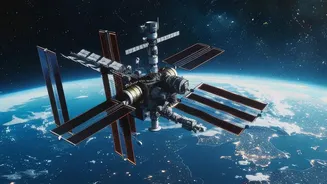
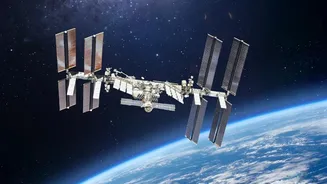
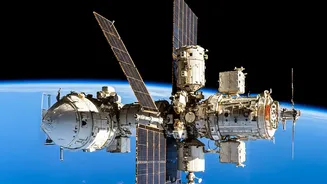
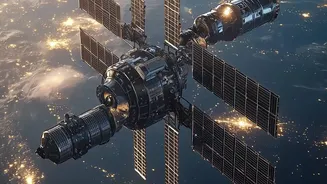
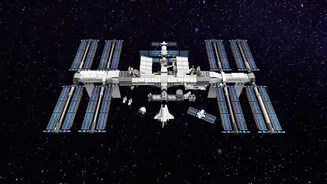
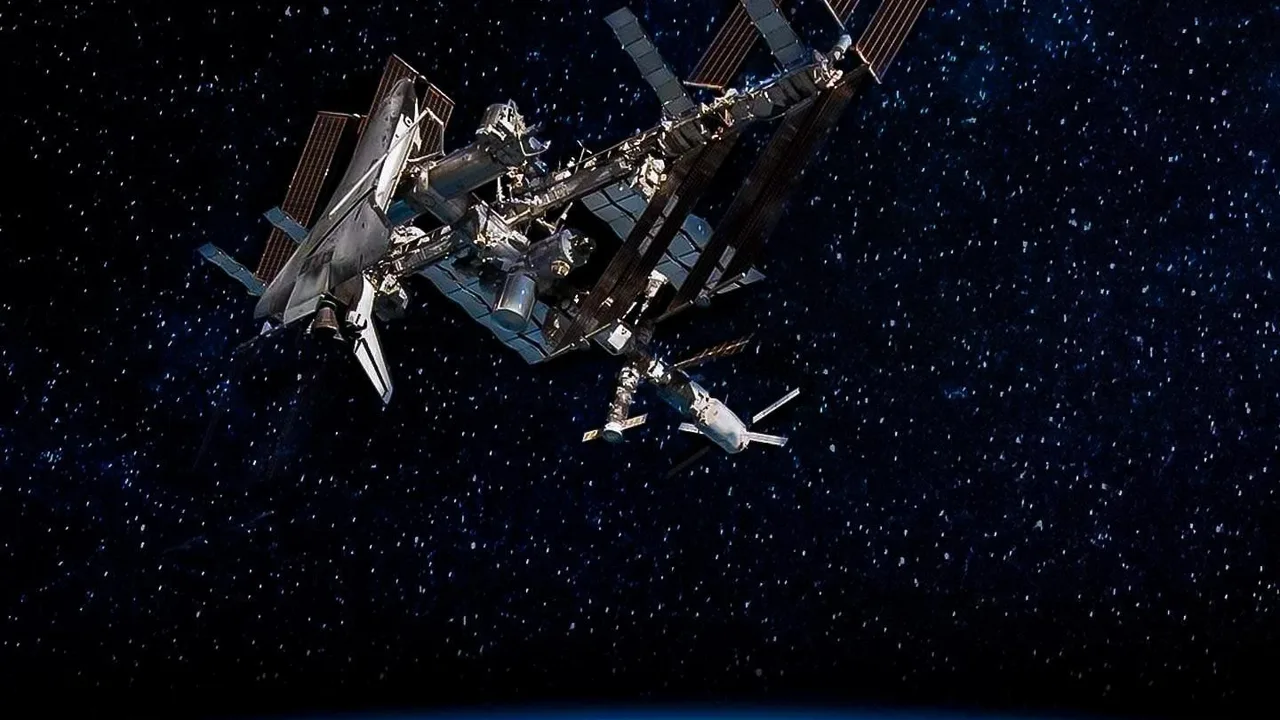
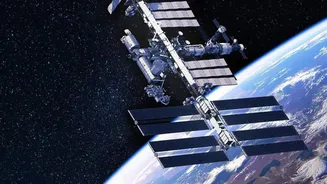
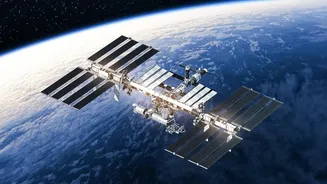
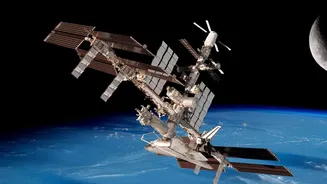
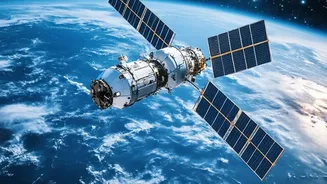
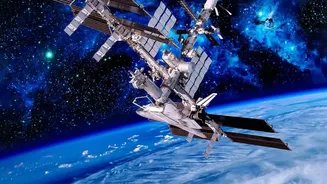
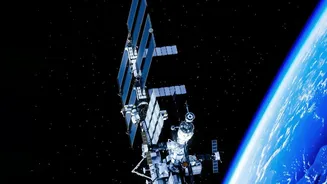
Before you start searching the skies, it helps to know what you’re trying to find. The International Space Station (ISS) is a large spacecraft that orbits Earth at an altitude of about 400 kilometres. It serves as a home and science laboratory for astronauts
from around the world. To the naked eye, it doesn’t look like a sprawling complex of modules. Instead, it appears as a very bright, star-like point of light moving silently and steadily across the sky. Unlike an aeroplane, it won't have flashing or blinking lights. Its brightness comes from the sun's light reflecting off its massive solar panels. It moves faster than most planes, typically crossing from one horizon to the other in just a few minutes. Because it's reflecting sunlight, the best viewing times are shortly after sunset or just before sunrise, when your location is dark but the station is still high enough to catch the sun's rays.
The Best Tool: NASA's Spot The Station Service
The easiest and most reliable way to find out when the ISS will be visible from your specific location is by using NASA's own 'Spot The Station' service. This free tool allows you to sign up for email or text message alerts for upcoming sighting opportunities. You can visit the Spot The Station website and enter your city. The system will then show you a list of dates and times for potential sightings. The service is incredibly user-friendly. Just search for your nearest major Indian city—be it Delhi, Mumbai, Kolkata, Chennai, Bengaluru, or hundreds of smaller towns—and the website will generate a schedule. Signing up for alerts means you’ll get a notification a day or so in advance, giving you plenty of time to prepare for the celestial show. This removes all the guesswork and is the most recommended method for beginners.
Understanding Sighting Information
When you look up a sighting schedule, you’ll see a few key pieces of information. 'Max Height' tells you how high the station will be in the sky, measured in degrees. 90 degrees is directly overhead, while 10 degrees is very low on the horizon. The higher the max height, the better and brighter the view will be. 'Appears' and 'Disappears' will tell you where to look, using compass directions like 'NW' (North-West) or 'SE' (South-East). 'Visible' indicates how long you'll be able to see it. For example, a great sighting might last for over five minutes and reach a high elevation, making it unmissable on a clear night. Shorter sightings of one or two minutes, especially at low elevations, can be harder to catch. For instance, in the coming week, spotters in New Delhi can look for a bright pass lasting over six minutes, while Bengaluru might have several good opportunities just before dawn.
Other Useful Apps and Websites
While NASA's service is excellent, several other apps and websites offer detailed tracking. 'Heavens-Above' is a long-standing favourite among satellite watchers, providing detailed star charts that show the ISS's path against the constellations. For smartphone users, apps like 'ISS Detector' and 'GoISSWatch' provide real-time tracking on a map, alerts, and even use your phone's compass to point you in the right direction. Many of these apps also allow you to track other satellites, including the Hubble Space Telescope or Starlink satellite trains, turning your sky-watching hobby into a more expansive exploration of what's orbiting above us. They are great companions to have on your phone for spontaneous stargazing sessions.
Tips for the Perfect Viewing Experience
To make the most of your ISS sighting, a little preparation goes a long way. First, find a location with a clear view of the horizon, away from tall buildings and trees. The darker your surroundings, the better, as city light pollution can make it harder to see. Step outside about ten minutes before the scheduled sighting time to allow your eyes to adjust to the dark. Double-check the 'Appears' direction from your tracking app or website so you know where to focus your gaze. You don't need a telescope or binoculars; the ISS is one of the brightest objects in the night sky and is easily visible to the naked eye. Finally, be patient. Sometimes it takes a moment to spot the moving light as it emerges from the horizon. Sharing the experience with family or friends can make it even more memorable.