

A Sanctuary for the Stars
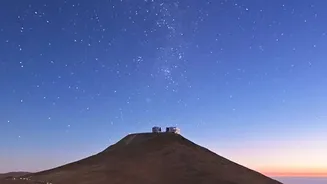
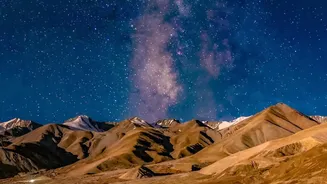
Deep in the Changthang region of Ladakh, an area of profound silence and beauty, lies the Hanle Dark Sky Reserve. Designated in December 2022, it is India's first official sanctuary dedicated to preserving the natural darkness of the night sky. Covering
an area with a radius of about 22 kilometres, the reserve is a collaborative effort between the UT Ladakh administration, the Ladakh Autonomous Hill Development Council (LAHDC), and the Indian Institute of Astrophysics (IIA). This partnership ensures that the darkness here isn't just a lucky accident of geography but a protected resource, shielding the heavens from the ever-growing problem of artificial light pollution.
Why Hanle, Ladakh?
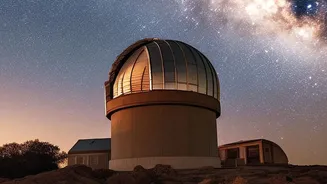
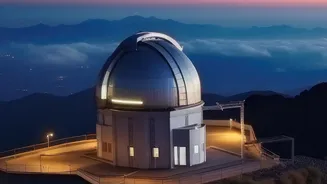
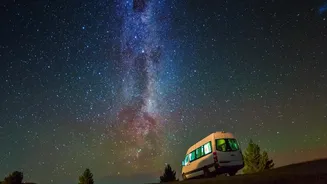
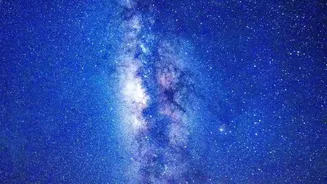
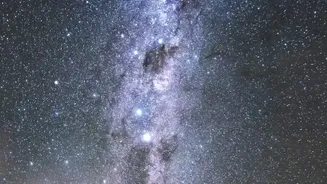
Hanle’s selection was no coincidence; it is one of the best places on Earth for looking at the stars. Sitting at a staggering altitude of 4,500 metres (nearly 14,800 feet), the air is thin, cold, and exceptionally dry, which means less atmospheric distortion. The region boasts over 250 clear, cloudless nights a year, making it a paradise for astronomers. For decades, this unique combination has made it the home of the Indian Astronomical Observatory (IAO), one of the world's highest observatories, operated by the IIA. The near-total absence of urban development means light pollution is practically non-existent, giving Hanle a Bortle Class 1 rating—the darkest possible sky, where the Milky Way can be bright enough to cast shadows.
More Than Just a Celestial View
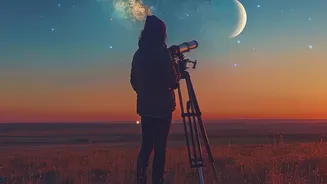
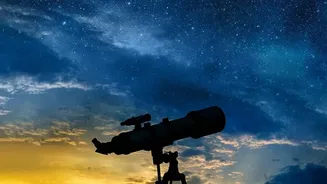
The Hanle Dark Sky Reserve is about more than just science; it's a pioneering model for sustainable development. The initiative is deeply rooted in community involvement, transforming the local economy through astro-tourism. The IIA has trained dozens of local residents, many of them women, as 'Astronomy Ambassadors'. Equipped with powerful telescopes, these guides offer paid stargazing sessions to visitors, ensuring that tourism revenue directly benefits local families. This new source of income has spurred the growth of homestays and other services, creating a local economy that thrives on preserving the natural environment rather than altering it. Furthermore, protecting the dark skies also benefits the fragile ecosystem of the Changthang Wildlife Sanctuary by safeguarding the natural behaviours of nocturnal wildlife.
The Fight Against Light Pollution
Light pollution is a global issue with far-reaching consequences. It disrupts human sleep cycles by suppressing melatonin production, impacts wildlife migration and reproduction, and wastes enormous amounts of energy. In most cities, the glow from artificial lights completely washes out the night sky, making it impossible to see anything but the brightest stars and planets. The Hanle reserve counters this by implementing strict light-discipline practices. Local communities have adopted measures like using shielded outdoor lights, installing thick curtains, and restricting vehicle high beams within the reserve's boundaries. These simple but effective rules are crucial for maintaining the pristine darkness that makes Hanle so special for both scientific research and tourism.
Planning Your Celestial Escape
A trip to Hanle requires careful planning but offers an unparalleled reward. The best time to visit is from May to September when the weather is clear and roads are accessible. To witness the Milky Way in all its glory, plan your trip around the new moon when the sky is at its darkest. Due to the extreme altitude, acclimatisation is critical; travellers should spend at least two to three days in Leh before proceeding to Hanle to avoid altitude sickness. Visitors also need to obtain an Inner Line Permit (ILP) due to the area's proximity to the border. Once there, the experience is truly transformative. Under the guidance of a local astronomy ambassador, you can gaze upon the rings of Saturn, see the Andromeda Galaxy with your naked eye, and watch the Perseid meteor shower in August without any city lights to dim the show.