



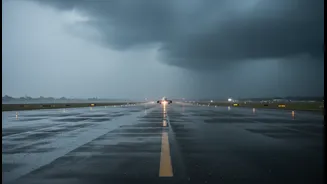


The Annual Monsoon Challenge
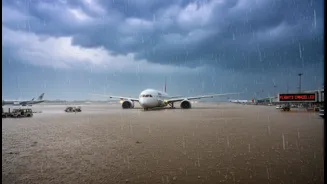
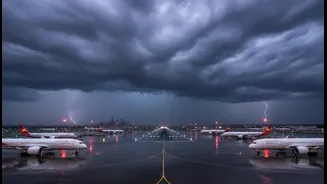
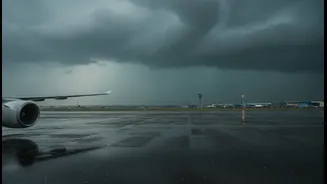
For travellers in the capital, the monsoon brings a familiar sense of dread. Heavy downpours, a recurring feature of Delhi's weather, consistently test the limits of the Indira Gandhi International (IGI) Airport's operational capacity. Recent days have
seen a fresh wave of disruptions, with major airlines like IndiGo, Air India, and SpiceJet issuing advisories due to adverse weather. The primary culprits are low visibility, which makes landings and take-offs hazardous, and strong winds that can force aircraft to divert. On Sunday, for instance, 15 incoming flights had to be diverted to Jaipur and Lucknow due to unsafe landing conditions. Beyond the airfield, the journey to the airport itself becomes an obstacle course, with widespread waterlogging causing severe traffic snarls on key routes like the Outer Ring Road and NH-48 near the airport.
Before You Leave Home: The Digital Checklist
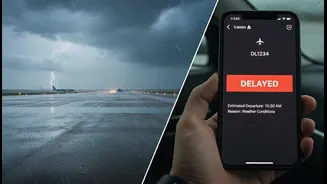
The first rule of monsoon travel is to stay informed. Airlines are now required to provide accurate, real-time information about flight delays. Before you even think about booking a cab, make it a habit to check your flight status. All major carriers, including IndiGo and Air India, have urged passengers to use their official websites and mobile apps for the most current updates. These platforms are your most reliable source of information on delays, cancellations, or gate changes. Many airlines will also send proactive notifications via SMS or email if your flight is affected. Given the unpredictable nature of the weather — the IMD has issued alerts for continued rain — it is wise to complete your web check-in from home. This saves you time at the airport and ensures you have a boarding pass, which can be crucial if you're running late due to traffic.
Mastering the Commute to the Airport
The journey to the airport is often the most unpredictable part. Recent rains have caused significant waterlogging and traffic chaos across Delhi-NCR, with Gurugram police even advising companies to allow employees to work from home to reduce congestion. Key roads leading to the airport are frequently affected. Therefore, you must budget for extra travel time — significantly more than you usually would. Check local traffic updates on mapping services before you depart. If possible, consider using the Delhi Metro's Airport Express Line, which is insulated from road traffic and offers a more reliable way to reach Terminal 3. Airlines have explicitly advised passengers to allow for extra commute time due to rain-induced traffic.
Navigating the Terminal and Your Rights
Once you're at the airport, patience is key. Even if your flight is on time, the system-wide effects of bad weather can lead to longer queues for security and check-in. Keep your devices charged and perhaps carry a power bank, as you may spend more time waiting than anticipated. It is also important to know your rights as a passenger. According to guidelines from the Directorate General of Civil Aviation (DGCA), airlines are obligated to provide certain facilities in case of significant delays or cancellations. If a flight is cancelled or delayed beyond a certain threshold due to reasons within the airline's control, you are entitled to meals, refreshments, and potentially a refund or an alternative flight. While weather-related disruptions are often considered 'force majeure' and may limit compensation, airlines are still expected to communicate clearly and offer assistance. The DGCA has specifically instructed airlines to cancel flights anticipated to be delayed by more than three hours in advance to reduce airport congestion.