




Dhoni: The Architect of Trophies
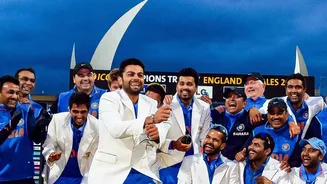
Mahendra Singh Dhoni's legacy is etched in silverware. He is the only captain in cricket history to win all three major ICC trophies: the 2007 T20 World Cup, the 2011 ODI World Cup, and the 2013 Champions Trophy. This unparalleled success in knockout
tournaments defines his era. Dhoni's leadership was a study in calmness and intuition. Known as 'Captain Cool', he built a culture of belief and stability, often making bold, instinctive decisions that paid off on the biggest stage, like giving the final over to Joginder Sharma in 2007. He inherited a team of fading legends and managed the transition, backing young players who would form the core of India's future success. Dhoni’s transformation was about turning a talented team into a clutch, title-winning unit. He led India to the pinnacle of Test rankings in 2009, but his most significant impact came in white-ball cricket, where he taught India how to win the big moments, culminating in the historic 2011 World Cup victory on home soil.
Kohli: The Forger of a Fitness Revolution
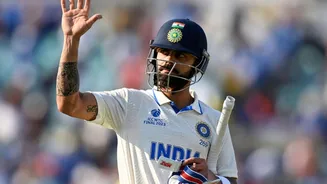
Where Dhoni brought trophies, Virat Kohli brought a revolution. His transformation of Indian cricket was rooted in fitness and intensity. Taking over the Test captaincy in 2014, Kohli introduced a non-negotiable fitness culture that fundamentally reshaped the team. He institutionalised the 'Yo-Yo' test as a selection benchmark, ensuring every player met elite athletic standards. This focus on physical conditioning was designed to make India a dominant force in all conditions, especially in challenging SENA countries (South Africa, England, New Zealand, Australia). Kohli's own discipline—from his strict diet to his rigorous training—set the example, and the team followed. Players became faster, more agile, and capable of sustaining high intensity for all five days of a Test match. This physical transformation was the bedrock of his entire captaincy philosophy.
A New Era of Test Dominance
Kohli's primary goal was to make India the best Test team in the world, and by many metrics, he succeeded. He is India's most successful Test captain, with 40 wins in 68 matches. His philosophy was aggressive and result-oriented. Unlike Dhoni's more conservative approach in Tests, Kohli always pushed for a win, famously preferring to play five specialist bowlers to ensure he had the firepower to take 20 wickets. This strategy led to the development of a fearsome fast-bowling arsenal, with bowlers like Jasprit Bumrah, Mohammed Shami, and Ishant Sharma flourishing under his leadership. Under Kohli, India achieved a historic first-ever Test series win in Australia in 2018-19 and held the ICC Test mace for five consecutive years. While an ICC trophy eluded him as captain, he transformed India into a team that could consistently win Test matches anywhere in the world, a feat that had long been a dream for Indian fans.
Two Sides of the Same Coin
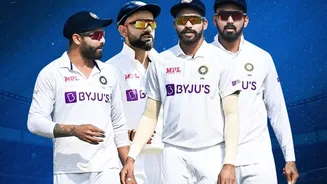
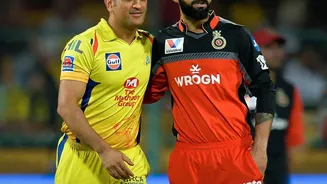
The transition from Dhoni to Kohli was gradual and supportive. Dhoni stepped down from Test captaincy in 2014 and limited-overs captaincy in 2017, ensuring a smooth handover to Kohli, whom he mentored. Their leadership styles were starkly different—Dhoni's calm pragmatism versus Kohli's fiery aggression—but they were complementary. Dhoni built a champion team by mastering pressure and winning global tournaments. He provided the foundation. Kohli took that foundation and built a supremely fit, relentlessly aggressive unit that dominated the most challenging format of the game. Dhoni handed over a team full of proven talent, including Kohli himself, Ravichandran Ashwin, and Ravindra Jadeja, who were entering their peak years. Kohli, in turn, honed their killer instinct and professional standards to an unprecedented level.