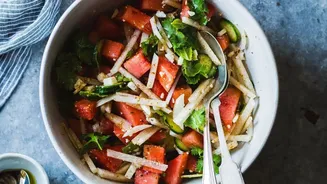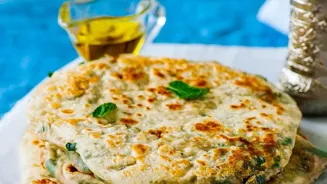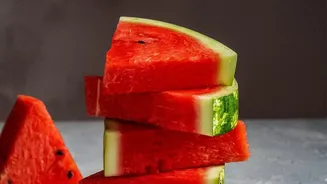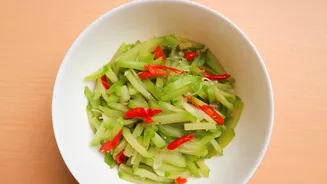


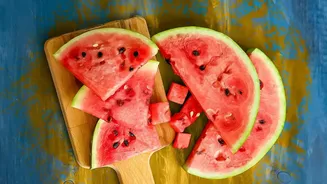


As the weather warms, the last thing many of us want is a heavy, starchy meal. This simple kitchen secret transforms leftover watermelon rind from food waste into a delightfully crisp and light sabzi that will change the way you see summer fruit.
A Zero-Waste Tradition
Before
you toss that hefty watermelon rind into the compost, consider this: you're throwing away a delicious and versatile vegetable. Across India, resourceful home cooks have long known the secret of 'tarbooz ke chhilke ki sabzi'. This tradition of turning waste into wealth is not just about frugality; it's about discovering the unique culinary potential in every part of an ingredient. The white part of the rind, which is often discarded, has a firm, crisp texture and a neutral flavour, making it a perfect canvas for spices. Far from being a modern 'foodie' trend, using watermelon rind is a time-honoured practice in many cuisines, from pickled rinds in the American South to savoury curries in Gujarat.
Lighter and Crisper Than Potato
The most common comparison for a vegetable curry in India is often one made with potatoes. While delicious, potato-based dishes can feel heavy and dense, especially in warmer months. This is where watermelon rind truly shines. When cooked, it doesn't become soft and starchy like a potato. Instead, it retains a pleasant, toothsome bite, similar to that of a cucumber or ash gourd. The texture is best described as crisp-tender, providing a refreshing crunch that feels significantly lighter in a meal. Because of its high water content, it creates a juicy, flavourful sabzi without the carb-heavy feeling of a traditional aloo curry. Its mild taste allows it to absorb the flavours of the tadka beautifully, taking on the aroma of cumin, turmeric, and chillies without overpowering them.
How to Prepare the Rind
Preparing watermelon rind for cooking is a simple, three-step process. First, after you've enjoyed the sweet red flesh, take the remaining large pieces of rind. Using a sturdy vegetable peeler or a sharp knife, carefully remove the tough, dark green outer skin. This part is edible but can be tough and is best removed for a better texture. You'll be left with the thick, pale white part of the rind. It's okay if a little of the pink flesh remains, as this can add a subtle sweetness. Next, wash the peeled rind thoroughly. Finally, chop the white rind into small, bite-sized cubes, roughly half to one inch in size, much like you would prepare potatoes or paneer for a sabzi. Your new favourite vegetable is now ready for the pan.
Crafting the Perfect Stir-Fry
Cooking the rind is quick and rewarding. Start by heating a bit of oil in a pan or kadai. A traditional tadka of mustard seeds, cumin seeds, and perhaps some curry leaves and a pinch of asafoetida (hing) creates the perfect flavour base. Once the seeds begin to pop, you can add aromatics like chopped ginger, garlic, and green chillies, sautéing for a minute until fragrant. Add the cubed watermelon rind to the pan, along with powdered spices like turmeric, red chilli powder, and coriander powder. Stir everything well to coat the rind in the masala. The rind will release some of its own water, so you may not need to add much extra liquid. Cover and cook for about 10-15 minutes, stirring occasionally, until the rind is tender but still has a slight crunch. Overcooking will make it mushy, so check for doneness by piercing a piece with a fork; it should go in easily but still offer a little resistance.
A Boost of Nutrition
Beyond its delightful texture and zero-waste credentials, watermelon rind offers surprising nutritional perks. It's a good source of dietary fibre, which aids digestion, and is significantly lower in calories and carbohydrates than potatoes. The rind is also notably rich in citrulline, an amino acid that the body converts to arginine, which is beneficial for heart health and circulation. In fact, the rind contains a higher concentration of citrulline than the sweet flesh we typically eat. It also provides vitamins C and B6, and minerals like potassium. By incorporating the rind into your meals, you not only reduce food waste but also add a host of valuable nutrients to your diet.