








The Science of Clean Speed
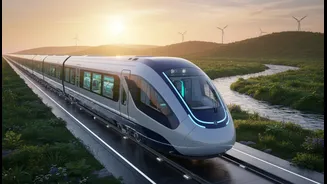
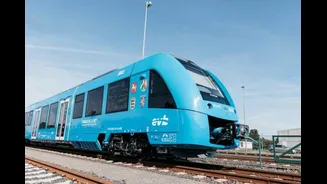
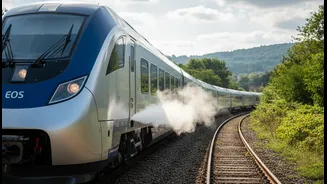
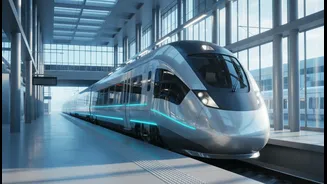
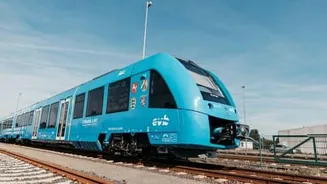
So, what exactly is a hydrogen train? Imagine a train that glides along the tracks with virtually no pollution, emitting only water vapour. That's the promise of this new technology. Instead of a diesel engine or relying on overhead electric lines, these
trains use onboard hydrogen fuel cells. The system works through a chemical reaction between stored hydrogen and oxygen taken from the air. This process generates electricity to power the train's motors, with the only by-products being water and a little heat. This makes them an exceptionally clean alternative, especially for routes where electrification is difficult or expensive.
India's Historic First Run
The landmark launch is scheduled for July 17, 2026, when Prime Minister Narendra Modi is expected to flag off the train from Jind in Haryana. Following successful trials, this indigenously developed train is set to begin commercial operations on the nearly 90-kilometre Jind-Sonipat route. The 10-coach train is designed to make two round trips daily, covering the distance in about an hour—a significant improvement over the current two-hour journey time for diesel services on the same route. With affordable fares announced, it represents a major step in the 'Make in India' and Green Transport Mission initiatives.
A Leap in Indigenous Technology
This isn't just a new train; it's a showcase of India's growing technological prowess. The train has been designed by the Research Designs and Standards Organisation (RDSO) in Lucknow and manufactured at the Integral Coach Factory (ICF) in Chennai. Billed as the world's longest 10-coach hydrogen-powered broad-gauge train, it boasts a powerful 2,400 kW propulsion system. Safety has been a paramount concern, with the train featuring numerous hydrogen leakage detectors, fire sensors, and modern control systems, all approved after rigorous checks. A dedicated hydrogen production and refuelling facility has also been established in Jind to support the operations.
Joining a Global Green Club
With this launch, India joins an elite group of countries, including Germany, China, Japan, and the United States, that are pioneering hydrogen rail technology. Germany was the first to put a commercial hydrogen passenger train into service in 2018. India's entry into this field is a strong statement of its commitment to achieving its climate goals. The project is a key part of Indian Railways' ambitious target to become a net-zero carbon emitter by 2030. While diesel trains still run on about 37% of the network, this hydrogen pilot project serves as a crucial test case for replacing them on non-electrified routes and reducing dependence on fossil fuels.
The Bigger Picture for a Greener India
The successful rollout on the Jind-Sonipat line is just the beginning. The learnings from this pilot will be crucial for a potential wider deployment across the vast Indian Railways network. While challenges like the cost of producing 'green' hydrogen—hydrogen made using renewable energy—and scaling up the infrastructure remain, this first step is vital. It aligns perfectly with India's National Green Hydrogen Mission, which aims to make the country a global hub for clean hydrogen production and use. By proving the technology's viability in the demanding Indian environment, this train is not just carrying passengers; it's carrying the future of sustainable transport for the entire nation.