






A New Space Race Fueled by Teamwork
Forget the old model of space exploration being solely a government-run endeavour. Today, NASA is teaming up with innovative private companies to achieve its ambitious goals, including sending humans to Mars. This approach is known as a Public-Private
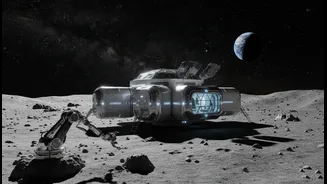
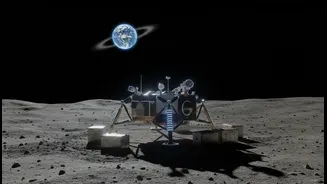
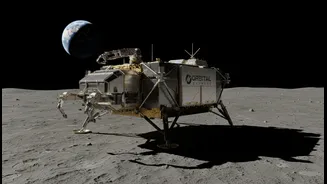
Partnership (PPP). Under this model, NASA sets the scientific goals and provides expertise, while commercial partners like SpaceX, Blue Origin, and others design, build, and operate the rockets, landers, and other essential hardware. This collaboration is a core part of the Artemis program, which aims to establish a sustainable presence on the Moon as a stepping stone to Mars. By sharing the massive cost and complexity of space exploration, these partnerships accelerate innovation and open the door for more frequent and diverse missions.
Beyond the Cockpit: A Galaxy of New Careers
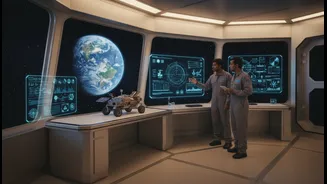
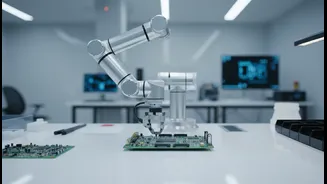
When we think of space careers, we often picture astronauts. But the teams that support missions to Mars are vast and varied. The commercial space industry, projected to be a trillion-dollar market by 2040, needs more than just rocket scientists. Companies are actively hiring for roles that might surprise you. Software developers are critical, writing the code for autonomous flight systems and mission control. Materials scientists invent new alloys and composites to withstand the harsh conditions of space. Robotics engineers design the rovers and drones that will explore the Martian surface. Beyond the purely technical, there's a huge demand for non-engineering professionals. The fastest-growing job needs are in operations—project managers, accountants, human resources, and supply chain experts who can keep these complex projects on track. There are even roles for lawyers specializing in space treaties and marketers who can share the vision of interplanetary exploration with the public.
The Skills That Launch Interplanetary Futures
So, how can a student in India prepare for this exciting future? A strong foundation in Science, Technology, Engineering, and Mathematics (STEM) is still the bedrock. But the modern space industry requires a blend of skills. Proficiency in programming languages like Python and C++ is in high demand for developing the software that runs everything from navigation to life support. Experience with data analysis and machine learning is also crucial, as missions generate enormous amounts of data that needs to be interpreted. However, technical skills alone are not enough. Companies are looking for people with strong problem-solving abilities, creativity, and the ability to collaborate in multidisciplinary teams. Skills in systems engineering, which involves managing the complexity of a large project, are particularly valuable and often sought from outside the traditional aerospace sector.
Charting a Course: From Classroom to Cosmos
The path to a career in the space industry begins long before university. For middle and high school students, focusing on maths and science is key. Getting involved in extracurricular activities like robotics clubs, coding competitions, or science fairs can provide invaluable hands-on experience. NASA itself offers numerous programs designed to inspire and engage the next generation. The Human Exploration Rover Challenge (HERC), for example, is open to international teams and provides a hands-on engineering design experience related to Artemis missions. The agency's internship programs, while often geared toward U.S. citizens, provide a model for the types of experiences students should seek. Many private companies like Axiom Space and SpaceX also offer internships, providing a direct pipeline into the industry. These opportunities allow students to work on real projects, from developing virtual reality software for training to testing new technologies.
India's Ascent in the Global Space Economy
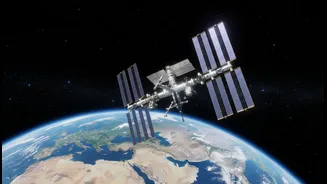
Indian students are uniquely positioned to contribute to and benefit from this new space age. With a strong educational emphasis on engineering and information technology, the skills being cultivated in India are directly transferable to the global commercial space sector. The Indian Space Research Organisation (ISRO) is a world leader in its own right, and its missions inspire and train a generation of highly skilled engineers and scientists. In fact, a recent private astronaut mission to the International Space Station, facilitated by Axiom Space, includes an ISRO astronaut, highlighting the growing international collaboration. The expertise gained from working on India's own ambitious space programs can open doors at companies across the world, making Indian talent a valuable asset in the collective human endeavour to explore the cosmos.