




A catastrophic high-speed train collision in Toledo, Spain, has sent shockwaves through the global transport community. For a nation like India, heavily invested in its own bullet train future, this tragedy is a sobering wake-up call.
What Happened in Toledo?
On October 28, 2026,
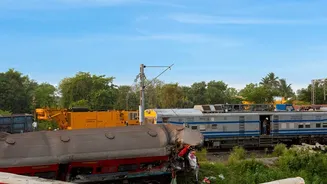
two high-speed trains collided near Urda in the Spanish province of Toledo, resulting in one of the country's deadliest rail accidents. A Renfe AVE train, travelling at high speed, slammed into the back of a stationary Iryo train on the same track. The impact was devastating, causing several carriages to derail and tumble down an embankment. The collision resulted in at least 69 fatalities and scores of injuries, with victims from Spain and several other countries. The incident occurred on the busy Madrid-Seville high-speed line, a corridor that had tragically seen another fatal accident earlier the same year, intensifying scrutiny on Spain's rail safety.
A Cascade of Failures
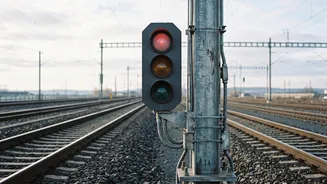
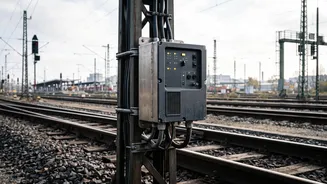
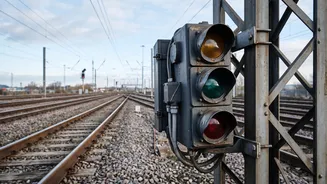
The investigation is quickly pointing toward a disastrous combination of technical malfunction and human error. Around 20 minutes before the crash, the automatic train protection system, known as LZB, experienced a communication failure, bringing all trains in the 63-kilometre section to a halt as a default safety measure. At this point, responsibility for managing traffic switched to manual control at the central command centre. According to Spain's transport minister, a controller then made an 'inexplicable' decision to authorise the Renfe train to resume its journey at normal speed, despite the Iryo train remaining stationary on the track ahead. Standard protocols for such 'degraded conditions' would typically require a much slower, more cautious 'visual approach' procedure. This apparent breakdown in failure protocols allowed one high-speed train to travel roughly 25 kilometres before striking the other.
What Are Failure Protocols?
Failure protocols, or functional safety standards, are the critical backbone of any modern railway. They are a multi-layered system of rules and technologies designed to ensure that if one component fails—be it a signal, a computer, or a section of track—the entire system defaults to a safe state, preventing accidents. These systems include Automatic Train Protection (ATP) which can control a train's speed, centralized traffic control, and strict communication procedures between drivers and control centres. The European standards, like EN 50126, provide a framework for identifying hazards and assessing risks to ensure that even in an emergency, procedures are in place to protect passengers and staff. The Toledo crash highlights a crucial question: what happens when both the automated system and the human-led backup fail simultaneously?
Lessons for India's High-Speed Ambitions
As India forges ahead with ambitious projects like the Mumbai-Ahmedabad High Speed Rail corridor, the events in Spain serve as a critical case study. Indian Railways has been focused on upgrading its safety infrastructure, implementing the indigenous 'Kavach' anti-collision system and modernizing its signalling. The Railway Safety Act 2023 also aims to enhance safety protocols across the network. However, the Toledo crash underscores that technology alone is not enough. The human element in managing system failures is just as vital. While India's bullet train project leans on Japan's Shinkansen technology, which has an unparalleled safety record, the Spanish disaster proves that even the most advanced networks are vulnerable to breakdowns in procedure. The key takeaway is the need for relentless training, rigorous drills for emergency scenarios, and creating a culture where procedural adherence is absolute, especially when automated systems go offline.