




The Sun Doesn't Shine at Night
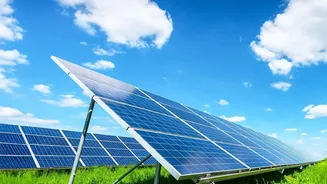
The most fundamental challenge is the nature of solar power itself: it's intermittent. Panels generate electricity only when the sun is out, with peak production happening around midday. However, household electricity demand often peaks in the evening,
just as solar generation drops to zero. This creates a fundamental mismatch between when power is made and when it is most needed. This daily boom-and-bust cycle, sometimes called the 'duck curve', means that without a way to store the midday energy, a massive installed capacity is useless after sunset, forcing the grid to rely on other sources like coal to meet evening demand.
Our Grid Wasn't Built for This
India's electricity grid was designed for a different era. It was built around large, centralised power plants—like coal and hydro—that produce a steady, predictable flow of energy 24/7. Solar power is the opposite: it is variable and often decentralized. Integrating this fluctuating power into a system designed for stability is a major technical hurdle. When solar generation surges in the afternoon, it can overwhelm local grid infrastructure, which wasn't built to handle such variability. This forces grid operators to sometimes 'curtail', or deliberately waste, available solar power to prevent grid instability. In the first half of 2026 alone, a significant amount of solar generation was reportedly curtailed for this reason.
The Billion-Dollar Storage Problem
The obvious solution to solar's intermittency is to store excess daytime power in batteries for use at night. While the technology exists, its cost remains a major barrier. Large-scale battery energy storage systems (BESS) are expensive, making stored solar power significantly pricier than conventional power sources like coal. For instance, recent tenders for battery-stored solar power have come in at much higher rates per unit than both coal power and solar power used directly. While India is taking steps to promote energy storage, building enough capacity to balance the grid is a monumental task that requires immense investment and time.
Lost in Transmission
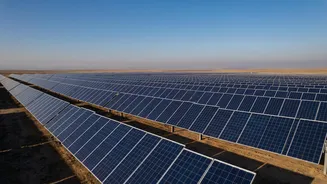
Another issue is geography. Many of India's largest solar parks are located in sun-rich but sparsely populated regions like Rajasthan and Gujarat. The major centres of electricity demand—our cities and industrial hubs—are often hundreds of kilometres away. Moving this power requires a robust network of transmission lines. Unfortunately, the construction of new transmission infrastructure has not kept pace with the rapid installation of solar panels. This creates bottlenecks where power generated in one state cannot be efficiently moved to another, leading to more curtailment and wasted energy.
The Weakest Link: Distribution Companies
Finally, even if power is generated, stored, and transmitted, it must be delivered to homes by local power distribution companies, or Discoms. Across India, many of these state-run entities are in poor financial health, burdened by massive debts and operational losses. Their financial instability prevents them from making crucial investments in modernizing the local distribution networks. Without upgraded transformers, smart meters, and stronger local grids, they struggle to handle the fluctuating input from renewable sources or reduce technical losses, meaning the power never reliably reaches the end consumer. This makes Discoms a critical bottleneck in India's energy transition.