



Phase 1: Pre-Trek Planning and Permits
A successful trek to this UNESCO World Heritage Site begins weeks before you set foot on the trail. The best time to witness the full floral bloom is from mid-July to mid-August, which coincides with peak monsoon. Your first step is to arrange travel
to Govindghat, the starting point. From there, a shared jeep can take you 4 km to Pulna, significantly shortening the initial trek. The main trek is from Pulna to Ghangaria, the base camp village, which is about a 9-10 km journey that takes 4-6 hours. Accommodation in Ghangaria is basic and should be booked in advance, as it's the only place to stay. You do not need to arrange a permit beforehand; it is issued at the forest checkpoint in Ghangaria upon showing a valid government-issued ID. The permit is valid for a single day's entry.
Phase 2: Essential Monsoon Packing
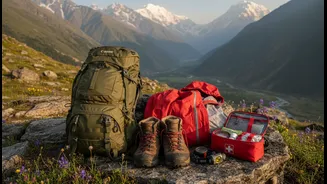
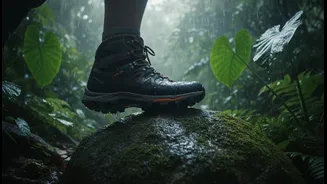
Packing for a monsoon trek is about staying dry and stable. Waterproofing is non-negotiable. Your main rucksack (around 40-50 litres) must have a rain cover. Inside, use dry bags or plastic covers to protect clothes, electronics, and documents. For clothing, prioritise quick-dry synthetic fabrics over cotton. You will need a high-quality waterproof jacket and pants, a warm fleece for cold evenings, and several pairs of moisture-wicking t-shirts and trek pants. The single most important piece of gear is a pair of waterproof trekking shoes with excellent grip for slippery, muddy trails. Also essential are trekking poles, which provide crucial stability on ascents and descents. Carry a smaller daypack (15-20 litres) for the daily hikes into the valley.
Phase 3: On the Trail to Ghangaria
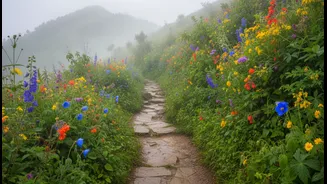
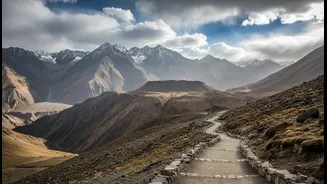
The trail from Pulna to Ghangaria is a steady ascent along the Lakshman Ganga River. It is a well-defined path, with stone paving and railings in many sections. The key is to start early, ideally before 7 AM, to avoid the afternoon showers that are common in the monsoon. The path is shared by trekkers and pilgrims heading to Hemkund Sahib, creating a lively atmosphere. There are small eateries and shelters along the way to rest and have refreshments. Though considered an easy to moderate trek, the continuous climb requires a reasonable level of fitness. Maintain a steady pace and take short breaks.
Phase 4: Exploring the Valley
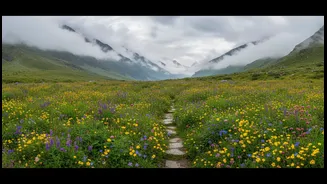
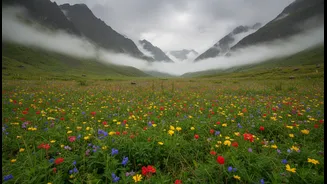
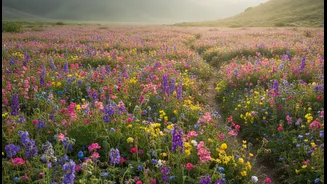
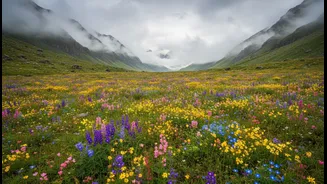
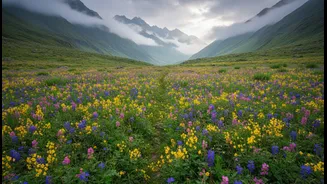
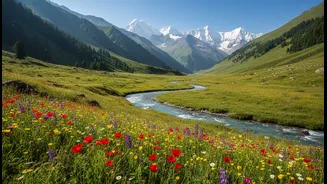
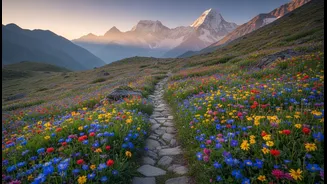
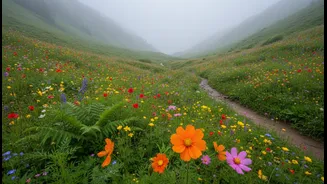
From Ghangaria, the trek to the entrance of the Valley of Flowers is a 3-4 km walk. The park gates open around 6-7 AM and you must exit by evening, as overnight stays are not permitted. An early start allows you to spend maximum time inside. The valley itself is a sprawling meadow, and you'll need at least 3-4 hours to explore it properly. The trail inside can be narrow and misty. Walk carefully and stay on the designated paths to protect the fragile ecosystem. The monsoon weather is unpredictable; what starts as a sunny morning can quickly turn into a foggy, rainy afternoon.
Phase 5: Health, Safety, and Monsoon Challenges
Trekking in the monsoon brings specific challenges. Leeches are common in the wet, forested sections. To manage them, wear full-length socks, tuck your trousers in, and carry salt or a sanitiser to help remove them if they latch on. Do not pull them off forcefully. Acute Mountain Sickness (AMS) is a risk as Ghangaria sits at an altitude of nearly 10,000 feet. Acclimatise properly, stay hydrated, and ascend slowly. Carry a basic first-aid kit with personal medications, painkillers, antiseptic, and ORS sachets. Always be aware of trail conditions, which can change quickly with rain.