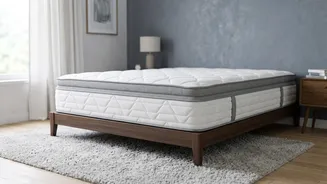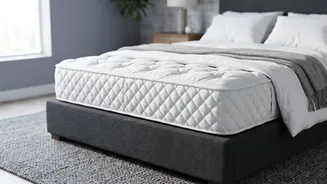






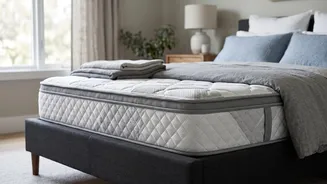
Choosing a new mattress is a major investment in your well-being. With countless options available, the classic spring mattress remains a popular choice for its support and breathability. Here’s how to navigate the key factors to find your perfect match.
Understanding Support vs. Firmness
Many people use the terms 'support' and 'firmness' interchangeably, but they refer to two different things. Support is about how well the mattress keeps your spine in a neutral alignment, preventing aches and pains. This comes from the core of the mattress—the spring system. Firmness, on the other hand, is the immediate feeling you get when you lie down. It's how soft or hard the surface feels. A mattress can be soft (low firmness) but still highly supportive, or firm but lacking proper support. The goal is to find a mattress that provides the right support for your body, with a firmness level that feels comfortable to you.
The Core of Support: Coil Systems
The engine of a spring mattress is its coil system. The two main types are Bonnell spring and pocket spring. Bonnell springs are interconnected, creating a very firm and durable surface. Because they move as a single unit, they can be bouncy but are also prone to transferring motion across the bed. Pocket springs are individual coils, each wrapped in its own fabric pocket. This allows them to move independently, contouring to your body's specific shape and providing more targeted support. This independent movement also means pocket spring mattresses excel at motion isolation, making them an excellent choice for couples.
Matching Firmness to Your Sleep Position
Your primary sleeping position is the most important factor in determining the right firmness level. The aim is always to maintain neutral spinal alignment. Side Sleepers: This is the most common sleep position. Side sleepers need a softer mattress—typically in the medium-soft to medium range—that allows their shoulders and hips to sink in slightly. This relieves pressure on those points and keeps the spine straight. A mattress that's too firm will create pressure points and misalignment. Back Sleepers: Back sleepers generally require a medium-firm to firm mattress. This level of firmness supports the natural curve of the lower back, preventing the hips from sinking too deeply and causing strain. Stomach Sleepers: To avoid the lower back arching into a 'U' shape, stomach sleepers need the firmest support. A firm or extra-firm mattress keeps the hips elevated and aligned with the shoulders, protecting the spine.
Considering Body Weight
Body weight also plays a crucial role in how a mattress feels. A mattress will feel different to a lighter person than to a heavier person. As a general rule, lighter individuals (under 60 kg) may need a softer mattress than typically recommended for their sleep position, as they don't sink in as much. Conversely, heavier individuals (over 90 kg) often need a firmer mattress to get adequate support and prevent excessive sinking.
Decoding Coil Count and Gauge
When shopping, you'll often see numbers for coil count and coil gauge. Coil count is the total number of springs in the mattress. While a higher count can mean more precise support, quality is more important than quantity. A mattress with 800 highstndard quality coils can outperform one with 2,000 poorstndard quality ones. Coil gauge refers to the thickness of the wire, with a lower number indicating a thicker, firmer wire. A lower gauge (e.g., 12 or 13) generally results in a more durable and firmer mattress, while a higher gauge (e.g., 14 or 15) offers a softer feel.