





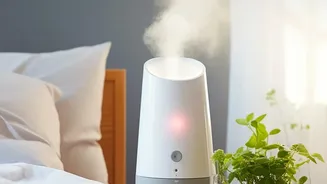
As we become more aware of urban pollution, the battle for clean air has moved indoors. In the quest for a healthier home, two champions emerge: the modern air purifier and the humble houseplant. But which one truly cleans the air you breathe?
Identifying the Enemy Inside
Before picking
a side, it’s crucial to know what you’re fighting. Indoor air in Indian homes can often be more polluted than the air outside. The culprits are numerous and often invisible. The dominant threat is PM2.5—tiny particulate matter from cooking smoke, agarbattis (incense), dust, and infiltrating outdoor smog. Then there are Volatile Organic Compounds (VOCs), which are gases released from everyday items like paint, new furniture, cleaning agents, and even mosquito repellents. These can include harmful chemicals like formaldehyde. Lastly, biological pollutants like mould spores (especially during monsoon), pet dander, and dust mites are common triggers for allergies and asthma.
Houseplants: The Natural, but Limited, Solution
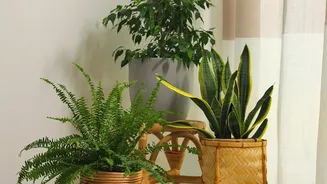
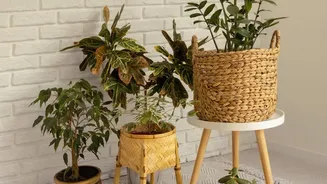
The idea that houseplants are powerful air purifiers comes largely from a 1989 NASA study. This research showed that in small, sealed chambers, certain plants could remove VOCs like benzene and formaldehyde. However, translating this to a real home is misleading. Subsequent reviews and analysis have concluded that you would need an impractically large number of plants—some estimate between 10 to 1,000 plants per square metre—to match the air cleaning rate of a typical building's natural ventilation, let alone a purifier. While plants can absorb small amounts of VOCs and contribute to a sense of well-being, they are largely ineffective against the bigger threat of PM2.5 particles. Think of them as a decorative and psychological boost, not a primary air cleaning tool.
Air Purifiers: The Mechanical Powerhouse
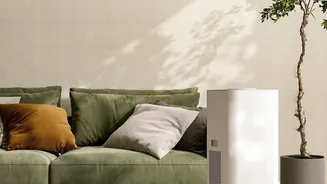
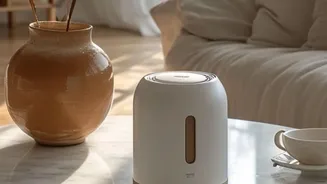
This is where technology shows its strength. Air purifiers work by pulling in room air and forcing it through a series of filters. The most important of these is the HEPA (High-Efficiency Particulate Air) filter. A 'True HEPA' filter is certified to capture 99.97% of particles as small as 0.3 microns. This makes them extremely effective at removing PM2.5 particles, dust, pollen, and pet dander from the air. Studies have shown that using a HEPA purifier can significantly reduce indoor PM2.5 levels. For tackling gaseous VOCs and odours from cooking or chemicals, many purifiers also include an activated carbon filter, which adsorbs these compounds. A HEPA filter alone cannot remove VOCs.
The Verdict: It's a Partnership, Not a Competition
The debate isn't about which is 'better' overall, but which is the right tool for the job. If your main concern is particulate matter (PM2.5) from smog, dust, or smoke, an air purifier with a HEPA filter is the only truly effective solution. Its ability to rapidly filter large volumes of air and trap tiny particles is something a room full of plants simply cannot compete with. However, if your concerns are minor and more related to the general 'staleness' of a room, or you want to tackle very low levels of certain VOCs, houseplants can play a small supporting role. They are undisputed champions for aesthetics and mental wellness, which are important parts of a healthy home environment.