





The Psychology of a Clear Surface
Before diving into the 'how,' it’s important to understand the 'why.' A cluttered space often contributes to a cluttered mind. Environmental psychology studies suggest that orderly surroundings can reduce stress, improve focus, and promote a sense of calm
and control. When your table is clear, it sends a signal that it’s ready for its next purpose, whether that’s a focused work session or a relaxing family meal. A tidy environment can enhance morale and shows that the space—and the people in it—are valued. This isn’t about achieving sterile perfection; it's about reducing the constant visual noise that drains mental energy, allowing you to be more present for the task at hand, be it a spreadsheet or passing the salt.
Implement the Five-Minute Reset
The most effective organisational tool is a consistent habit. The 'Five-Minute Reset' is a simple but powerful routine to perform at key transition times, such as before dinner or at the end of the workday. The goal is not a deep clean, but a quick surface clear. Start by removing everything that doesn’t belong on the table. Make one trip for dishes, another for rubbish, and a final one for miscellaneous items like mail, keys, or toys. Wiping down the surface is the final step, leaving a clean slate. Involving the whole family by assigning small tasks—one person clears plates, another gathers glasses—makes the process even faster and teaches shared responsibility for the space.
Create Portable 'Stations'
To make the Five-Minute Reset even easier, create portable 'stations' for recurring activities. Instead of letting work supplies spread across the table, contain them in a dedicated box, basket, or tray. When the workday is over, the entire 'office' can be lifted and stored on a nearby shelf or in a cabinet. The same system works wonders for kids’ homework supplies, art projects, or any other activity that regularly takes over the table. Using shallow trays or even baking sheets can be an effective way to corral multiple small items at once. This 'pack-up' mentality ensures that transitioning the table from a workspace back to a dining space takes seconds, not twenty minutes of frustrated searching and stacking.
Use Smart, Simple Storage
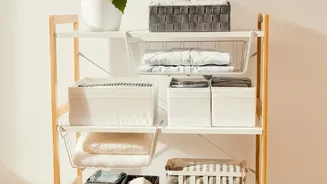
You can’t clear a table if the items have no proper home. Effective organisation relies on having designated storage spots. If your table is constantly buried under paperwork, consider installing wall-mounted file holders nearby to sort mail and documents. A small bar cart or a rolling utility cart can serve as a mobile 'command centre' for work or craft supplies, easily wheeled out of sight when not in use. Even a simple decorative basket on a sideboard can hold daily essentials. The key is to have a convenient, dedicated place for everything that tends to land on the table. This way, clearing clutter isn't a chore, but a simple act of putting things back where they belong.
Set Boundaries with Zones and Times
In a busy household, managing expectations is half the battle. Mentally or physically 'zone' your table. Perhaps one end is designated for ongoing projects, while the rest must remain clear for meals. Even better, establish time-based boundaries. From 9 am to 5 pm, it’s a workspace. At 6 pm, all work must be cleared as it transitions into a dining-only zone. This creates a predictable rhythm for the entire household. Using placemats and coasters for meals helps reinforce the table's primary function and protects the surface. When dinner is served, a tablecloth or a simple centrepiece—even a small vase of flowers—can instantly shift the atmosphere, signalling that it’s time to disconnect from work and reconnect with family.