


A Sweet Discovery in Deep Space
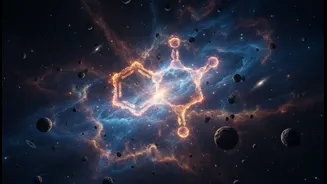
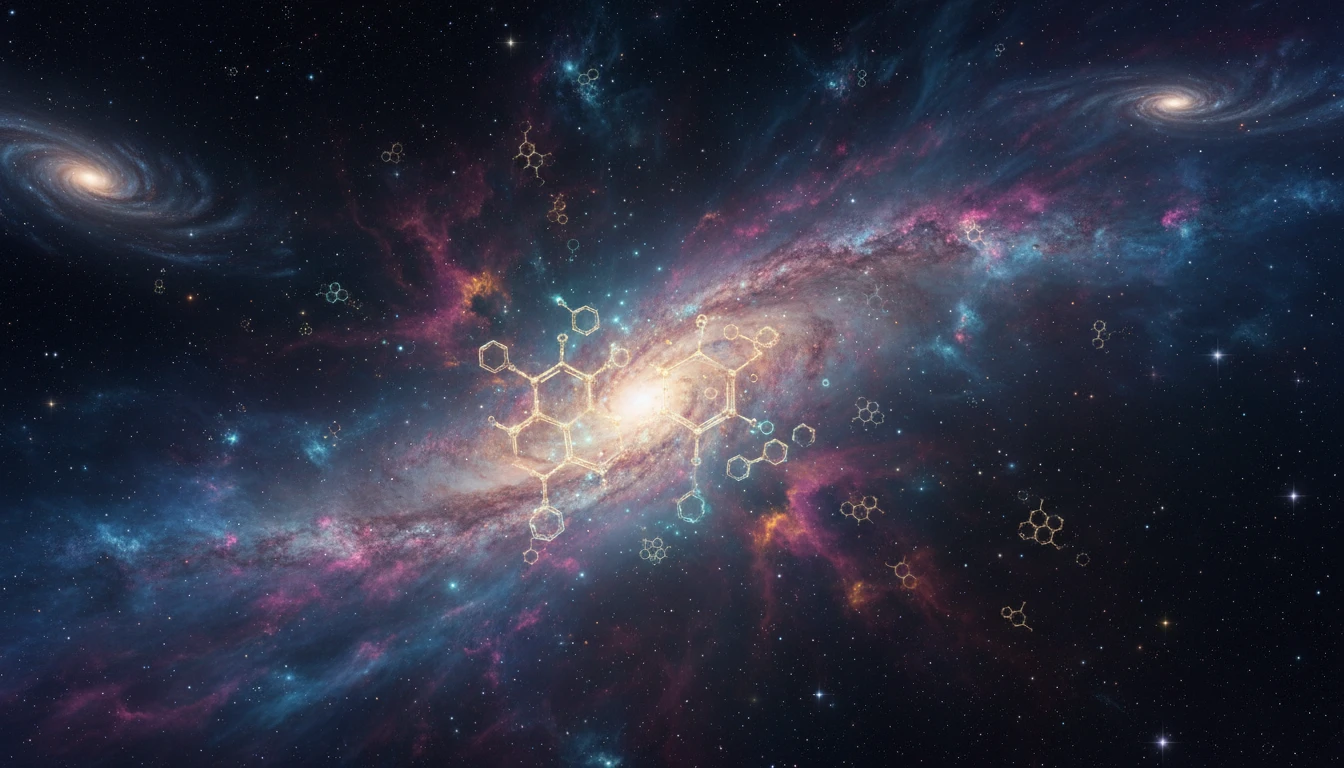
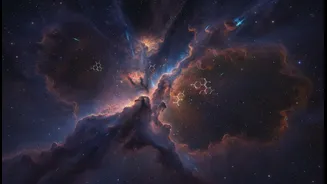
In a vast, star-forming cloud of gas and dust some 27,000 light-years away, scientists have made a groundbreaking detection. Using powerful radio telescopes in Spain, an international team of researchers identified the chemical signature of erythrulose.
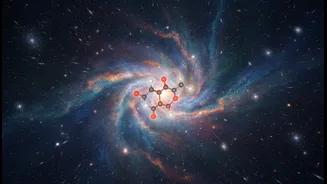
This molecule is a four-carbon sugar, similar in basic structure to the sugars we know on Earth; in fact, it's found in small amounts in fruits like raspberries. While other sugar-like molecules have been found on meteorites or asteroids before, this marks the first time a true sugar has been confirmed floating freely in the interstellar medium—the space between stars. The discovery was made in a region known as Sagittarius B2, a well-known cosmic nursery where stars and planets are born.
More Than Just Cosmic Candy
So, why is finding sugar in space a big deal? Sugars are fundamental to life as we know it. They are not just for energy; they form the backbone of RNA and DNA, the molecules that carry the genetic code for all known living organisms. The specific sugar found, erythrulose, is what scientists call a prebiotic molecule. This means it is a chemical precursor, a building block that can lead to more complex, biologically significant molecules. Its presence in space supports a long-held theory: that the essential ingredients for life didn't have to form on Earth, but could have been delivered to our young planet from space billions of years ago.
The RNA World Hypothesis
This discovery lends significant weight to the “RNA World” hypothesis. This theory proposes that before DNA-based life evolved, an earlier form of life existed based on RNA (ribonucleic acid). RNA can both store genetic information and act as an enzyme to drive chemical reactions—a dual role that makes it a prime candidate for the original molecule of life. A key component of RNA is a sugar (ribose). Finding a simpler sugar like erythrulose floating in space is so exciting because lab experiments have shown it can be transformed into the very components needed to build RNA. It suggests that the raw materials for the first genetic material are not rare, but are available in the cosmic clouds where planets are born.
Seeding Planets from the Start
Stars and their planets form from the gravitational collapse of enormous clouds of gas and dust, just like the one where erythrulose was found. This means that as new planets coalesce from this cosmic debris, they could be seeded with these life-giving ingredients from their very inception. Instead of a planet needing to create these complex organic molecules from scratch in some primordial soup, they could arrive ready-made, delivered by comets and asteroids that formed from the same sugar-laced cloud. Scientists estimate that during Earth’s early history, a period of intense asteroid bombardment could have delivered millions of tons of erythrulose to our planet's surface, potentially jump-starting the chemical processes that led to life.
A Universe Ripe for Life?
The discovery of erythrulose challenges previous ideas that complex molecules must build up step-by-step from simpler ones. Scientists were surprised to find this four-carbon sugar but no simpler three-carbon sugars, suggesting that cosmic chemistry might have unexpected shortcuts to creating complexity. This find is part of a growing body of evidence showing that the interstellar medium is a rich chemical factory. Molecules like water, alcohols, and even the components of amino acids have been found there. Each discovery paints a picture of a universe where the basic building blocks of life are common. While this doesn't mean life itself is everywhere, it strongly implies that the conditions necessary for it to begin may not be unique to Earth.