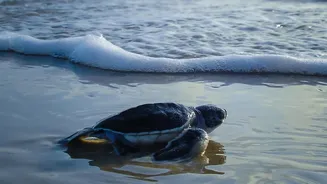










A Major Proposal for 24 Beaches
The Goa Forest Department has put forward a significant proposal to the Department of Environment and Climate Change. It recommends that 24 of the state’s most popular beaches be officially designated as turtle nesting sites under the Coastal Regulation
Zone (CRZ) Notification, 2019. The list is extensive, including 10 beaches in North Goa like Morjim, Mandrem, Calangute, and Baga, and 14 in South Goa such as Agonda, Palolem, and Cavelossim. This designation isn't a ban, but it would trigger stricter regulations aimed at protecting the turtles, particularly during their nesting season which typically runs from November to March. The move is prompted by concerns over a decline in nesting numbers compared to previous years.
Why Olive Ridley Turtles Need Protection
The focus of this proposal is the Olive Ridley sea turtle, an endangered species that has long used Goan shores for nesting. Beaches like Morjim, Mandrem, Agonda, and Galgibaga are already known as important nesting grounds. The conservation challenge is that the turtles' nesting season coincides with Goa's peak tourist season. The turtles, especially hatchlings, are highly sensitive to their environment. Artificial lights from shacks and hotels can disorient hatchlings, leading them away from the sea. Loud music, beach parties, and even obstacles like beach chairs and litter can disturb nesting females and trap the tiny hatchlings on their journey to the water. The new proposal aims to mitigate these exact threats by controlling human activity in these sensitive zones.
Regulation, Not a Ban
The headline-making aspect of this story is the approach. Instead of an outright enforced ban on activities, the proposal focuses on regulation. If the 24 beaches are designated as turtle nesting sites under CRZ rules, it would likely mean tighter controls on artificial lighting, loud music, beach events, and vehicle movement during the nesting season. This isn't about closing the beaches. In fact, two of the proposed beaches, Mandrem and Galgibaga, are also being considered for the prestigious Blue Flag certification, which recognizes well-managed, environmentally responsible tourist beaches and does not restrict public access. The goal is to find a middle ground where tourism can continue, but in a way that is sustainable and does not harm the fragile coastal ecosystem.
Concerns from Local Communities
The proposal has understandably caused a stir among those whose livelihoods depend on the beaches. Shack owners, fishermen, and other tourism stakeholders have voiced concerns, seeking clarity on what the new rules would mean for their businesses. The Secretary of the Shack Owners Welfare Society, John Lobo, stated that while they support turtle protection, declaring so many beaches as nesting sites is not practical and could disrupt the entire tourism industry. Fishermen are worried about potential restrictions on their access to beaches for parking boats and traditional fishing methods. Stakeholders in Canacona, where eight beaches are on the list, have expressed strong opposition, fearing the new rules could 'kill tourism business' in the area. They are asking for a clear dialogue with authorities to ensure conservation doesn't come at the cost of local livelihoods.