



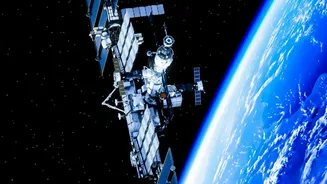
A Strategic Handover in Orbit
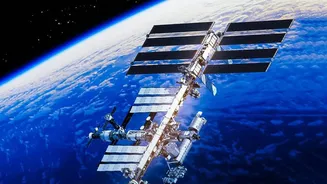
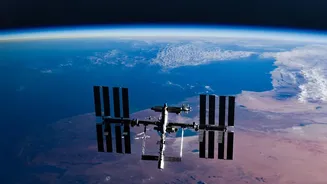
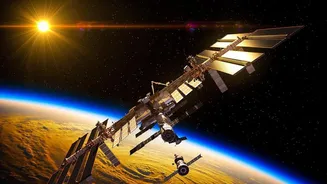
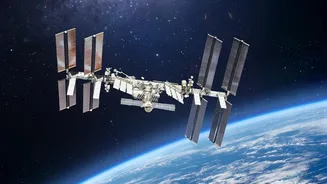
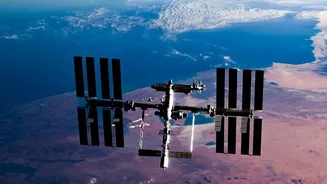
The end of the International Space Station isn't a failure, but the fulfillment of a long-term strategy. For years, NASA has successfully used commercial partners for cargo and crew transport, proving the private sector's capabilities. Now, NASA is extending
that model to real estate. Instead of owning and operating a multi-billion-dollar station, the agency plans to become just one of many customers renting time and space on commercially owned platforms. This shift, managed through programs like the Commercial Low-Earth Orbit Destinations (CLD) initiative, frees up NASA's resources to focus on deep-space missions like returning to the Moon and exploring Mars, while leaving low-Earth orbit (LEO) to private enterprise.
The Race to Build the Successors
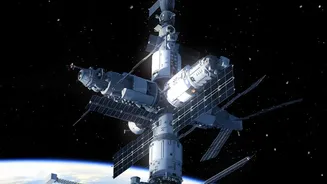
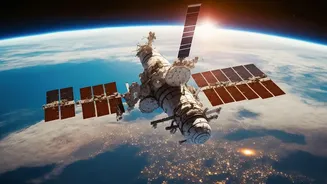
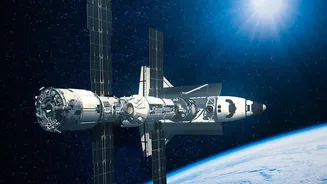
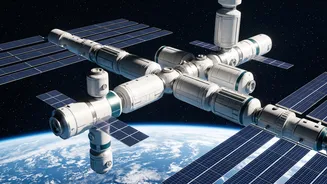
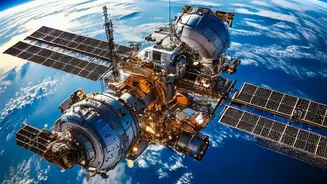
Several major players are in a race to build the first generation of private space stations. Axiom Space is taking a unique approach by first attaching its modules to the ISS before detaching to form a free-flying station. Their first module is expected to launch around 2028. Another major contender is Starlab, a joint venture between Voyager Space and aerospace giant Airbus, which plans to launch a large, single-module station focused on research. Then there's Orbital Reef, a concept from Blue Origin and Sierra Space, envisioned as a 'mixed-use business park' in space designed for science, manufacturing, and tourism. These companies, backed by both private investment and NASA seed funding, are all aiming to have their platforms operational before the ISS is deorbited to prevent a gap in U.S. presence in LEO.
More Than Just a Space Hotel
While space tourism for the ultra-wealthy grabs headlines, the business case for these stations is far broader. The primary driver is creating a platform for a new orbital economy. This includes in-space manufacturing, where the microgravity environment allows for the creation of unique products impossible to make on Earth, such as superior fiber optics, perfect crystals for semiconductors, and complex bioprinted tissues. Another key market is research-as-a-service. Companies and national space agencies without their own stations can rent lab space for experiments, continuing the scientific work of the ISS but in a more modern, efficient facility.
Building a Business Park in the Sky
The ultimate vision is a self-sustaining ecosystem in low-Earth orbit. These commercial stations are the anchor tenants of what could become a bustling orbital business park. Just as industrial parks on Earth spurred economic growth, permanent commercial outposts in space are expected to do the same. The global space economy is already valued at over $600 billion and is projected to grow to $1.8 trillion by 2035. These stations will serve as the infrastructure—the factories, labs, and logistics hubs—that will enable this growth. By dramatically lowering the cost of living and working in space, they open the door for new industries, from satellite servicing and orbital data centers to entertainment and marketing.
The Challenges Are Still Astronomical
Despite the ambitious plans, the path forward is not guaranteed. Building and launching a space station is an incredibly complex and expensive undertaking. Timelines have already slipped, and there are significant financial and technical hurdles to overcome. While private companies have invested billions, they are still heavily reliant on NASA not just as a future customer, but for funding and technical support during development. There remains a very real risk of a gap between the ISS decommissioning and the first commercial station becoming fully operational. However, the commitment from both the private sector and government signals a fundamental belief that the future of humanity in LEO is not just possible, but profitable.