




The Balcony Gardener’s Dilemma
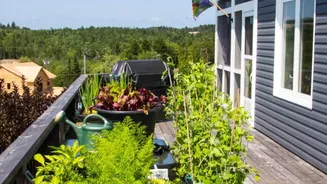
For those with limited space, a balcony garden is a cherished green oasis. However, container gardening presents a unique and frustrating challenge: overwatering. Unlike plants in the ground, potted plants have a finite amount of soil, which can quickly
become waterlogged. When soil is constantly saturated, there is no room for oxygen, and roots begin to suffocate and decay. This condition, known as root rot, is one of the most common reasons container plants fail. Symptoms include wilting even when the soil is wet, yellowing leaves, and a foul odour from the soil. Many well-intentioned plant owners see a wilting plant and instinctively reach for the watering can, accidentally worsening the problem. The confined environment of a pot makes it a perfect breeding ground for this silent killer.
Beyond Guesswork: Traditional Methods
For generations, gardeners have relied on simple techniques to gauge soil moisture. The most common is the 'finger test'—sticking a finger an inch or two into the soil to feel for dampness. Others might try lifting the pot to gauge its weight or observing the soil’s colour. While these methods are better than nothing, they are imprecise. The top layer of soil can often feel dry while the root zone at the bottom of the pot remains saturated. This is especially true for larger pots. Simple electronic moisture meters are another option, but many work by measuring electrical resistance, which can be thrown off by salts and minerals in the soil, leading to inaccurate readings. These methods leave room for error, and for delicate plants, that error can be fatal.
A Living Sensor: How Microbes Can Help
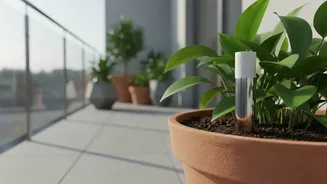
Enter the next generation of plant care: microbial soil moisture sensors. These innovative devices are a type of microbial fuel cell (MFC), a technology that harnesses the power of tiny, naturally occurring bacteria in the soil to generate a small but measurable electric current. As these microbes break down organic matter in the soil, they release electrons as part of their metabolic process. The activity level of these microbes—and thus the electrical signal they produce—is directly influenced by their environment, including the amount of available water. By measuring these subtle changes in bio-electricity, the sensor can determine the soil's moisture content with remarkable precision, essentially letting the soil's own ecosystem report on its condition.
The Science of Soil-Powered Sensing
A microbial fuel cell sensor is elegantly simple. It typically consists of two electrodes: an anode buried in the soil and a cathode exposed to the air. The microbes colonise the anode, and as they digest nutrients in the soil, they transfer electrons to it. These electrons then travel to the cathode, creating a circuit and generating power. The key to its function as a moisture sensor lies in how water affects this process. When the soil has optimal moisture, microbial activity is high, producing a steady electrical signal. When the soil becomes too dry or too waterlogged, this activity changes, altering the electrical output. Researchers have developed systems that can translate this data into a clear indicator of when to water. Because they are powered by the soil itself, these sensors are incredibly energy-efficient and sustainable.
Advantages for the Urban Gardener
For the balcony gardener, this technology offers several key advantages. Firstly, it provides a highly accurate, real-time look at the conditions right at the root ball, removing the guesswork that leads to root rot. Secondly, because it relies on biological processes, it offers a more holistic view of soil health than a simple electrical resistance meter. Some advanced designs can operate effectively in a wide range of conditions, from very dry soil to completely flooded pots. This durability is a significant step up from some traditional sensors. Finally, the technology represents a sustainable alternative to battery-powered devices, as the sensors draw their tiny amount of required energy directly from the soil they are monitoring. This means less waste and less maintenance for the gardener.
The Future of Smart Plant Care
While microbial fuel cell technology has been explored for large-scale precision agriculture, its application for home gardeners is an exciting emerging field. Consumer-grade products are still in the early stages of development, but the principles are sound and proven in laboratory and field tests. As the technology becomes more accessible, it could revolutionise how we care for our potted plants. Imagine planters that send a notification to your phone when they need water, powered entirely by the life within their own soil. This isn't science fiction; it is the near future of home gardening, promising healthier plants and happier, more confident gardeners. It enables a shift from a rigid watering schedule to a responsive, needs-based approach that works with nature, not against it.