





The Evidence: A Restless Ocean Floor
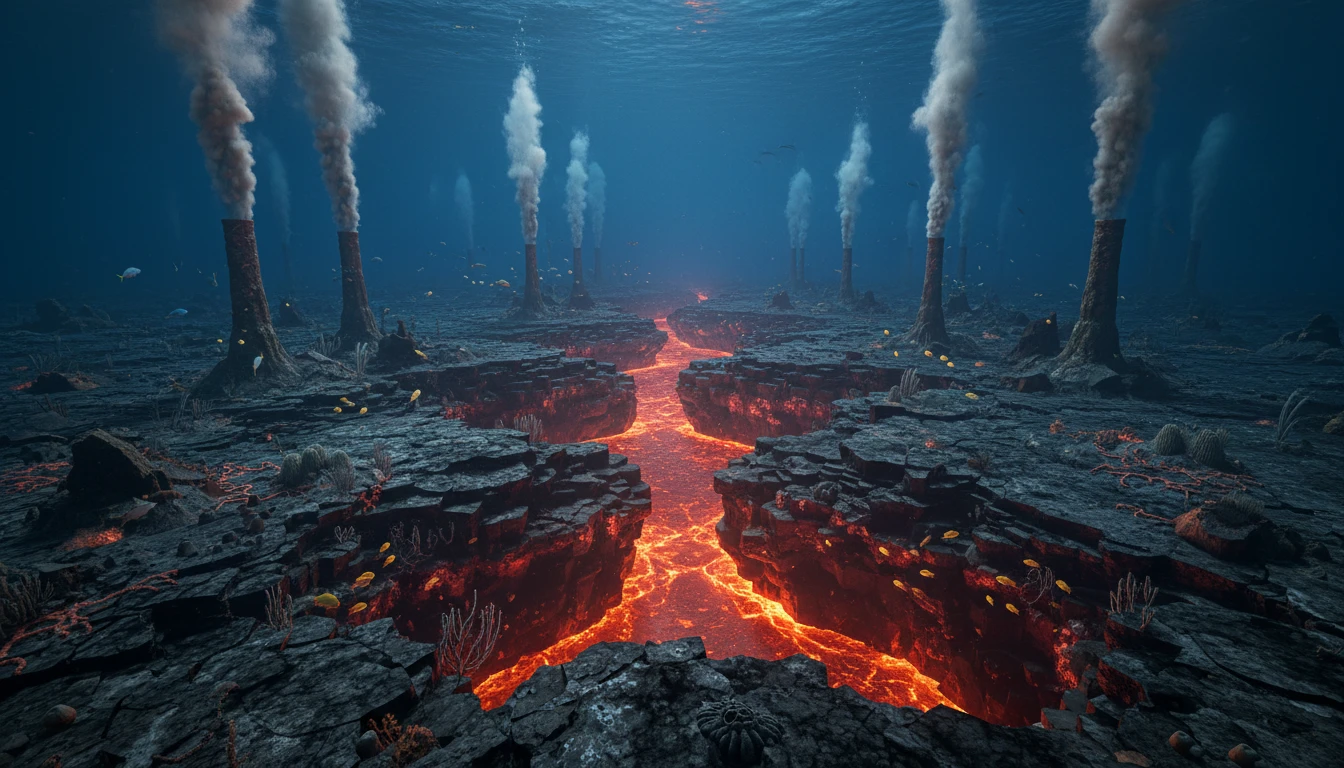
The Earth’s surface is not a single, solid shell but a mosaic of tectonic plates in constant, slow-motion collision and separation. Running down the centre of the Indian Ocean is a massive underwater mountain range known as the Mid-Indian Ridge. This
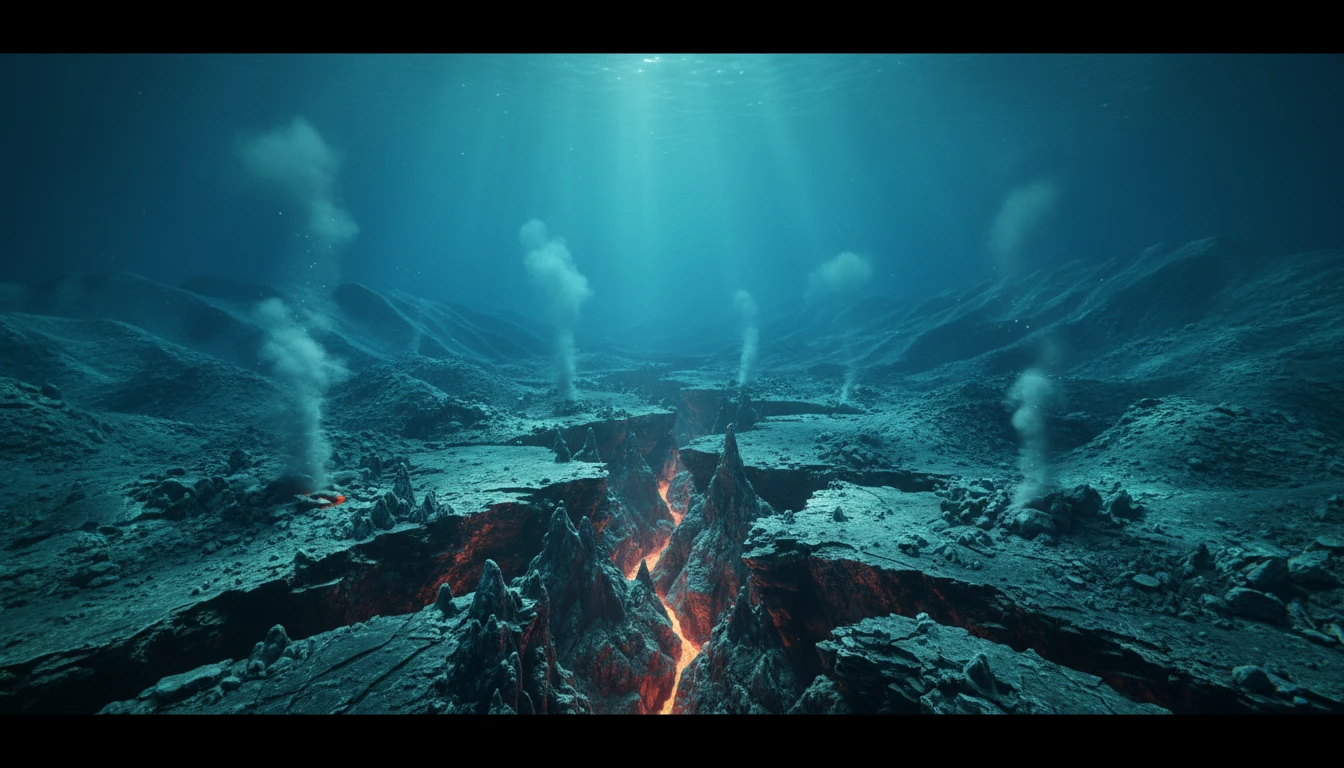
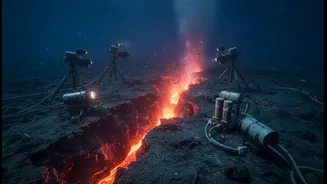
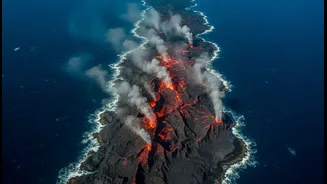
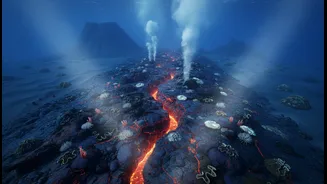
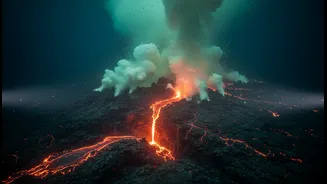
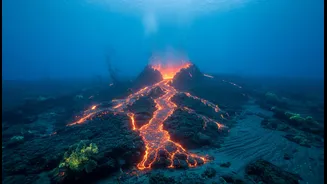
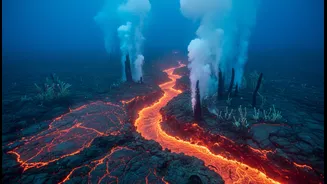
is a divergent boundary, where tectonic plates are pulling away from each other. As they separate, molten magma from deep within the Earth rises to fill the gap. Upon contact with the cold seawater, it solidifies, forming brand-new oceanic crust. This process is called seafloor spreading. Evidence for this is written in the rocks themselves. Geologists find magnetic 'stripes' on either side of the ridge—bands of rock with alternating magnetic polarity, mirroring each other perfectly, which record the reversals of Earth's magnetic field over millions of years. The age of the crust also provides proof; it is youngest at the ridge and gets progressively older the farther you move away. In April 2024, scientists directly witnessed a spreading event for the first time, observing the seafloor near the Southeast Indian Ridge stretch and crack as hundreds of millions of cubic metres of lava erupted over just 16 days.
The Opportunity: India's Deep-Sea Destiny
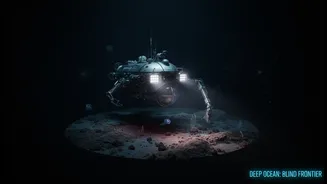
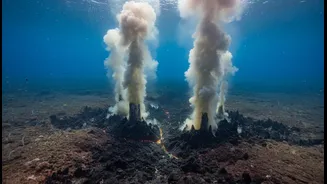
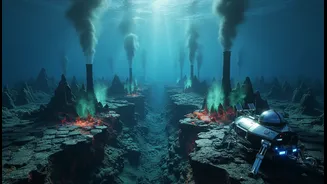
This geological turmoil creates incredible economic potential. The hydrothermal vents and unique conditions along mid-ocean ridges are factories for valuable minerals. As hot, mineral-rich fluids blast from the seafloor and hit the cold ocean water, they deposit metals, forming polymetallic sulphides (PMS) rich in copper, zinc, silver, and gold. In other areas, over millions of years, metals precipitate from seawater to form potato-sized polymetetric nodules (PMN) and cobalt-rich crusts on the seabed, laden with manganese, nickel, copper, and cobalt. These are the very metals critical for India’s future, powering everything from electric vehicle batteries and solar panels to advanced electronics and defence systems. Recognizing this, India has launched the ambitious Deep Ocean Mission. A key part of this is the 'Samudrayaan' project, which aims to send three aquanauts to a depth of 6,000 metres in the indigenously developed 'Matsya 6000' submersible for exploration. India has already secured multiple exploration contracts from the International Seabed Authority (ISA), granting it exclusive rights to survey vast tracts of the Indian Ocean floor, making it a leading nation in the race for deep-sea resources.
The Limits: Technological and Environmental Hurdles
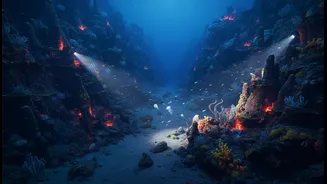
The ambition to tap this underwater bounty faces monumental challenges. The deep sea is one of the most hostile environments on Earth, with crushing pressures, near-freezing temperatures, and total darkness. Designing and operating machinery to mine the seabed at depths of 4 to 6 kilometres is an immense and costly technological feat. Beyond the engineering problems lie profound environmental risks. Deep-sea mining would involve scraping the seabed, destroying habitats that have evolved over millennia. These unique ecosystems host creatures, many still unknown to science, that have adapted to these extreme conditions. Mining activities would stir up vast sediment plumes that could drift for kilometres, smothering marine life and disrupting the food web. The noise and light pollution from 24/7 operations could also have devastating effects on species like whales that rely on sound to navigate and communicate. Furthermore, the deep sea is a massive carbon sink, and disturbing these sediments could release stored carbon, impacting global climate regulation.
The Limits: A New Geopolitical Frontier
India is not the only nation with its eyes on the prize. The quest for deep-sea minerals is sparking a new era of geopolitical competition in the Indian Ocean. China, a dominant force in global critical mineral supply chains, has been increasingly active in the region, with research vessels operating near India's contracted exploration zones. This contest for underwater resources is adding a new dimension to the strategic rivalry between the two Asian giants. While the International Seabed Authority (ISA) is tasked with regulating all mineral activities in international waters for the benefit of humankind, its authority and enforcement mechanisms are still evolving. The race to secure resources could strain regional cooperation and create new friction points over maritime influence and control. Successfully navigating this crowded and competitive environment will be as challenging as overcoming the technological and environmental hurdles. For India, staking its claim is not just about resource security but also about asserting its strategic presence in its own maritime backyard.