



Why Step-Ups are a Winter Workout Win
The beauty of the step-up lies in its simplicity and functionality. It mimics the motion of climbing stairs, strengthening the major muscles in your lower half: the quadriceps (front of thighs), hamstrings (back of thighs), and glutes. Because it's a unilateral
exercise, meaning it works one leg at a time, it's excellent for improving balance, core strength, and identifying and correcting muscle imbalances between your legs. It’s also a low-impact movement, which makes it a joint-friendly alternative to more explosive exercises, especially for those with knee or lower back concerns. You can do it almost anywhere, making it easy to stay consistent when the weather keeps you inside.
Finding a Safe and Sturdy Platform
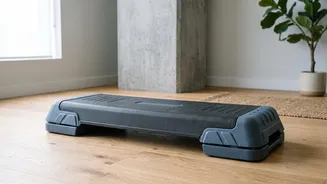
You don't need fancy gym equipment to get started. A stable surface is all that is required. For absolute beginners, the bottom step of a staircase is an ideal starting point. An aerobic step, a low and sturdy stool, or even a thick, solid book like a dictionary can also work. The most important factor is stability; ensure your chosen platform will not slide or tip over. As a beginner, start with a low height, typically around 15 to 20 cm. The rule of thumb is to choose a height you can step onto in a controlled manner without having to excessively lean forward or push off forcefully from your back leg.
Mastering the Basic Form
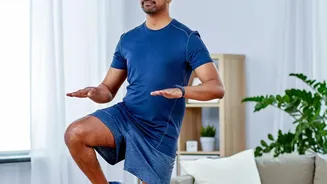
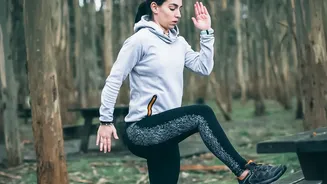
Proper form is crucial to get the most benefit and avoid injury. Stand tall facing your step with your feet about hip-width apart. Place your entire right foot firmly onto the platform, making sure your heel is not hanging off the edge. Lean your torso slightly forward from the hips and engage your core. The key to the movement is to drive your weight through the heel of your right foot to lift your body up, letting that leg do all the work. Avoid pushing off the floor with your left foot; it should feel more like a passenger. Stand up straight at the top, bringing your left foot to meet your right. To descend, step back down with your left foot first, followed by your right, controlling the movement all the way down.
Beginner Reps at a Comfortable Pace
For those just starting, the goal is consistency and control, not speed or exhaustion. A great starting point is to perform 2 to 3 sets of 8 to 12 repetitions per leg. Perform all the reps on one leg before switching to the other. This ensures the target muscles are properly fatigued. Rest for about 60 to 90 seconds between sets. A 'comfortable pace' means moving slowly and deliberately, especially on the way down. Controlling the descent, or the 'negative' part of the motion, is just as important as the step up itself. Don't simply drop back to the floor; lower yourself with intention. The best pace is one that allows you to maintain perfect form for every single repetition.
Common Mistakes to Avoid
There are a few common errors that can reduce the effectiveness of the exercise and increase injury risk. The most frequent mistake is pushing off the back foot to create momentum. If you find yourself doing this, it's a sign your step is too high. Another common issue is letting the knee on your stepping leg cave inward. Focus on keeping your knee aligned over your second toe throughout the movement. Lastly, avoid leaning too far forward or rounding your back; keep your chest up and your core braced.
When You're Ready to Progress
Once you can comfortably complete your sets and reps with perfect form, you can start to make the exercise more challenging. The easiest way to progress is to gradually increase the height of your step. You can also increase the number of repetitions or sets. Another option is to add weight. You can hold light dumbbells in each hand by your sides. Start with a very light weight to ensure your form remains solid. You can also progress by slowing down the lowering phase of the movement, for instance, taking three to five seconds to step back down, which increases the time your muscles are under tension.