






The Ancient Wisdom of Eating Seasonally
For centuries, Indian households have aligned their diets with the rhythm of nature. This practice, deeply embedded in Ayurveda as 'Ritucharya' (seasonal regimen), isn't just about what’s available in the market. It’s a holistic philosophy that understands
that our bodies' needs change with the environment. In summer, we crave cooling foods to combat the heat. In winter, we need warming, nutrient-dense foods to build immunity. The monsoon brings a need for foods that are light and easy to digest. This intuitive way of eating ensures we get the right nutrients at the right time, directly from nature’s pantry. Today, as we look for sustainable and healthy lifestyles, this age-old wisdom is more relevant than ever.
Winter’s Immunity Hero: Amla
When the winter chill sets in, Indian gooseberry, or amla, takes centre stage. This small, green, tart fruit is a powerhouse of Vitamin C—containing about 20 times more per serving than an orange. Traditionally used in pickles (achaar), preserves (murabba), and juices, amla is revered for its immunity-boosting properties. It’s a potent antioxidant that helps fight off the common colds and flu that are prevalent during the colder months. Ayurveda celebrates amla as a 'Rasayana' herb, meaning it promotes longevity and rejuvenation. Its ability to improve skin health, aid digestion, and support hair growth makes it a true winter superfood that has been cherished for generations.
Summer’s Cooling Delight: Kokum
As the scorching summer sun beats down, the coastal regions of India turn to kokum for relief. This deep-purple fruit, primarily found along the Western Ghats, is famous for its cooling properties. It’s most popularly consumed as a refreshing drink called 'kokum sherbet,' a perfect antidote to dehydration and heat stroke. But its benefits go beyond simple refreshment. Kokum contains garcinol, an antioxidant with anti-inflammatory properties. It’s also an excellent digestive aid, often used in curries to balance rich flavours and prevent acidity. Unlike processed cold drinks, this natural coolant provides hydration and essential nutrients, making it an indispensable part of the Indian summer diet.
The Monsoon Marvel: Jamun
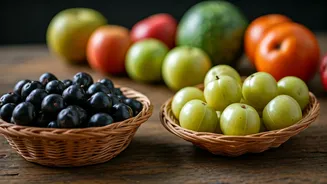
The arrival of the monsoon rains brings with it the delightful jamun, or black plum. This sweet and tangy fruit paints our tongues purple and offers a host of health benefits perfectly suited for the season. Jamuns are low in calories but rich in vital nutrients like iron, potassium, and Vitamin C. They are particularly celebrated for their role in managing blood sugar levels, making them a beneficial fruit for diabetics. In Ayurveda, every part of the jamun tree—from the fruit to the seeds and bark—is used for medicinal purposes. During the monsoon, when the risk of water-borne infections is high, jamun’s antimicrobial properties and ability to purify blood make it a seasonal necessity.
Autumn's Creamy Treat: Sitaphal
As the monsoon recedes and a gentle coolness fills the air, markets are flooded with sitaphal, or custard apple. This uniquely shaped fruit with its sweet, creamy pulp is a seasonal indulgence that’s packed with goodness. It’s an excellent source of energy, rich in Vitamin C, Vitamin B6, and minerals like magnesium and potassium. These nutrients are crucial for maintaining heart health and regulating blood pressure. The high fibre content in sitaphal aids digestion and prevents constipation. While its sweetness might seem decadent, it’s a natural, wholesome dessert that provides sustained energy, making it a perfect post-monsoon superfood to nourish the body before winter arrives.