






A Galaxy's Sudden Change
In late 2019, a galaxy named SDSS1335+0728, located about 300 million light-years away, did something completely unexpected. After years of being calm and unremarkable, its core began to shine dramatically brighter than ever before. Astronomers using
automated sky surveys like the Zwicky Transient Facility (ZTF) in California first flagged the change. Initially, they considered known causes for such celestial flare-ups, like a supernova (an exploding star) or a tidal disruption event (TDE), where a star gets shredded by a black hole's gravity. However, those events are relatively brief, lasting for a few dozen or maybe a few hundred days. This galaxy just kept getting brighter, a process that is still ongoing more than four years later, pointing to something entirely new.
What 'Waking Up' Means
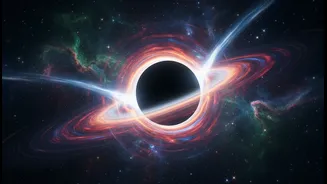
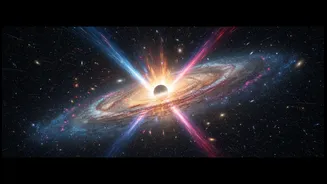
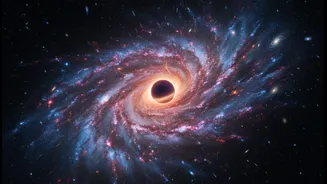
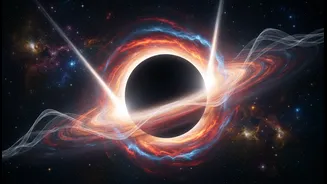
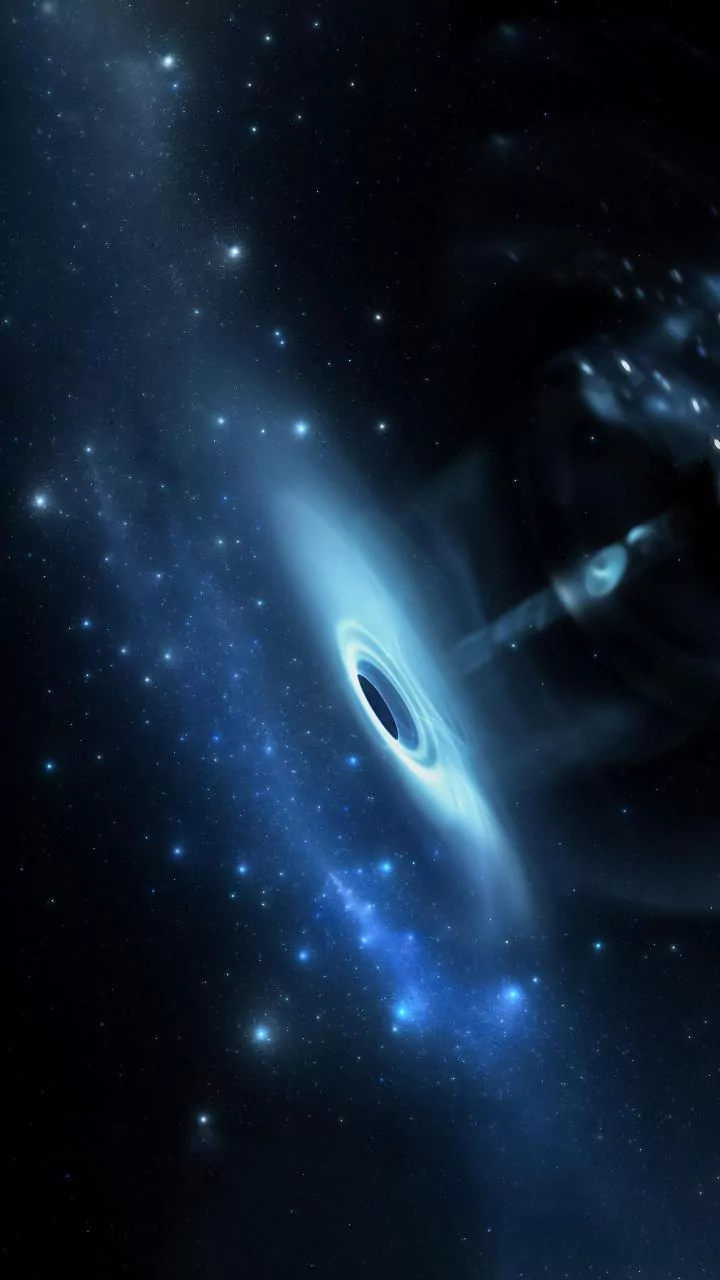
Most large galaxies, including our own Milky Way, have a supermassive black hole at their center. These cosmic titans are often dormant, or 'sleeping', meaning there isn't much material falling into them. When they 'wake up', they begin to actively 'feed' on the gas and dust in their surroundings. This material doesn't fall straight in. Instead, it forms a massive, swirling structure called an accretion disk around the black hole. The immense friction and gravitational forces within this disk heat the material to millions of degrees, causing it to radiate huge amounts of energy across the entire light spectrum—from X-rays to infrared—making the galaxy's core incredibly bright. This bright, active core is what astronomers call an Active Galactic Nucleus (AGN).
A Global Hunt for Clues
Confirming they were seeing a black hole awakening for the first time required a massive, coordinated effort. Once the initial alert was sounded by ZTF, astronomers around the world scrambled to point other powerful telescopes at the galaxy. This included the European Southern Observatory's Very Large Telescope (VLT) in Chile, the W. M. Keck Observatory in Hawaii, and space-based observatories like NASA's Swift and Chandra X-ray telescopes. By combining archival data from before the event with continuous new observations, they pieced together the story. They saw the galaxy dramatically brighten in ultraviolet, optical, and infrared light. Then, in early 2024, it started glowing in X-rays, a key signature of an active black hole's accretion disk forming. This is the 'first light' from the activation process.
Decoding the First Light Signatures
The 'light' from this event isn't just what we can see with our eyes. It's a complex mix of radiation that provides a wealth of information. The initial optical and ultraviolet light likely came from the outer parts of the newly forming accretion disk. The later appearance of X-rays suggests the inner, hotter regions closer to the black hole were beginning to fire up. The infrared brightening signifies that dust clouds far from the black hole were being heated by the intense new radiation from the core. Watching this sequence unfold in real time is like having a step-by-step guide to building an AGN. It allows scientists to test their theories about how black holes begin to feed and how this process influences the galaxy around them. This unprecedented event is allowing them to observe the formation of an AGN from the ground up.
Why This Discovery Is a Game-Changer
Until now, our understanding of how black holes switch from dormant to active has been based on theories and observations of galaxies that were already active. We had never caught the transition in the act. Observing the awakening of SDSS1335+0728 is like finding the 'missing link' of black hole evolution. It provides a unique, real-world laboratory to study how these cosmic engines start up, how they grow, and how their immense energy output can shape the development of their entire host galaxy. Scientists will continue to monitor the galaxy for years to come, watching to see if the activity stabilizes or changes. This single, unexpected event has opened a new window into the lives of the universe's most mysterious and powerful objects.