

More Than Meets the Eye
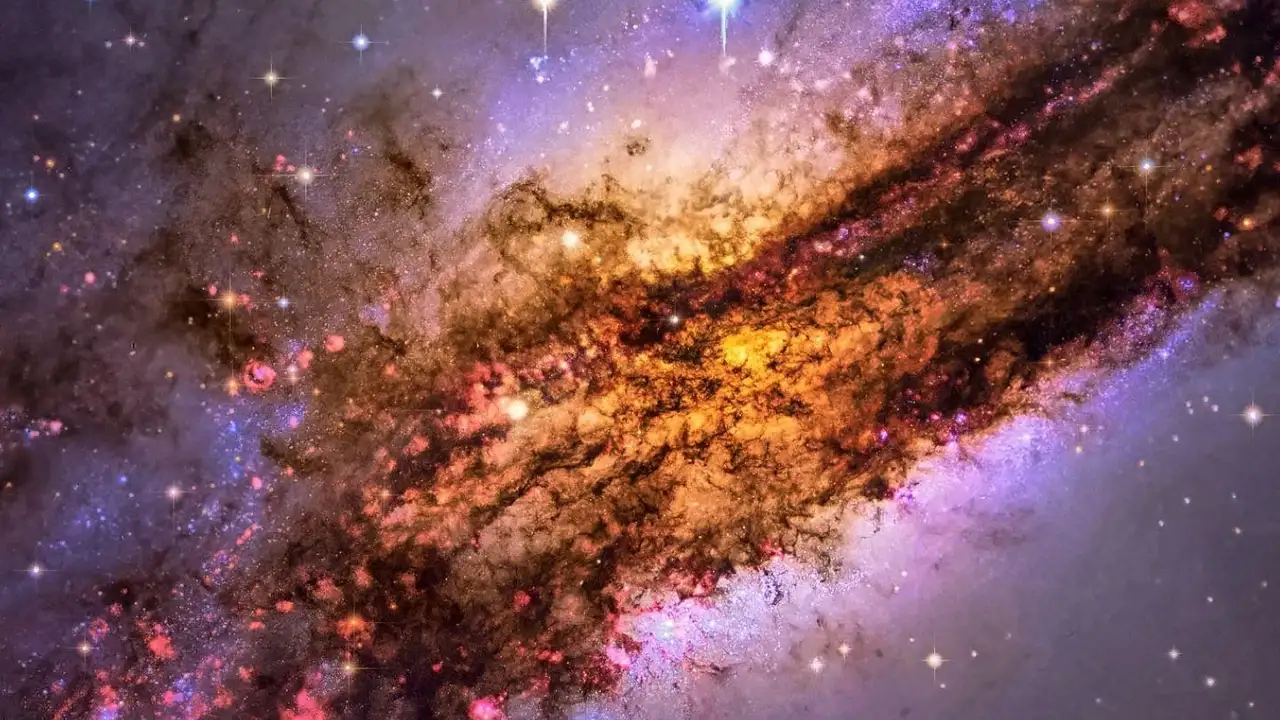
When we look at the night sky, our eyes see visible light, a mere sliver of the total energy that celestial objects emit. To get the full story of a galaxy, astronomers need to use specialized telescopes that can detect other forms of light across the electromagnetic
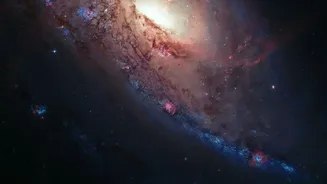
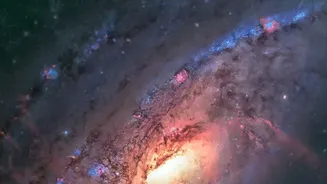
spectrum. A perfect case study is Centaurus A, a massive elliptical galaxy located about 13 million light-years from Earth. In visible light, it’s known for a dramatic, dark lane of dust cutting across its bright center. But this is just one piece of a much larger, more complex puzzle. By observing Centaurus A with radio, infrared, and X-ray telescopes, scientists can combine the different views to build a comprehensive picture of the galaxy’s structure, history, and the violent processes shaping it. This multi-wavelength approach is like using a set of cosmic superpowers to see what's otherwise invisible.
The Radio View: Cosmic Jets and Raw Fuel
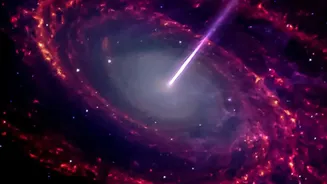
Tune into the radio waves coming from Centaurus A, and the picture changes dramatically. The serene-looking galaxy reveals colossal jets of material blasting from its core at nearly half the speed of light. These jets, which are completely invisible to the eye, are powered by a supermassive black hole with the mass of 55 million suns. As the black hole feeds on gas and dust, it spews out streams of high-energy particles that travel for over a million light-years. Radio telescopes, like the Very Large Array (VLA), detect the radio emissions from these jets as they plow through surrounding space. This radio view not only exposes the immense power of the central black hole but also maps out the cold gas clouds that serve as the raw fuel for future star formation, giving us a glimpse into both the galaxy's destructive power and creative potential.
The Infrared View: Through Dust to See Newborn Stars
That dark, dusty lane that dominates Centaurus A in visible light is a barrier to optical telescopes. But in the infrared, that veil is lifted. Infrared telescopes, such as the Spitzer Space Telescope and the James Webb Space Telescope, are designed to see the heat glow of objects that are too cool or too obscured to shine in visible light. When pointed at Centaurus A, they peer right through the dust to reveal what’s hidden inside. This infrared vision unveils a flurry of star formation within the dusty band, which is evidence of a past galactic merger that occurred billions of years ago. The glow from the cold dust itself helps astronomers map the galaxy's warped structure, confirming the story of a cosmic collision. Essentially, infrared light shows us the galaxy's hidden nurseries and the skeletal structure of its dusty remains.
The X-Ray View: A Universe of Extreme Violence
If radio waves show the black hole's reach and infrared shows hidden birth, X-rays reveal the galaxy's most violent and energetic events. Telescopes like the Chandra X-ray Observatory are built to detect high-energy radiation from super-heated gas and cataclysmic events. In the X-ray view of Centaurus A, we see one of the jets from the black hole in sharp detail, along with the shockwaves created as it collides with interstellar gas, heating it to millions of degrees. This view also pinpoints smaller, individual sources of X-rays, such as neutron stars and smaller black holes left behind by dead stars. X-ray astronomy essentially gives us a map of the most extreme physics at play in the galaxy—from matter being devoured by a supermassive black hole to the explosive remnants of past supernovas.