



The Universal Solvent
At its core, life is a series of complex chemical reactions. For these reactions to occur, molecules need a medium in which they can move, mix, and interact. Liquid water is exceptionally good at this, earning it the nickname 'the universal solvent'.
Its molecules are polar, meaning one end has a slight positive charge and the other a slight negative charge. This allows water to pull apart and dissolve a vast number of other substances, from salts to sugars. This process is fundamental for life. It's how cells transport nutrients to where they're needed and how they flush out waste products, a constant flow essential for metabolism. Without a solvent like water, the chemical machinery of life would grind to a halt.
A Master of Temperature Control
Life requires a relatively stable environment. Water has an incredibly high specific heat capacity, which means it can absorb a large amount of heat energy without a significant increase in its own temperature. This property is crucial for regulating temperature, both inside an organism and across a planet. The massive oceans on Earth, for example, act as giant heat reservoirs, absorbing solar energy and preventing extreme temperature swings that would be hostile to life. For an individual organism, which is mostly made of water, this property helps maintain a stable internal temperature even when the external environment changes. This thermal buffering is a key reason why worlds with stable bodies of liquid water are considered prime candidates for habitability.
The Anomaly of Floating Ice
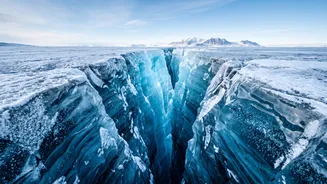
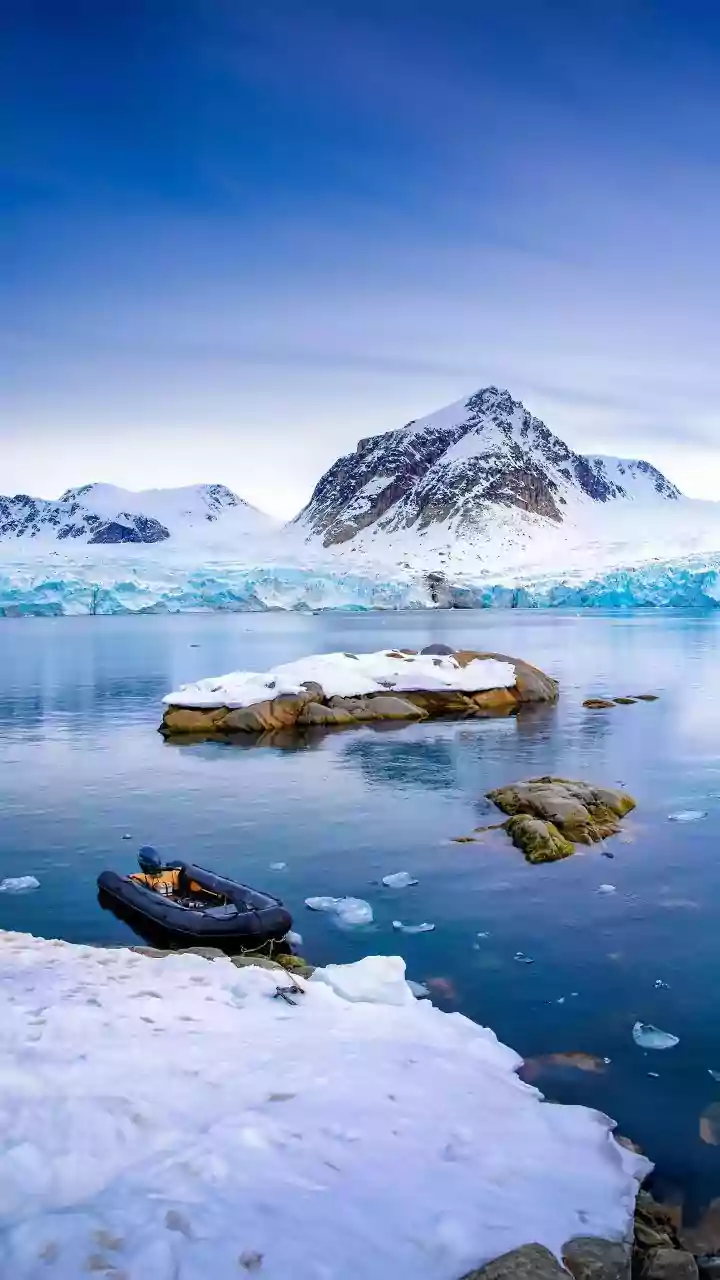
Water has another strange but vital property: its solid form, ice, is less dense than its liquid form. In almost every other substance, the solid state is denser and sinks. The fact that ice floats has profound implications for life on Earth. During winter, lakes and oceans freeze from the top down, creating an insulating layer of ice that protects the liquid water below. This allows aquatic life to survive in the warmer, insulated water underneath. If ice were to sink, bodies of water would freeze from the bottom up, eventually becoming solid blocks of ice and making it impossible for life to survive the cold. This single, unusual property ensures that aquatic ecosystems can persist through freezing temperatures.
The Search for 'Goldilocks' Worlds
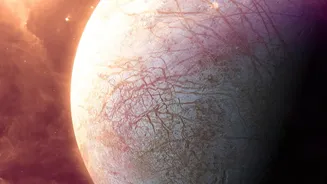
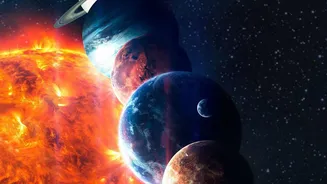
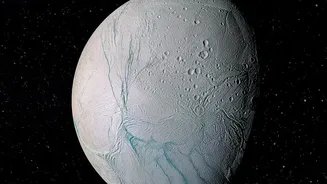
These unique properties are why astronomers and astrobiologists focus their search on planets within the 'habitable zone', often called the 'Goldilocks zone'. This is the region around a star where the temperature is not too hot and not too cold, but 'just right' for liquid water to exist on a planet's surface. Planets too close to their star will be too hot, causing water to boil away; planets too far will be too cold, leaving water perpetually frozen. Finding a rocky planet in this zone is the first major step in identifying a potentially habitable world. Moons in our own solar system, like Jupiter's Europa and Saturn's Enceladus, are also exciting targets because they are believed to harbor vast liquid water oceans beneath their icy shells, kept liquid by internal heat.
Could Other Liquids Work?
While scientists 'follow the water' because we know it works, they remain open to other possibilities. Other liquids, like ammonia or methane, exist in liquid form on other worlds, such as Saturn's moon Titan. In theory, these could act as a solvent for a different kind of biochemistry. However, these alternatives come with their own challenges. They are often only liquid at extremely cold temperatures, where chemical reactions would occur very slowly. Water remains liquid across a much wider and more energetic temperature range. Because life on Earth is the only example we have, water provides the most reliable and logical starting point in our quest to find out if we are alone in the universe.