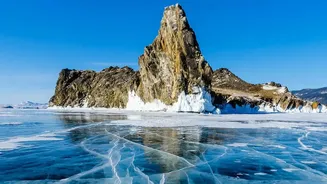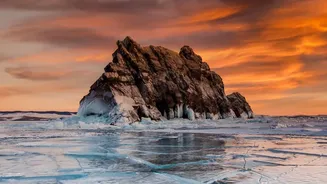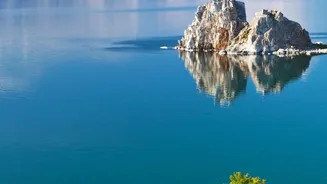

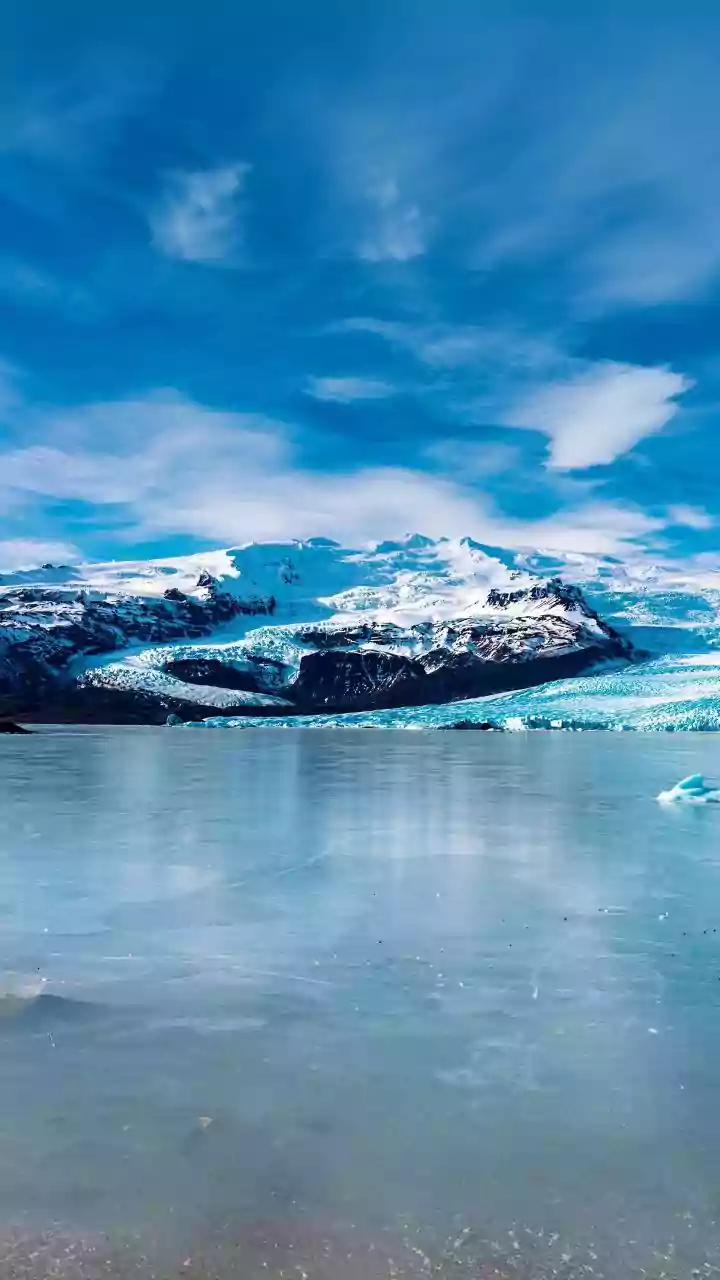
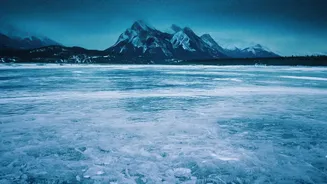
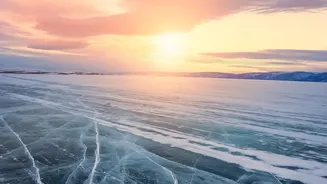
In the heart of Siberia lies a spectacle of nature so profound it feels otherworldly. This is Lake Baikal, where extreme cold transforms the world's deepest lake into a frozen canvas of turquoise ice and sculptural, crystalline formations.
A Frozen Giant Awakens
Lake Baikal
is a place of superlatives. Not only is it the world's oldest and deepest lake, but it also holds about 20% of the planet's unfrozen fresh water. Each winter, this colossal body of water puts on its most dramatic display. While severe Siberian frosts begin much earlier, Baikal's immense volume of water resists freezing until around January. Once the freeze begins, it is total. For nearly five months, the lake is sealed under an ice sheet that can reach up to two metres thick in places, strong enough to support vehicles and create temporary ice roads connecting the shore to islands like Olkhon. This frozen surface becomes a stage for one of nature's most stunning light shows, drawing photographers and adventurers to witness its ethereal beauty.
The Science of Turquoise Ice
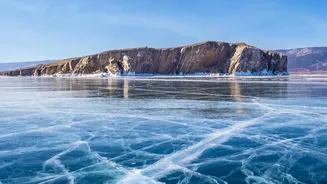
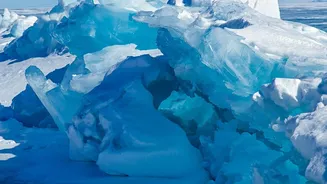
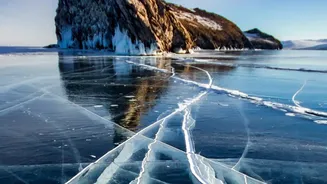
The most mesmerising feature of Baikal's winter is its iconic 'blue ice' or 'turquoise ice'. This phenomenon is not due to any magical property but rather a combination of purity and physics. The water of Lake Baikal is exceptionally clear, with very few suspended minerals or pollutants, thanks to a unique ecosystem that includes freshwater sponges that filter the water. When this pure water freezes slowly, it forms large, dense crystals with very few air bubbles. Much like a glacier, this dense ice absorbs most colours in the light spectrum but reflects blue, making the ice itself appear a brilliant turquoise, especially when large, fractured blocks are pushed up onto the surface. The clarity is so profound that in some areas, you can see up to 40 metres down through the transparent ice to the rocks and dark depths below.
A Symphony of Ice Formations
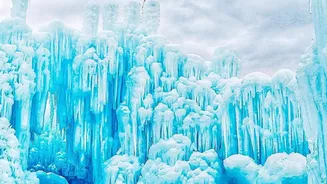
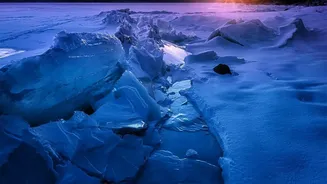
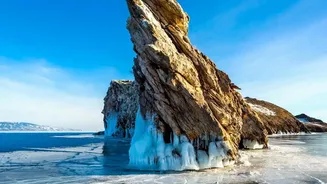
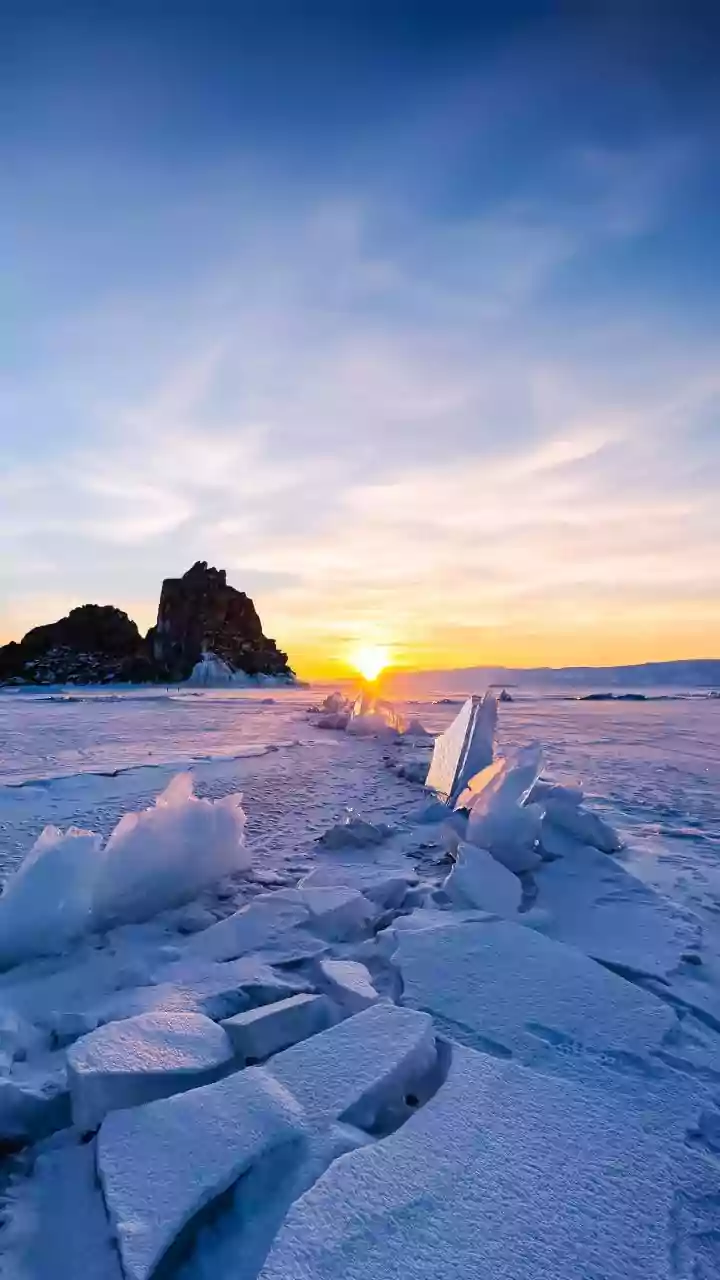
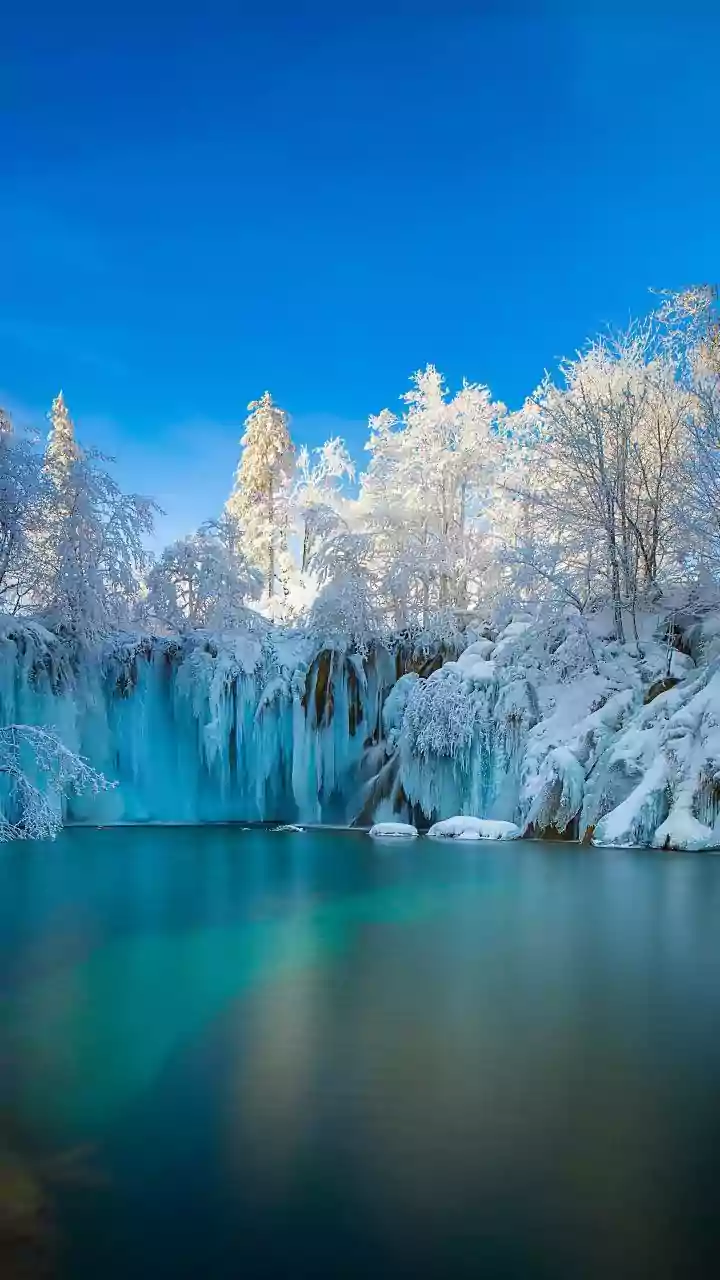
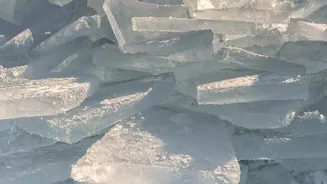
Baikal's ice is not a uniform, flat sheet. It is a dynamic landscape of varied and stunning formations. 'Hummocks,' or 'torosy,' are jagged piles of ice shards, some glowing like emeralds in the sun, that form when ice sheets collide and break. They can be pushed into ridges up to 12 metres high. Along the rocky shores and cliffs, waves splash and freeze before the lake is fully covered, creating ethereal white ice formations and icicles known as 'sokui'. Perhaps most famously, methane gas released from decomposing organic matter on the lakebed rises and gets trapped as it freezes, forming beautiful stacks of white, circular bubbles suspended in the clear ice.
Braving the Siberian Chill
The beauty of Baikal's ice is forged in truly harsh conditions. The peak season for ice viewing, from mid-February to late March, sees average temperatures hover between -15°C and -30°C, with cold snaps plunging even lower. The wind can be relentless, sweeping snow off the vast ice fields to reveal the clear surface below, but also adding a significant wind chill factor for anyone braving the elements. The ice itself is alive with sound; as temperatures fluctuate between day and night, the ice sheet expands and contracts, creating loud cracks and deep groans that echo for miles, a sound locals call the 'whisper of Baikal'. This symphony serves as a constant reminder of the immense natural forces at play.
A Journey Across the Ice
To experience Baikal in winter is to undertake a true adventure. Travel across the frozen expanse is done via specially adapted 4x4s, hovercrafts, snowmobiles, or even on foot with skates or crampons. These journeys must follow authorised routes checked by local guides, as the ice is not uniformly safe. A trip to Olkhon Island, the lake's largest island and a spiritual centre for local Buryat people, is a highlight, offering views of the most photographed cliffs and ice grottoes. Visitors might skate on the world's largest rink, witness the otherworldly glow of the hummocks at sunrise, or simply lie on the ice, gazing into the abyss through a metre-thick window of the purest ice on Earth.