





The Dream of Self-Repairing Roads
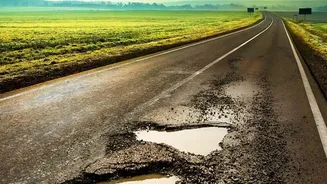
Every driver in India knows the teeth-rattling frustration of a pothole-ridden road, a problem that balloons into a crisis each monsoon. The cycle is as predictable as the rains themselves: water seeps into tiny cracks in the asphalt, traffic pounds the weakened
surface, and soon, a small fissure becomes a vehicle-damaging crater. What if the road could fight back? This is the promise of self-healing asphalt, a revolutionary approach to infrastructure that aims to stop potholes before they even form. The core idea is to embed a repair mechanism directly into the road material itself. Instead of sending out patchwork crews after the damage is done, these smart roads would autonomously mend the microscopic cracks that are the precursors to larger failures. This isn't just about smoother rides; it's about creating longer-lasting, safer, and more sustainable infrastructure that could save municipalities enormous sums in annual repair costs.
How Bio-Binders Bring Roads to Life
The magic behind many of these self-healing systems lies in what are broadly termed “bio-engineered binders.” There are a few different approaches, but one of the most fascinating involves using dormant bacteria. Researchers mix hardy bacterial spores, such as specific strains of Bacillus, into the asphalt along with nutrients. These microbes lie in wait, protected within tiny capsules. When a micro-crack forms and rainwater inevitably seeps in, the moisture acts as an alarm clock. The awakened bacteria feed on the provided nutrients and, as a byproduct of their metabolic process, produce calcium carbonate—essentially limestone. This limestone precipitate fills the crack, knitting the asphalt back together and restoring its strength. Another method involves embedding microcapsules filled with rejuvenating oils or polymers into the asphalt. When a crack ruptures a capsule, the healing agent is released, softening the aged and brittle bitumen around it and allowing it to flow and seal the gap.
Rainfall: From Foe to Friend
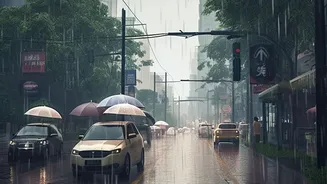
In conventional road-building, water is the enemy. It is the primary catalyst for the degradation that leads to potholes. But in bacteria-based self-healing systems, it becomes an essential ally. Rain is the trigger that activates the dormant biological repair crew precisely where it's needed—inside a newly formed crack. This turns the entire concept of weather-related damage on its head. Instead of engineers bracing for a surge in road repairs after a heavy downpour, the rainfall itself initiates the healing process. Laboratory tests have shown that this bacterial healing can restore a significant percentage of the pavement's original strength within days, potentially extending the lifespan of a road by 30-50%. The process is microscopic and happens automatically, with no need for human intervention, traffic cones, or road closures. The very element that once guaranteed decay now becomes a crucial part of the road's longevity.
A Game-Changer for Indian Cities?
The potential implications for India are staggering. The country grapples with thousands of deaths and significant economic losses due to pothole-related accidents annually. In 2022 alone, accidents on national highways attributed to potholes saw a worrying increase. A technology that not only extends the life of roads but actively repairs them could be transformative. The National Highways Authority of India (NHAI) is already exploring self-healing technologies to improve road durability. Furthermore, research bodies like the Central Road Research Institute (CRRI) and IIT-Madras are reportedly experimenting with variants designed for India's unique challenges, including tropical climates and heavy traffic loads. Adopting such technologies aligns perfectly with national infrastructure missions aimed at building not just more roads, but smarter, more resilient ones. While initial costs may be higher, the long-term savings from reduced maintenance and a longer lifespan present a compelling economic case.
The Roadblocks to Widespread Adoption
Despite the immense promise, a future of self-healing roads isn't just around the corner. The most significant hurdle is cost. The specialised additives, whether they are bacterial spores or rejuvenator microcapsules, can increase the initial expense of laying asphalt by 15-25% or more. For a technology to be adopted on a national scale, this initial investment must be justified by proven long-term savings—a calculation that requires more real-world data from large-scale pilot projects. Researchers are still working to optimize the systems to ensure the healing agents can survive the harsh temperatures and pressures of the asphalt mixing and paving process, only to activate when needed years later. While countries like the Netherlands have deployed self-healing materials on highways, the technology is still maturing. For India, the journey from promising lab results to widespread implementation on its vast and varied road network will require continued research, rigorous testing, and strong policy support.