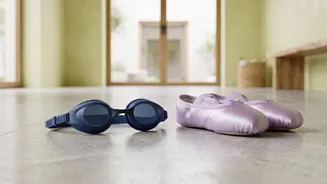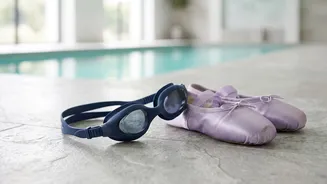



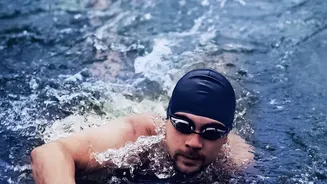


Choosing a cardio workout you enjoy is key to staying consistent. Both dancing and swimming are fantastic options that feel more like fun than a chore. But while both boost heart health, they place very different demands on your body.
The Heart of the Matter
Both activities are
excellent for cardiovascular health. Any exercise that elevates your heart rate for a sustained period strengthens the heart muscle, improves circulation, and can help lower blood pressure. Swimming provides a steady-state aerobic workout, ideal for building endurance as you find a rhythm and pace. The water's resistance forces your heart to pump blood more efficiently. Studies have shown that regular swimmers have a significantly lower risk of death from heart disease. Dancing, especially styles like salsa, hip-hop, or Zumba, often functions as a form of interval training. It involves bursts of high-intensity movement followed by brief, less intense periods, which is highly effective for improving cardiovascular fitness. Research has linked moderate-intensity dancing with a lower risk of cardiovascular death, with some studies suggesting the benefit is even greater than walking.
Calorie Burn and Weight Management
The number of calories you burn depends on your weight, intensity, and duration. It's a common debate with conflicting data. Some studies suggest that high-energy dance styles like street or swing dance can burn more calories than a moderate swim. This is partly because dancing involves constant acceleration and deceleration in multiple directions, which demands more energy than the fluid momentum of swimming. However, other sources state that vigorous swimming often comes out on top for calorie expenditure because you're pushing your entire body against the resistance of water. Harvard Health estimates show that for a 70kg person, 30 minutes of vigorous swimming (freestyle or butterfly) can burn over 350 calories, while general high-impact aerobics or dancing burns around 250-360 calories in the same time. Ultimately, intensity is the deciding factor in both activities.
Joint Impact and Injury Risk
This is where swimming has a clear and significant advantage. The buoyancy of water supports your body, creating a zero-impact workout. This makes it the perfect choice for individuals with arthritis, joint pain, mobility issues, or those recovering from injury. It provides a full-body workout without any stress on your knees, hips, or spine. Dancing is a weight-bearing exercise, which is great for building bone density and helping to prevent osteoporosis. However, it does place impact on your joints. While styles like ballroom are low-impact, more athletic forms like hip-hop or high-energy fitness classes involve jumping and quick pivots that can carry a higher risk of strain or injury, especially if done with improper form.
Muscle Toning and Engagement
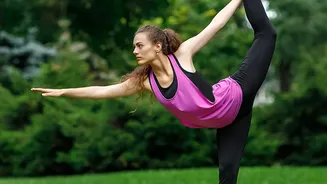
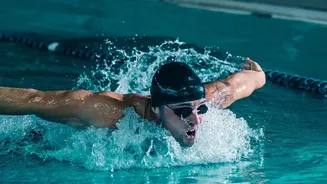
Swimming is renowned as a true fullbody workout. Different strokes target different areas, but in general, swimming engages your arms, shoulders, chest, back, core, and legs simultaneously. The water provides consistent resistance through every movement, building long, lean muscle tone across the entire body. Dancing also engages multiple muscle groups, but the focus can vary dramatically by style. For example, ballet heavily targets the legs and core, while hiphop requires explosive power from the lower body and significant core stability. Dance works stabilizer muscles that are often missed in linear exercises like running or cycling because of its multi‐directional movements, improving balance and coordination.
The Fun Factor and Accessibility
The best exercise is the one you will actually do. Dancing has a major accessibility advantage: you can do it anywhere, anytime, with no equipment needed other than some music. It’s also an inherently social activity, and the combination of music, movement, and community can reduce stress and boost mood. Many people find the creative expression of dance so enjoyable that it doesn't feel like exercise at all. Swimming, on the other hand, requires access to a pool, which can be a barrier due to cost or location. It is often a more solitary and meditative activity, which can be a pro or a con depending on your personality. The feeling of weightlessness in the water is a unique benefit that many find deeply relaxing.