



Gather Your Styling Arsenal
Before you begin, having the right tools on hand makes all the difference. You don’t need a professional salon's worth of equipment, but a few key items will ensure a smoother process. First, invest in a pair of proper hair-cutting or styling scissors;
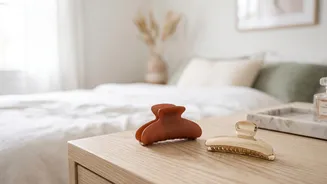
kitchen scissors can bend the hair and create uneven lines. A tail comb is essential for creating clean, precise sections. For styling, have a blow dryer with a nozzle, a medium round brush, and potentially a flat iron for touch-ups. Finally, some clips to hold back the rest of your hair will keep your working area clear and prevent accidental snips.
Prep Your Bangs for Success
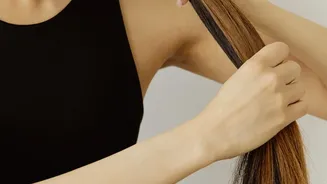
Always work with dry, clean hair, especially if you are considering a trim. Hair shrinks as it dries, and cutting wet bangs is a common way to end up with a much shorter fringe than intended. If you're just styling, starting with damp, towel-dried hair is fine. Comb your bangs forward and separate them from the rest of your hair. A good way to section them is by creating a triangle shape, with the point starting at your part and the base running along your hairline from eyebrow to eyebrow. This isolates the fringe and ensures you’re only working with the hair you intend to shape.
The Blow-Dryer Method for Volume
For a classic, voluminous look, the blow-dryer and round brush are your best friends. After applying a heat protectant, place a medium-sized round brush under your fringe. As you blow dry, brush your bangs first to one side, then to the other. This technique helps to eliminate any natural cowlicks or weird partings and builds volume at the root. To finish, roll the brush forward, lifting the hair up and away from your forehead to create that perfect, gentle curve. For curtain bangs, part them in the middle and use the round brush to sweep each side back and away from your face.
Using a Flat Iron for a Sleek Finish
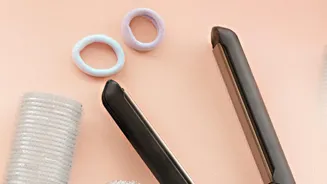
If you prefer a sleeker, more polished fringe, a flat iron is an excellent tool. Make sure your bangs are completely dry before you start. Working in small, thin sections, quickly pass the flat iron over the hair. Instead of pulling straight down, create a slight bevel or curve by turning your wrist inwards as you reach the ends. This gives the bangs a soft, natural shape and prevents them from looking stiff or flat. Mini flat irons are particularly great for this task as they offer more precision and control for shorter hair.
A Guide to At-Home Trims
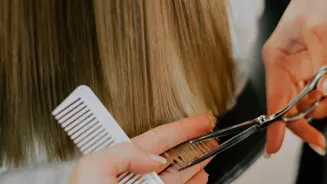
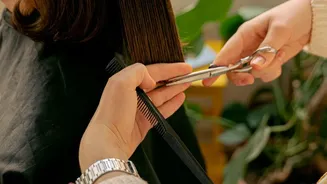
For maintenance between salon visits, a light trim can keep your fringe looking sharp. Always cut less than you think you need to. A common professional technique is 'point cutting', where you hold the scissors vertically and snip into the ends of the hair. This creates a softer, more textured edge rather than a blunt, hard line. Never pull your bangs taut when cutting; let them hang naturally to get an accurate sense of the length. If you're nervous, it's better to step away and book a professional trim than risk a mistake that takes weeks to grow out.
Products That Make a Difference
The right products can elevate your fringe from good to great. A light-hold hairspray will keep your bangs in place without making them feel stiff or crunchy. For fine hair, a texturizing spray or a bit of dry shampoo at the roots can add volume and prevent your fringe from going flat during the day. Be careful not to use heavy oils or serums, as they can weigh bangs down and make them look greasy quickly. When applying product, it's often best to spray it onto your fingers or a comb first for more controlled application.