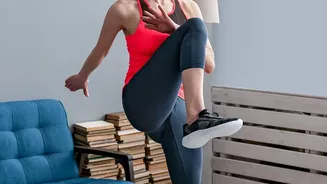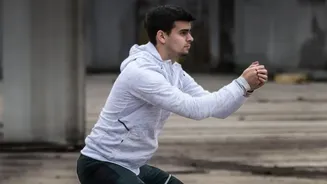


The Foundation: Squats and Lunges
When it comes to building strong, sculpted thighs, squats and lunges are foundational exercises for a reason. These compound movements are incredibly effective because they engage multiple major muscle groups simultaneously. The primary muscles targeted
are the quadriceps (front of the thighs), hamstrings (back of the thighs), and the glutes. Think of them as the bedrock of any lower-body routine. Squats, being a bilateral exercise (using both legs at once), allow you to lift heavier loads, which is excellent for building overall strength and muscle mass. Lunges, a unilateral exercise (working one leg at a time), are fantastic for improving balance, coordination, and correcting muscle imbalances between your left and right sides. Incorporating both into your routine provides a comprehensive approach to leg training.
Perfecting Your Basic Squat
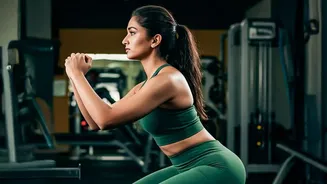
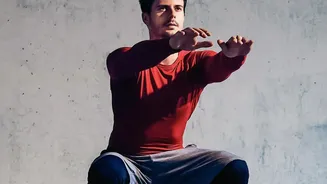
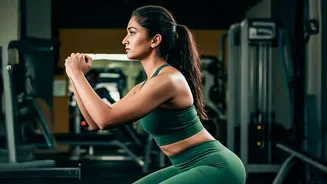
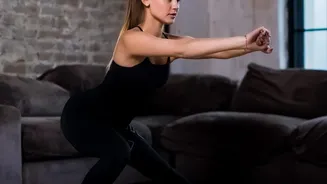
Before exploring variations, mastering the basic bodyweight squat is crucial to prevent injury and maximise results. Think of sitting back into a chair. Start with your feet shoulder-width apart, toes pointing slightly forward. Keep your chest up and your back straight as you lower your hips. Bend at your knees and hips, aiming to get your thighs parallel to the floor, ensuring your knees track in line with your feet and don't collapse inward. Drive through your heels to return to a standing position, squeezing your glutes at the top. A common mistake is letting the chest fall forward or allowing the knees to travel too far past the toes, which can place undue stress on the joints. Focus on controlled movement rather than speed.
Squat Variations for Targeted Strength
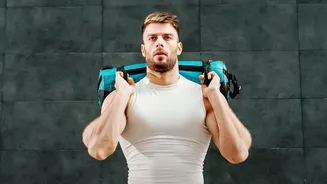
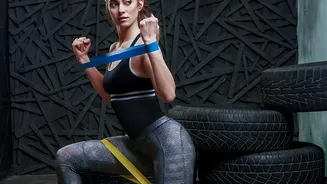
Once you're confident with the basic squat, introducing variations can target different areas of the thigh. A 'Sumo Squat', performed with a wider stance and toes pointed outwards at about a 45-degree angle, places greater emphasis on the inner thighs (adductors) and glutes. This is a great option for those looking to tone the inner leg. For an extra challenge to your balance and core, the 'Goblet Squat' involves holding a single dumbbell or kettlebell close to your chest. This counterbalance helps maintain an upright torso and can improve your squat depth and form. For those seeking to address strength differences between legs, the 'Bulgarian Split Squat' is a powerful single-leg variation where the rear foot is elevated on a bench. This move intensely targets the quad and glute of the front leg while improving stability.
Mastering the Fundamental Lunge
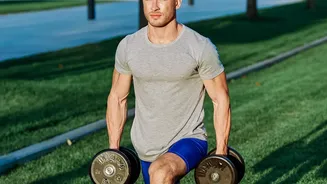
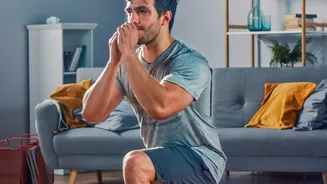
Proper lunge form is essential for stability and targeting the right muscles. Start by standing tall, then take a step forward with one leg. Lower your hips until both knees are bent at approximately a 90-degree angle. Your front knee should be aligned over your ankle, not shooting past your toes, and your back knee should hover just above the floor. Keep your torso upright and your core engaged to maintain balance. A common error is stepping one foot directly in front of the other, as if on a tightrope, which creates instability. Instead, maintain a hip-width distance between your feet as you step. Push off the front heel to return to the starting position. For those with knee sensitivity, a 'Reverse Lunge', where you step backward, can often feel more comfortable and places more emphasis on the glutes.
Lunge Variations to Deepen the Work
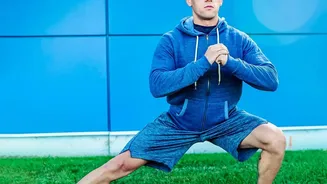
Like squats, lunge variations hit your thighs from new angles. 'Side Lunges' (or Lateral Lunges) involve stepping out to the side instead of forward. This movement is excellent for targeting the inner and outer thighs (adductors and abductors) and improving lateral stability. Another effective variation is the 'Curtsy Lunge'. In this move, you step one leg back and across behind the other, as if doing a curtsy. This diagonal pattern uniquely engages the glute medius (the side of your glutes) and inner thighs. 'Walking Lunges' add a dynamic component, challenging your coordination and core stability as you move across the floor.
The Power of Varied Movements
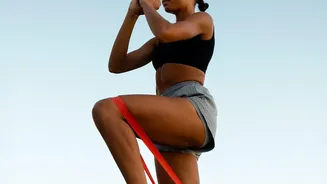
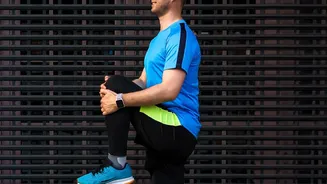
Doing the same exercises repeatedly can lead to a workout plateau, where your progress stalls because your muscles have adapted to the stress. Varying your movements by introducing different types of squats and lunges 'shocks' the muscles, forcing them to adapt and grow stronger. This approach not only prevents boredom but also promotes more balanced physical fitness by targeting muscles from multiple angles. It also helps reduce the risk of overuse injuries that can occur from repetitive strain on the same joints and tissues. By rotating through different squat and lunge variations, you create a new stimulus for your body, ensuring you continue to make progress over time.