


Why September Is Special for Venus Watchers
September 2026 offers a prime opportunity to see Venus at its most brilliant. Around the middle of the month, the planet reaches what astronomers call its 'greatest illuminated extent'. This is when it achieves its peak brightness in our sky for the entire
year, shining at a dazzling magnitude of -4.8. For comparison, the full moon is about -12, making Venus the brightest object in the night sky aside from the Moon itself. This peak brilliance occurs as Venus gets closer to Earth in its orbit. Even though we see it as a crescent through a telescope, its proximity makes its apparent size larger, reflecting an immense amount of sunlight back at us.
The Key Dates and Times
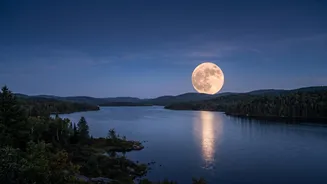
Mark your calendars for mid-September. The absolute peak brightness occurs around September 18-22, depending on your source. However, the entire period offers spectacular viewing. A particularly beautiful sight will occur on the evening of September 14, when a thin crescent Moon will appear very close to Venus in the western sky just after sunset. This conjunction of the Moon and our brightest planetary neighbour will be an unmissable photo opportunity. For stargazers across India, the best time to look will be in the hour just after the sun goes down. Look to the western horizon as twilight deepens to catch Venus before it sets.
How to Find Venus: No Telescope Needed
You don't need any special equipment to enjoy this celestial event. Venus will be impossible to miss. Shortly after sunset, find a spot with a clear view of the western horizon and simply look for the brightest 'star' there. Its steady, silvery light doesn't twinkle as much as actual stars do, making it easy to identify. While it will be prominent all month, its position will be lower in the sky for observers in the Northern Hemisphere, so a clear, unobstructed horizon away from tall buildings or trees is essential for the best view. Throughout early September, Venus will sink lower towards the horizon each evening, so catching it earlier in the month is also a great idea.
What Binoculars or a Telescope Will Show
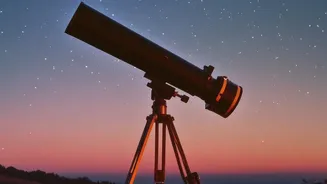
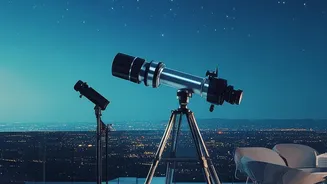
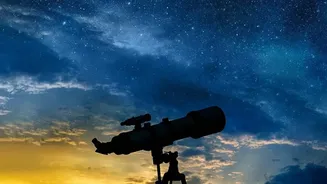
While Venus is stunning to the naked eye, a pair of binoculars or a small telescope will reveal a fascinating detail: its phase. Just like our Moon, Venus goes through phases as it orbits the Sun. During its brightest point in September, Venus will appear as a slim, beautiful crescent. This is often a surprise to first-time observers who expect to see a round disk. Seeing the distinct crescent shape of another planet is a thrilling experience that connects you directly to the mechanics of our solar system. The growing crescent size combined with its approach to Earth is precisely why it appears so bright to us.
Tips for the Perfect Viewing Experience
To make the most of this event, a little preparation goes a long way. First, check your local weather forecast for a clear evening. City light pollution can wash out fainter stars, but thankfully, Venus is so bright it can cut through even urban skies. For an even more immersive experience, try to find a darker location like a park or an area on the outskirts of your town. Give your eyes at least 15 minutes to adjust to the darkness; this will help you see not just Venus in all its glory, but other surrounding stars as well. Finally, consider using a stargazing app on your phone to help identify other objects in the sky, such as the star Spica, which Venus will be near at the beginning of the month.