



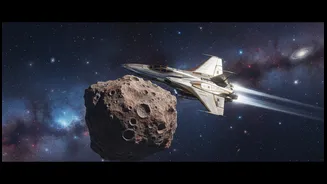


An Encore for a Veteran Spacecraft
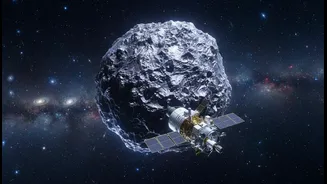
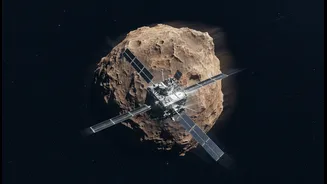
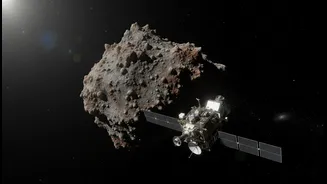
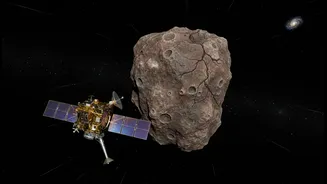
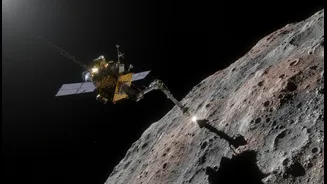
The hero of this story is the Hayabusa2 spacecraft, a veteran explorer from the Japan Aerospace Exploration Agency (JAXA). Originally launched in 2014, its primary mission was to visit the asteroid Ryugu, collect subsurface samples, and return them to Earth—a
feat it accomplished spectacularly in December 2020. Those samples have since provided invaluable insights into the building blocks of our solar system. But instead of retiring, the resilient probe was given an extended mission. Its new itinerary includes this flyby of Torifune (also known as 2001 CC21) and a final rendezvous with another asteroid, 1998 KY26, in 2031.
The Challenge of the July 5 Flyby
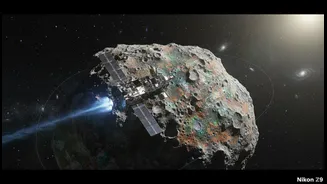
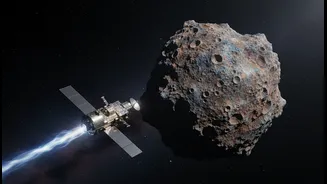
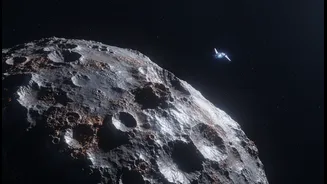
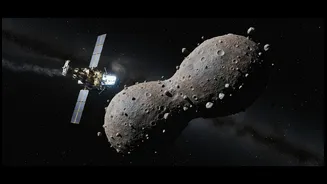
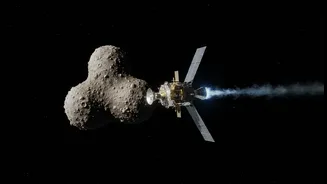
The July 5 encounter was anything but simple. Hayabusa2 sped past the 450-meter-long asteroid at a blistering velocity of about 5 kilometers per second. The plan was to get as close as possible without impact, a maneuver JAXA described as a test of high-precision guidance technology. The spacecraft successfully passed within just one kilometer of Torifune's center. Because of the asteroid's small size and the vast distances involved, final trajectory adjustments had to be made just days before the flyby, showcasing the team's ability to navigate in real-time. The operation was deemed a 'risky' but essential step in developing capabilities for planetary defense.
What the 'Snowman' Asteroid Revealed
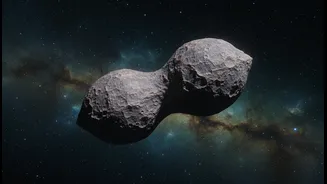
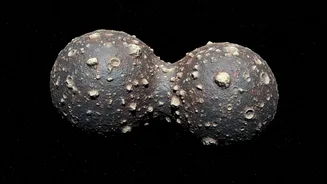
The images sent back to Earth have captivated scientists. They show that Torifune is a "contact binary," meaning it's composed of two distinct lobes that have gently collided and stuck together, giving it the appearance of a snowman or a peanut. This isn't the first such object seen, but experts have called it one of the best examples ever imaged. These types of asteroids offer clues into how smaller celestial bodies may have aggregated to form planets in the early solar system. Along with visible-light photos from its Optical Navigation Camera, Hayabusa2 used its near-infrared spectrometer and thermal imager to gather data on the asteroid's composition and temperature before the closest approach. This data, still being transmitted to Earth, will help scientists understand more about its structure and surface.
Planning as a Planetary Defense Tool
The headline-grabbing flyby is the culmination of years of meticulous planning. Every maneuver, from launch to sample return and beyond, is calculated to the finest degree. This level of precision is not just for scientific discovery; it's a critical component of planetary defense. By successfully executing such a high-speed, close-quarters flyby, JAXA is honing the very technologies that might one day be needed to intercept or deflect an asteroid on a collision course with Earth. The Torifune encounter serves as a real-world test for the kinetic impactor method of asteroid deflection, providing fundamental data for guiding a probe to a precise point on a small, fast-moving target. It's a powerful demonstration that our ability to protect our planet is directly linked to the careful planning and execution of missions like this one.