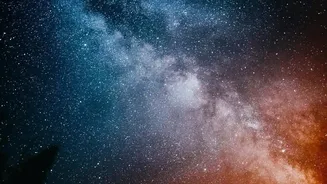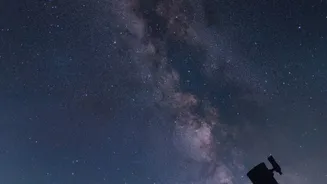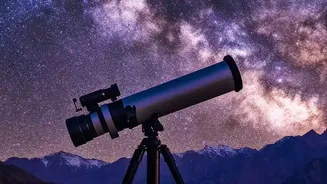





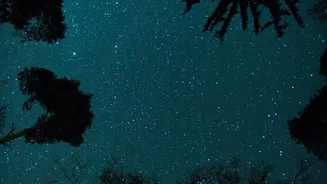
Far from the glow of city lights, India holds some of the planet's most pristine skies. For those willing to travel, these remote corners offer a breathtaking window into the cosmos, where the Milky Way is visible to the naked eye.
Hanle, Ladakh: India's Dark Sky Sanctuary
Considered the crown
jewel of Indian astronomy, Hanle in eastern Ladakh is a destination for the dedicated stargazer. At an altitude of 4,500 metres, it is home to the Indian Astronomical Observatory and was officially designated as India's first Dark Sky Reserve in 2022. The high altitude, dry air, and near-zero light pollution provide exceptionally clear skies for over 300 nights a year. Here, the Milky Way is not just visible but appears as a detailed, textured band across the sky. The journey is long, typically 8-10 hours from Leh, and requires permits, but the reward is an unparalleled view of the universe. Local communities are also involved, with trained 'Astronomy Ambassadors' offering guided sessions with telescopes.
Spiti Valley, Himachal Pradesh: A High-Altitude Desert
Often called a 'cold desert', Spiti Valley offers stargazing conditions that rival Ladakh but with slightly easier access. The high-altitude villages of Kibber, Langza, and Kaza, all situated above 3,800 metres, are perfect bases for astronomy enthusiasts. The valley sits in a rain shadow, meaning it remains mostly dry and cloud-free even during the monsoon months. The best time to visit for clear skies is from May to October. Nights in Spiti are profoundly dark, allowing for naked-eye sightings of constellations, planets, and the bright core of the Milky Way, especially between July and September. The ancient monasteries and unique landscapes, like the famous Buddha statue at Langza, provide stunning foregrounds for astrophotography.
Nubra Valley, Ladakh: Stars Over Sand Dunes
While Hanle is for purists, Nubra Valley offers a more accessible yet brilliant stargazing experience within a standard Ladakh itinerary. Situated at a lower altitude than other Ladakhi hotspots, it's easier for acclimatisation. The valley's remoteness ensures minimal light pollution, especially in areas away from the main settlements of Hunder and Diskit. The unique landscape of sand dunes against a backdrop of snow-capped mountains creates a surreal setting. Imagine seeing the arc of the Milky Way while camping near the famous double-humped camels. The clear, dry air enhances visibility, making it an excellent spot for both casual observers and serious astrophotographers.
Rann of Kutch, Gujarat: A Celestial Sphere
The Great Rann of Kutch offers a stargazing experience unlike any other. This vast, flat expanse of white salt desert provides an unobstructed 360ndegree horizon that creates the illusion of being inside a celestial sphere. Far from any major city, light pollution is extremely low. The best time to visit is during the Rann Utsav, from November to February, when the skies are clear and dry. On a moonless night, the white salt flats can even reflect the starlight, amplifying the cosmic spectacle. This destination is particularly good for observing winter constellations like Orion and planets such as Jupiter and Saturn. Many desert camps offer guided stargazing sessions, making it an accessible option for families and beginners.
Coorg, Karnataka: Coffee Plantations and Constellations
For those in South India, Coorg provides a fantastic escape from city lights without needing to travel to the Himalayas. Tucked away in the Western Ghats, the rolling hills and dense coffee plantations offer dark skies and a serene environment. While it doesn't have the high altitude of Ladakh, its distance from urban centres ensures minimal light pollution. Many homestays and resorts are located deep within estates, providing perfect, dark pockets for sky watching from your own verandah. There is even a dedicated observatory in Coorg offering guided sessions with telescopes, making astronomy accessible to all visitors. The best season is from October to March, when the skies are clear after the monsoon.
Neil Island, Andamans: Coastal Cosmos
Stargazing from a tropical beach is a magical experience, and Neil Island (Shaheed Dweep) in the Andamans is one of the best places for it. Its remote location in the Bay of Bengal means there is virtually no light pollution. The wide, open beaches like Laxmanpur Beach provide an unobstructed view of the sky over the ocean. From November to April, the weather is dry and the skies are exceptionally clear enough to see constellations and even the Milky Way with stunning clarity. The sound of waves paired with a glittering canopy of stars creates a deeply tranquil and unforgettable experience. Guided stargazing walks are also becoming popular enough to offer insights into celestial wonders visible from this latitude.